Wednesday, 30 September 2020

Obit/Tribute - Tribute to Natyacharya Rajee Narayan - The Dhananjayans

It is sad to note the passing away of Rajee Narayan of Mumbai. A Vaggeyakara by all virtues, she was an inspiring Natyacharya loved and respected by the Bharatanatyam fraternity. A very humble, simple person with great scholarship in naatya, music and literature is a rare  phenomenon in the performing arts world.

Read more in the site

Friday, 25 September 2020

Article - When Aharyabhinaya, the extraneous representation becomes integral in Performing Arts - Dr. Varada Pandit


'Gulabo Sitabo' is the recent film by director Shoojit Sircar that revolves around a heritage structure - the 'haveli'. The protagonist - a 76 years old landlord and multiple other characters have diverse interests in the haveli. As the film proceeds, it slowly reveals that the haveli is not just an external structure, but the director has portrayed it as a prime character. Whenever the camera focuses on the haveli, it seems that she is watching the chaos around her, sometimes with sheer amusement while sometimes feeling helpless. The very idea of portraying the haveli as a silent protagonist adds depth to the theme. The haveli is a metaphor that offers multiple interpretations on a broader canvas.

A similar theme was explored in the Marathi play 'Wada Chirebandi' by the renowned playwright Mahesh Elkunchvar. The plot was about the three generations of Deshpande family that reside in a heritage house - the 'Wada'. The wada is a witness of the ups and downs of the family and acts as a central character...


Today, the trend of choreography in Kathak is very well established and artistes continue to explore novel ideas. In 2018, Guru Shama Bhate presented 'Chaturang ki Chaupal', a choreography which was based on the idea of space...


Read more in the site 

Thursday, 24 September 2020

Slick virtual presentation of 26th Kelucharan Mohapatra Awards Festival - Taalam: column by Leela Venkataraman

Few festival designers can compare with Ratikant Mohapatra's efficient programming and layout of events and despite the pandemic restrictions necessitating a virtual event, the latest Guru Kelucharan Mohapatra Awards Festival in Bhubaneswar, carried the same trademark of a slick and neat presentation of an eclectic mix of events, where time honoured classicism lived in proximity with a more trendy modern approach, on all the five days. Very appropriately dedicated to the recently departed musical prodigy Pandit Jasraj and to light expert Jayadev Das who for years was the man behind the scene illuminating many an Odissi performance, this year's event in true flamboyant style, had Hema Malini, the dancer/matinee idol/turned Rajya Sabha member inaugurating the festival with a few appropriate words, paying homage to Guru Kelucharan Mohapatra.

Read more in the site

Wednesday, 23 September 2020

To many, this tribute may appear to be highly egocentric, for which I need be amply excused, since I am helpless. Kapilaji was always aglow in my life's firmament and I always basked in her reflected glory. On the whole, I had the most profound regard for her deep erudition in Indian art and culture. In turn, I felt she had a sneaking appreciation of my abiding cross-disciplinary interest in the sciences and the arts. How I perceived this, I would come to, a little later.

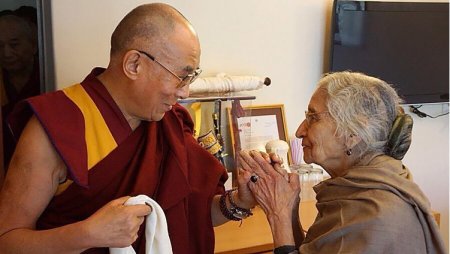
It began in 1975. I was already Dy. Secretary, Min. of Defence in 1968, when I left India as a Commonwealth Scholar and I had then returned with a Ph. D. in "IT and Management" under my belt from Manchester. I was duly made Adviser (Information Systems), Min. of Industry, but I began seriously wondering where I would go in my civil service from there. Tata Steel jumped into the fray and offered me a plum technical position. I was in a dilemma - should I leave the lifelong security in the services and join the fiercely competitive private sector? I escaped to - an unlikely place -- the Himalayas to contemplate and sought the advice from His Holiness the Dalai Lama. I sought and got - absolutely unexpectedly - an immediate "holy audience", provided I could climb the steep hillside from the Dharamsala Tourist Lodge to his hilltop abode, to keep the appointment in time. I did and received his blessing with a beatific smile, "I shall pray for you." I returned and took the plunge.

Read more in the site
Sunday, 20 September 2020

Roses and Thorns - In response to TM Krishna's article - Ramaa Venugopalan

('The guru-shishya structure is inherently prone to abuse. It needs to be demolished'

T.M. Krishna writes: The guru-shishya relationship in Indian music is grounded not just in a power imbalance, but in a celebration of inequality, which makes it vulnerable to abuse, which is then romanticised.
https://indianexpress.com/article/)

My response to T.M. Krishna's article in the Indian Express dated Sept 19, 2020
On this 'one' account I agree with his thoughts. At least he has the guts to consistently call out and speak about this issue. What is pertinent is the last line in this article (because enough has been said about the other aspects he addresses).

"In the guru-shishya parampara of Indian "classical" music and dance, rarely can a shishya stand up against her or his guru and hope to survive another day."

First off, to call a teacher imparting arts a Guru is problematic for me. As he says let's just address it as domain experts. The power play comes mostly in teachers who are performers themselves. When one is a popular performer, the adulation is beyond comprehension. Calling them deities, Gods and Goddesses of the art form... whatever else, is the problem. By practicing a performing art form, one cannot by default become divine. Two, a student who ventures or seeks to learn from such a star without doubt wants to imbibe those qualities to make them the next God or Goddess and also garner the popularity and opportunities that catapult them into that position. This is the truth! It's transactional in that sense.

Saturday, 19 September 2020

"Obit/Tribute - My tribute to my Guru - Navina Jafa

Dr. Kapila Vatsyayan, once called the Czarina of Indian Culture, was a legendary scholar on Indian culture. An administrator, institution builder, scholar, and dancer all packed in one. Her comprehension of the journey in understanding the seeds lying in the internal soils of India and Asia to the ephemeral fragrance was unmatched. My journey with her started at the age of 10 and a half when she was our neighbor in Satya Marg. We often shared time over dinners, shopping, and walks. She became my affiliated guide for my Ph.D. along with Dr. Narayani Gupta at the Jamia Milia Islamic. Here are some excerpts from my diary:


"How can you go to the fragrance of a flower? Well, you need to understand the soil in which the seed is nurtured, then the journey of the plant, and then the flower. But most times, the journey begins and ends with the fragrance, something that dissolves as soon as it is released."

Friday, 18 September 2020

Obit/Tribute - Tribute to Dr. Kapila Vatsyayan - V.P. Dhananjayan


The passing away of Dr. Kapila Vatsyayan creates a vacuum in the arts and cultural field of Bhaaratam. An erudite scholar and cultural activist par excellence she drew high reverence from all quarters of our society, for her steadfast nature and contributions she made to keep our cultural ethos flying aloft in the international arena.

Read more in the site