Monday, 7 September 2026

Article - In Me - The Shishya and the Guru - Dr. Lata Surendra

Abstract:

In Me - The Shishya and The Guru:
The Dualistic Paradigm of Shishya and Guru in the Eternal Continuum of Learning

The paper explores the epistemological and ontological dimensions of lifelong learning through the dual lens of the Shishya (the perpetual student) and the Guru (the inner teacher). Rooted in the rich philosophical heritage of India, this study unpacks the multi-tiered evolution of mentorship - tracing the spiritual and intellectual trajectory from Upadhyaya (skill instructor) to Acharya (the exemplar of conduct) and, ultimately, to Guru (the absolute dispeller of existential darkness). Drawing upon a shared global tapestry of insights, the narrative synthesises the existential angst of Western thought (Eliot, Sartre, Kafka, Dostoevsky), the abstract spatial geometries of modern painters (Kandinsky, Van Gogh), the humanist architecture of Rabindranath Tagore, and the moral and contemplative rigour of East Asian classical traditions (Confucius and Japanese Zen Buddhist aesthetics). On the occasion of Teacher's Day, and in alignment with the seminal warnings of philosopher-statesman Dr. Sarvepalli Radhakrishnan, the author argues that true intellect resides not in the accumulation of empirical certainty, but in the radical vulnerability of acknowledging one's own profound ignorance. The paper establishes that the act of giving (teaching) is intrinsically an act of receiving (learning); by interacting with the diverse human "moulds" of life, latent wisdom, historical experiences, and artistic masteries are reawakened and transmuted into immediate tools of comprehension. Ultimately, the paper positions life's inevitable crises - typified by the divine alchemy of Sri Krishna on the battlefield of Kurukshetra - as the supreme catalyst for spiritual unravelling and self-realization. The study concludes with a phenomenological reflection on macro-micro cosmic unity, asserting that the deepest depths of universal wisdom do not require external conquest, but an open, receptive heart capable of listening to the echoing depths of the infinite cosmos mirrored in the most ordinary fragments of nature. 

Read more in the site

Please type your name along with your comment. Anonymous and derogatory comments are likely to be removed.

Saturday, 5 September 2026

Article - Beyond Familiarity: Authenticity, Adaptation, and the Odissi Experience - Dr. Rohini Dandavate

Ever since I migrated to the U.S., I have sought to remain rooted in the authenticity and integrity of the Odissi style while finding ways to connect with audiences unfamiliar with its traditions, aesthetics, and cultural contexts. For me, the tension between authenticity and adaptation has never been about choosing one over the other. Rather, it has been a continuing process of understanding what must remain rooted in the tradition and what can evolve so that Odissi can speak meaningfully within the multicultural context of my adopted home.

Authenticity, as I understand it, cannot be static. Odissi itself has evolved through many historical transitions - from temple traditions and Mahari and Gotipua practices to its modern reconstruction and codification. Authenticity, therefore, is not the preservation of a frozen historical moment, but an ongoing relationship with tradition. My challenge has been to translate the form without losing its grammar, integrity, or cultural memory, while making it possible for audiences to encounter Odissi without first needing to understand all that lies behind it.

My experiments in translation began almost a month after my arrival in Ohio. In one of my earliest presentations, for a class of kindergarteners, I quickly learned from these five-year-olds that I needed to begin with stories and images familiar to them. Their response prompted me to think, learn, and discover new ways of presenting Odissi that could create curiosity about a movement language they had never encountered. 

Read more in the site

Please type your name along with your comment. Anonymous and derogatory comments are likely to be removed.
Friday, 4 September 2026

Interview - We worship Bharata Muni in Thailand: Bharatanatyam dancer Awassada Kilnsukhon - Shyamhari Chakra

She was in her mid-20's when she represented her country in the historic international conclave on Indian dance hosted by the Ministry of Culture and Sangeet Natak Akademi in New Delhi two years ago. The youngest delegate in the meet, she was one of the panelists to speak in the important and interesting session on Indian dance diaspora.


She is Bharatanatyam dancer Awassada Kilnsukhon from Thailand who was in India for two years and recently returned to her country upon completion of her masters in Bharatanatyam from Banaras Hindu University.

How did you get interested in dance?
I was born into a family of Thai classical musicians. Therefore, I grew up surrounded by the arts traditions of ancient Thailand. As a kid, I was quite fond of dancing. I began learning classical Thai dance as part of my school's dance curriculum from kindergarten when I was just four years old.

Read more in the site

Please type your name along with your comment. Anonymous and derogatory comments are likely to be removed.
Tuesday, 1 September 2026

Anita says...September 2026

 Aaaand... hello again!


Another month goes by. Another capture through my personal lens. Another set of thoughts shared. As Time marches on and tastes shift and change, it is a challenge to find that common ground that you, the reader who can be - dancer, choreographer, guru, teacher, musician, composer, costume designer, lighting director, Arts manager or anyone who is interested or working in the performing arts sector can connect to. Being a senior in the field, I realise that many of my views are shaped by the long decades of learning, performing, producing, curating, mentoring, speaking and writing about dance and society. I write and speak as I see it.

Read more in the site

Please type your name along with your comment. Anonymous and derogatory comments are likely to be removed.
Sunday, 30 August 2026

Monsoon showers along with a program deluge - Taalam: column by Leela Venkataraman

PARAMPARA FESTIVAL
Following a fairly barren two months, came a deluge of programmes in the capital starting with the annual Parampara Festival of the Reddys – which this year, considering the vagaries of sudden monsoon showers, was held at the Kamani auditorium, instead of the usual haunt of their own open-air theatre in their Saket home....


SARE JAHAN SE ACHCHA

Odissi exponent Ranjana Gauhar’s annual festival Sare Jahan se Achcha, began in the customary way established so far with the first evening being devoted to a presentation by the host institution Utsav. This year’s presentation Chitrangada based on Tagore’s play, with concept, script and direction by Ranjana and music direction by Saroj Mohanty, had Sandeep Dutta’s technical direction, for what has become the institution’s most prolifically staged nritta natika presentation.....


UNUSUAL KUCHIPUDI/KATHAK PERFORMANCE
Performing for a Delhi audience for the first time, Ritusri Chowdhuri and Amrita Singh settled in Kolkata, provided an evening of Kathak and Kuchipudi respectively, at the Stein auditorium....


REGALING TWOSOME FOR IIC’S MONSOON FESTIVAL

Geetanjali Acharya, a student of Guru Kelucharan Mohapatra, trained in Srjan, the Guru’s Odissi institution, performing at the IIC , given the brief recital, comprising the first half of the first evening, for the two-day Monsoon Festival, showed in her dance the unmistakable stylistic impact of the Guru. 

The Odissi recital was followed by a superb Bharatanatyam presentation by Apeksha Kamath, a student of Indira Kadambi of Bangalore. For the first time after a number of years, one found a dancer stressing the idea of the Monsoon (in the title of the event) as a central theme, while planning the recital....

Read more in the site

Please type your name along with your comment. Anonymous and derogatory comments are likely to be removed.
Monday, 24 August 2026

Article - The Ethics of Dance Critique: Why it matters who writes - Anita Vallabh

(The article first appeared in Global Indian Artist™ LLC, dated July 19, 2026)

In an interview, the former New York Times chief dance critic Alastair Macaulay described his work this way: “To reconcile heart and head; to show how emotion and intelligence can combine when absorbing works of art. To report on and to evoke an event for those who weren't there. To provoke and enrich discussion of dance. To help people show how many elements - how many values - go into the process of judgment.”

It's an apt description of the critic's role: feel deeply, think clearly, write truthfully. But behind those thoughts, lies an ethical terrain every dance critic must navigate.

I started critiquing in 2014 for no other reason than my love for writing and dance. My first critique was on a performance by my gurus, The Dhananjayans and published in Narthaki. Soon after, I had a conversation with my Gurus about what I had written. In that exchange, I understood the power of words and the responsibility to choose them with care.

It was then I realized that if I wished to write honestly and critically, I could not also remain a performing artist in the same spaces. I made a conscious decision to step away from the stage and commit to critiquing. In the eleven years since, apart from the occasional performance for a non-profit or community event, I have not danced publicly. My love for dancing will never vane, I think of my transition form dancer to writer as expanding the artistic canvas. 

Read more in the site

Please type your name along with your comment. Anonymous and derogatory comments are likely to be removed.
Sunday, 23 August 2026

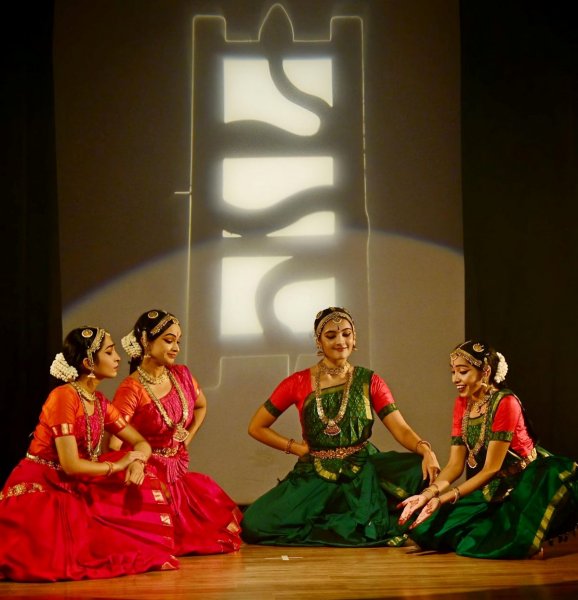
Prism - Mohiniyattam: Identity and Aesthetics - V. Kaladharan

Kerala, the south-west tip of the Indian sub-continent, can boast of giving birth to several highly evolved traditional performing arts viz. Kutiyattam, Krishnanattam, Kathakali, Mohiniyattam and Thullal, a semi-stylized solo dance-theatre narrative. Except Kutiyattam the first stage performance of which is deemed to have taken place between the 10th and the 11th century AD, the rest of the artforms came into being in the 17th century AD. Thullal dates back to the 18th century. While there are convincing evidences to establish the period of origin of Krishnanattam, Kathakali and Thullal, the history and development of Mohiniyattam prior to the establishment of Kerala Kalamandalam in the early 20th century is still shrouded in mystery not withstanding multiple references from various sources made by genuine and pretentious scholars over a period of time. Even the so called Mohiniyattam which poet laureate, Vallathol Narayan Menon, resurrected at Kerala Kalamandalam way back in the 1930's, was the remnant of its glorious past. 

Read more in the site

Please type your name along with your comment. Anonymous and derogatory comments are likely to be removed.
Tuesday, 18 August 2026

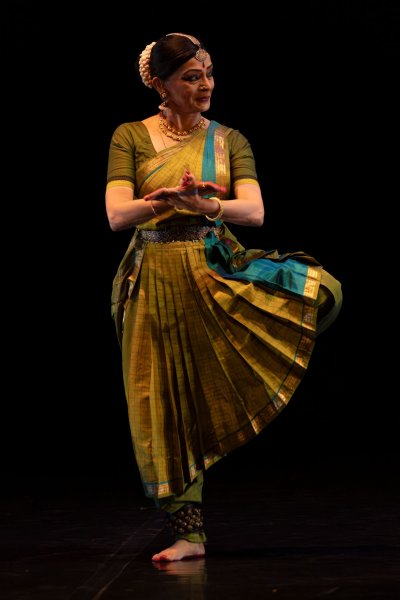
Interview - Odissi's Ambassador to Peru - Maria Laura Valdez Usseglio - Shyamhari Chakra


In one of the episodes of Mann Ki Baat, India's Prime Minister Narendra Modi hailed her contribution for popularising Odissi dance in the South American nation of Peru.
"In Peru, Herlinda Gonzales and Maria Valdez are popularising Bharatanatyam and Odissi dance respectively; showing how Indian classical dance is creating waves of popularity in South America," he had mentioned.

For Maria Laura Valdez Usseglio, the first and only Odissi dancer from Peru, such an important acknowledgement from the head of a country - that was her home-away-from-home for two decades - has been the ultimate honour that she could have ever aspired for as an Odissi dancer. 

Read the interview in the site

Please type your name along with your comment. Anonymous and derogatory comments are likely to be removed.
Monday, 17 August 2026

Article - Gaudiya Nritya: Analyzation on the subjects of debate - Adrita Misra

Gaudiya Nritya, at present is among the most debated dance forms of India which are yet to be considered strictly 'classical'. Despite covering the technical criteria of a classical dance form, Gaudiya Nritya faces strong criticism and opposition due to several reasons which we attempt to address and analyze here.


Gaudiya Nritya was denied the recognition based on various reasons... 

Read more in the site

Please type your name along with your comment. Anonymous and derogatory comments are likely to be removed.
Sunday, 16 August 2026

Of Chinna Nadam and periya talents! - Dance Matters: Column by Ashish Mohan Khokar


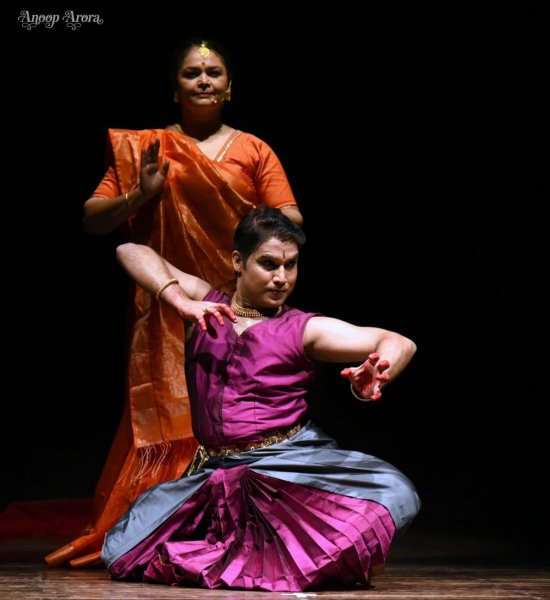
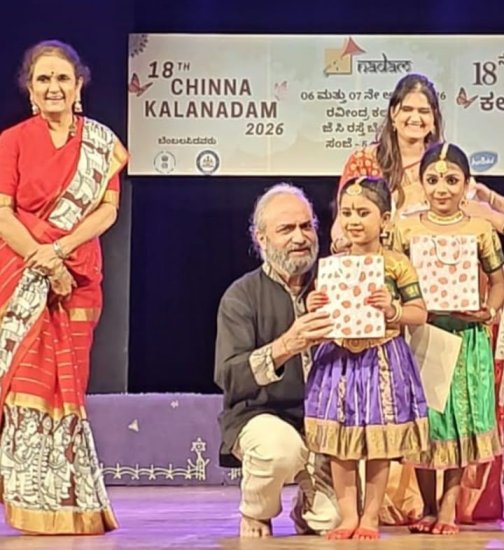
Nartanam Academy of Dance and Music (NADAM) is among Bangalore's best Kathak and Bharatanatyam teaching and performing society. Coconut is a fruit of which no part is wasted! Tender water, add protein rich fruit, even the shell makes Fab India buttons now! Then there's coir mat, rope, carpets, beds and more. Add the tree itself... Dancing in the winds when you see it! That's why NADAM is aptly located on Coconut Street! In where else? Centre of Bangalore's traditional culture - Malleswaram, the other bastion being Basavangudi. R.K. Narayan's famous book that Shankar Nag and wife Arundhati Nag made into a beautiful DD teleserial - Malgudi Days - partakes of these two wor(ld)ds Mal - (from Malleswaram) and Gudi from Basavangudi. Great ideas are simple; clutter leads to confusion. Or Confucius!

Confucius sounding, read 'sorted,' are NADAM founders Murali Mohan Kalvakalva and Nandini Mehta. Stable, sensible and solid, both have trained many, performed much and steered 25 years of Bangalore's best dance festival, nay, two festivals - Chinna Nadam for children under 13 and Periya Nadam for grown up talents in December.

It's a sheer delight to watch the young ones, all dolled up like - dolls 

Read more in the site

Please type your name along with your comment. Anonymous and derogatory comments are likely to be removed.
Thursday, 13 August 2026

Bharatanatyam and Neuroscience for Creative Aging - Sloka Iyengar - Not just anyBODY: a health and fitness column


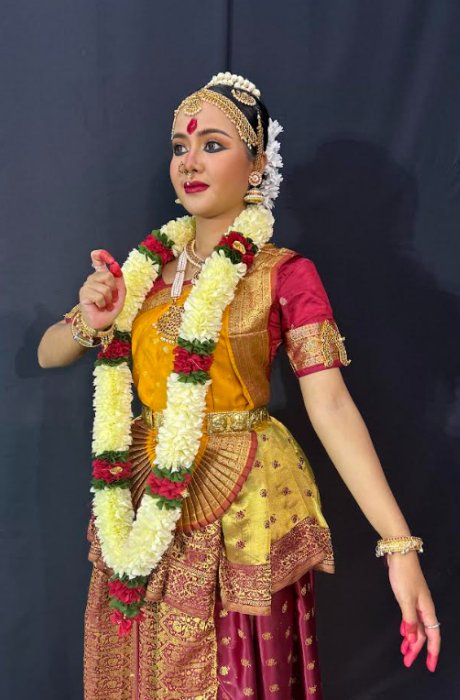
I came to creative aging a few years ago through neuroscience and a series of losses in my family. Growing up in Ahmedabad, I learned Bharatanatyam at the Darpana Academy of Performing Arts. My doctoral and postdoctoral work has been in neuroscience, more specifically in epilepsy; my clinical experience was with children who have refractory epilepsies. After my postdoctoral appointment, I lost my mother, mother-in-law, and a close older friend. Seeing formerly vibrant women being treated with pity and condescension when they were sick and frail, I was moved to think of ways to use my scientific and dance training to alleviate suffering, especially in older adults. I wanted to see if I could use Bharatanatyam as a vessel to provide a space where older adults can exercise their full human potential.

Read more in the site

Please type your name along with your comment. Anonymous and derogatory comments are likely to be removed.
Monday, 10 August 2026

Book Review - Kathak and Sanskritisation? - Leela Venkataraman


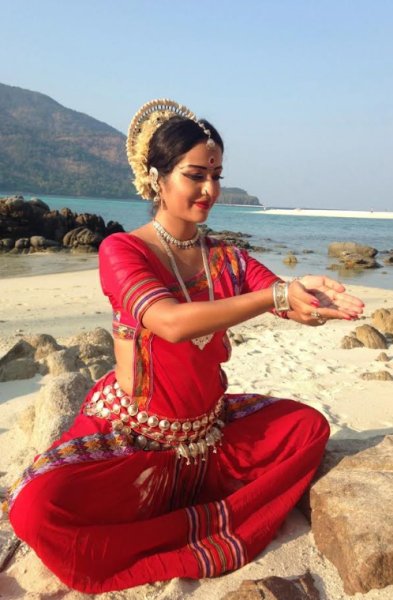
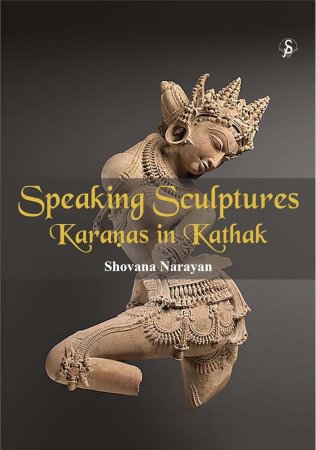
At the IIC, it was an evening with a scholarly gathering to mark the release of the book by Shubhi Publications on Speaking Sculptures - Karanas in Kathak, authored by Kathak specialist Shovana Narayan.

The Natya Sastra Karanas (Hasta-pada samayogah karanamiti samjnitam), we know, are not stances, but units of movement in a coordinated conjunction of hands and feet operating in a prescribed fashion. Shovana (as other scholars), understandably looks at sculpture as the best indicator of dance movement in history. One must remember however, that the Karana is a whole unit of movement - which has been arrested at any one point of a whole movement cycle, to be captured on temple walls by the sculptor's chisel. In other words, sculptural representations comprise frozen moments of whole units of movement prescribed as a Karana. And what is caught on stone arrested at any point -and what is seen in sculpture may not necessarily show the start or the culmination. 

Read more in the site

Please type your name along with your comment. Anonymous and derogatory comments are likely to be removed.
Sunday, 9 August 2026

Mixed week of folk and stylised traditions - Taalam: column by Leela Venkataraman

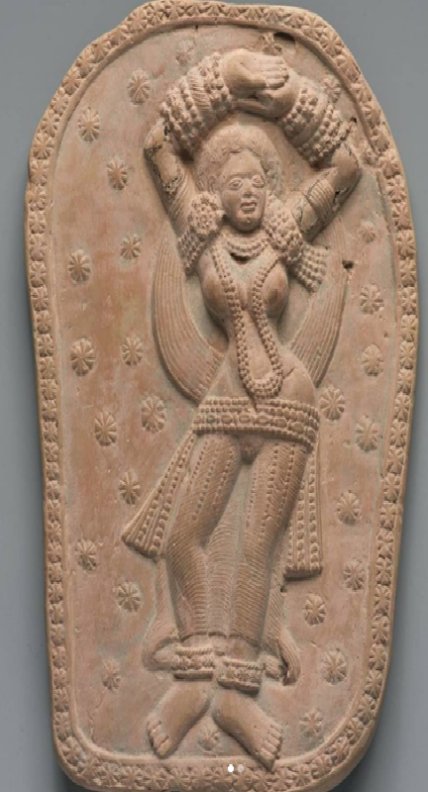
Treated generally to tailored, stylized fare of classical music and dance, the audience at the IIC auditorium, Delhi, seemed to get caught on the wrong foot, with the very different texture of the no-holds-barred exuberance, very much in the old Mujra style of the Lavani and Jogwa dancers from Maharashtra (performance courtesy NCZCC and Culture Ministry). Originating during 18th -19tth century Maharashtra under the Peshwas, who were great patrons of this art form, as a means of morale boosting entertainment for soldiers, Lavani  performers are mostly from among the community of Dangars (shepherds) of the Sholapur region of Maharashtra, their art a provocative blend of storytelling, dance and music, brimful of socio-political satire, built round society, religion and politics....


At the Habitat Centre’s Stein auditorium, watching the poised Bharatanatyam in the Tanjore Bani presented by Sneha Mahesh, trained under dancer Priya Murle of Chennai, one was surprised that this dancer had never before performed in Delhi. Entering the starkly bare stage, her curtain-raiser was a Muthuswamy Dikshitar composition Ananda Nadana Prakasham in raga Kedaram, one of the panchabhuta sthala kritis dedicated to Lord Shiva as the embodiment of space or akash in the Nataraja temple. Brilliant as innumerable suns, the Lord as granter of worldly pleasures and liberation, reveals himself with his dancing feet, to sages Patanjali and Vyagrapada.....


With a capital in siege for a week, understandably lean audiences at the Habitat Stein auditorium greeted both the Bharatanatyam and Pravat Kumar Swain’s group Odissi Nrutya Arpana. This writer was struck by one stark difference, in that Sneha Mahesh performed on a bare stage - with even the announcements from backstage - whereas the tastefully decorated altar for Jagannath greeting the onlookers for the Group Odissi recital led  by teacher Pravat Kumar Swain, was the starting point of prolonged formalities, which went on for over quarter of an hour – with every person known to the dance world in the audience, being called to the stage to be honoured - draped with elegant dupattas, with the hospitality involving  a bag containing other goodies!.... 

Read more in the site

Please type your name along with your comment. Anonymous and derogatory comments are likely to be removed.
Friday, 7 August 2026

Article - The lullaby that awakened - Dr. Lata Surendra

The First Gurus!

'To be is to know that you are not separate, but an ongoing flow of every history gone before.'

My father was the scholar and linguist who awakened me to the magic of words. Through scriptures, chants, and books, he introduced me to friends across epochs. He taught me to romance poets who charmed my soul, and philosophers who silenced the hunger of the dust. In his eyes, I sought to dance past every milestone; he made achievement so effortless that it became a habit. Yet, when I grew too lost in the past, he gently urged, "Close the books now, dear, and read from the pages of life." Growing up under British rule, his accent was flawlessly British - to me, he was simply the ideal, and he was my own.

Read more in the site

Please type your name along with your comment. Anonymous and derogatory comments are likely to be removed. 
Saturday, 1 August 2026

Anita says...August 2026

July has been 31 days of ceaseless unrest. Ablaze with arguments and heated rhetoric about issues of representation and race swapping. About translations, cinematic liberty and appropriation. The rumble became a roar with the student unrests in India that started in with a leaked examination paper and the subsequent student protests in New Delhi has rocked the government and the ripples continue as I write this monthly message. 

Read more in the site

Please type your name along with your comment. Anonymous and derogatory comments are likely to be removed.
Wednesday, 29 July 2026

Article - My Guru's greatest choreography: An institution that taught me to fall in love - Dr. Amrithasruthi Radhakrishnan

Every Guru Purnima, we celebrate the guru. This year, my gratitude extends beyond my guru to the institution she has cultivated over three decades: Natya Vriksha. I have come to recognise that the greatest choreography of dancer Geeta Chandran (Akka, as generations of us affectionately call her) may not be a work created for the stage at all. It is the institution she has built. To build an institution is among the most demanding acts of artistic practice. Choreographies conclude after the final applause, but institutions demand care every single day.

When I first entered Natya Vriksha as a young student, everyone around me believed I was rolling in a dance school, where I would acquire a vocabulary of movement and, one day, perform. Little did I know that this was where my becoming would quietly unfold. Today, whatever I have become, as a dancer, researcher, a teacher, administrator, and a cultural practitioner, has its roots there. Natya Vriksha gave me ground steady enough to take flight from, and a place to land each time I returned.

Read more in the site

Please type your name along with your comment. Anonymous and derogatory comments are likely to be removed. 
Tuesday, 28 July 2026

Thoughts of an 82-year-old Kathak dancer: Column by Janaki Patrik

My hair has turned white and I've celebrated my 82nd birthday. It's now patently evident that I've been around for a while! So when young Kathak dancers and their parents discover that I've been a Kathak dancer... student, performer, guru, choreographer... for 60 plus years, they sometimes ask me for advice.

I suppose they expect me to tell them to practice tatkar every day for several hours, followed by an orderly regimen of bol parhant and repetitions of chakkurs, tukras, parans, paramelu, kavita torahs etcetera etcetera etcetera .......

But that's not the advice I give. I speak more about longevity in terms of sustaining our lives as creative artists within a supportive community, and of maintaining the "life of the mind" while sharing what we know and appreciating the gifts of others. 

Read more in the site

Please type your name along with your comment. Anonymous and derogatory comments are likely to be removed.
Sunday, 26 July 2026

Article - Guru Purnima-From darkness to light - Bana Shastri Ramanath

Guru Purnima is a special full moon day that is observed once a year. It is also celebrated to honor the birthday of the ancient enlightened Hindu Guru Veda Vyasa who organized and compiled the Vedas and authored the epic Mahabharatam - an encyclopedia of the ever-evolving human drama. As Guru Purnima approaches, I feel moved to express gratitude to my Gurus, guided by faith and a sense of responsibility shaped by my upbringing in traditional Indian culture. People of Indian heritage around the world celebrate Guru Purnima through rituals, worship, gift-giving, and other expressions of respect. When my own students offer their gratitude and appreciation on this day, I cannot ignore the meaning and significance of Guru Purnima.

Read more in the site

Please type your name along with your comment. Anonymous and derogatory comments are likely to be removed.
Saturday, 18 July 2026

Article - The thirty second sentence, How the 30-second loop is dismantling the Performing Arts - Dr. Lata Surendra

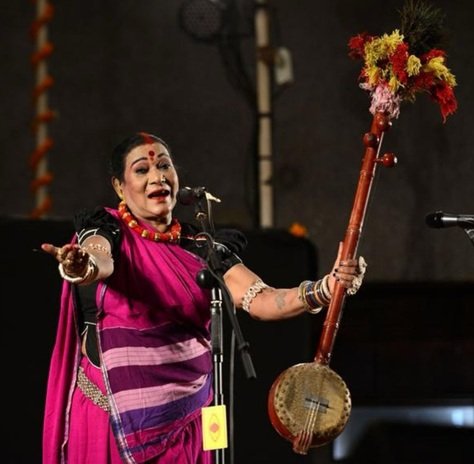
We have reduced the vastness of human expression, the agonizing architecture of art and the very rhythm of life to a fleeting thirty-second glance. In the modern cultural landscape, thirty seconds is no longer a mere unit of time, it is a violent trial. It is the maximum boundary of human attention before the thumb twitches, the screen changes, and the psyche shifts. Yet we wonder why a relentless, automated loop of these same thirty seconds leaves us completely reeled. We are caught in a hypnotic vertigo, spun around by a carousel of fragments that mimic depth but offer only a momentary spark. Time it was, when surrender to the aesthetics cradling art was ever so vital. To watch a classical dancer trace the geometry of grief across a stage; to hear a vocalist hold a single, trembling note until it fractured the silence, or to witness a theatrical monologue build its emotional scaffolding over the course of hours - these required a shared covenant of time. It was absolutely 'a transaction' of presence. Today, that covenant is broken. 

Read more in the site

Please type your name along with your comment. Anonymous and derogatory comments are likely to be removed.
Thursday, 16 July 2026

Article - Guru and Sishya: The sacred bond then and now - Vazhuvoor Saravanan

A Modern Dilemma

A boy known to me was deeply inclined to learn the Veena. After consistent prayers, he found his Guru near Adyar, Chennai. Both considered themselves lucky - the Guru found a devoted disciple, and the sishya a knowledgeable teacher.

However, despite the boy's sincerity and perfect attendance, he soon experienced disheartening neglect. His Guru frequently took long breaks for personal commitments, leaving the student in tears. On one occasion, the boy confirmed his class by phone a day before and again an hour in advance, only to travel to the teacher's house and be turned away at the door by the Guru's husband, who stated she was suffering from a headache and resting. The young boy was shattered - not by the tiring public commute, but by the callous treatment and lack of concern. Today, this mutual loss of respect and devotion between teacher and student has become all too common. 

Read more in the site

Please type your name along with your comment. Anonymous and derogatory comments are likely to be removed.
Tuesday, 14 July 2026

Debadhara Festival built round Debaprasad style of Odissi - Taalam: column by Leela Venkataraman

The three-day festival at Habitat's Stein auditorium in Delhi, featuring Odissi of the Debaprasad school, was a joint effort by Debadhara run by Binayak Panda and Tridhara, the institution under older brother and guru Gajendra Panda, at Bhubaneswar of Odisha. With the dance tribe in general facing daunting financial limitations in arranging events involving the larger circle of dance practitioners, the brothers must be credited for managing grants by the Ministry of Culture and other Corporate Sectors enabling the sponsoring of such a festival, involving dancers from forms outside Odissi too.

Read more in the site

Please type your name along with your comment. Anonymous and derogatory comments are likely to be removed.
Monday, 13 July 2026

Tribute - The Pinnacle of Kathak - Pandit Kundan Lal Gangani - Dr Chitra Sharma


Pandit Kundan Lal Gangani was one of the most eminent exponents of the Jaipur Gharana, whose creative vision shaped the very form in which this illustrious tradition is known today. Drawing upon the priceless legacy inherited from his forefathers, he enriched and expanded the art of Kathak through his profound knowledge, imagination, and experience, creating a legacy that has itself become a part of history. 

Read more in the site

Please type your name along with your comment. Anonymous and derogatory comments are likely to be removed.

Thursday, 9 July 2026

Obit / Tribute - Teejan Bai: Folk Theatre artist from the Pardhi Margins to the Throne of the Mahabharata - Dr Navina Jafa


The stage did not tremble when Teejan Bai stepped on it; it remembered how to tremble.

Teejan Bai, the great teller of the Pandavas, died on 5 July 2026 at the age of 70. She was born into the Pardhi community, a denotified tribe in Chhattisgarh that had been unjustly branded as criminal and pushed to the margins, and was told early that women in her world were not meant to speak for gods. She did not learn to obey. She learned to sing the Mahabharata aloud, on her own feet, and in her own voice. 

Read more in the site

Please type your name along with your comment. Anonymous and derogatory comments are likely to be removed.

Sunday, 5 July 2026

Book Review - Dance games for digital age denizens - Ranee Kumar

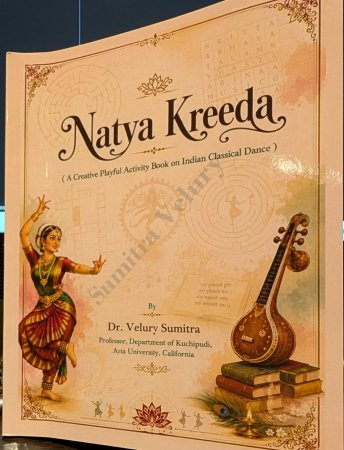
Though not the first of its kind, this play activity book on Indian classical dance has a cutting edge with its mind games and pithy puzzles. Aptly titled 'Natya Kreeda' and authored by California-based Aria University professor Dr. Velury Sumitra (Dept of Kuchipudi), the glossy 46-page book is a mini handbook on dance, not just for kids but for dance aspirants across all ages.

It's a brilliantly conceived workbook with a definite design and direction. Replete with artistic pictures the table of contents, divides itself into seven chapters beginning with: 1) The dance Maze puzzle; 2) Word-finder; 3) Yati and builder games; 4) Jumbled word games; 5) Advanced puzzle sections; 6) Complex word-building and 7) Answers to the puzzles. The author has provided ample instructions to the practitioner/readers of this workbook in the form of one-page notes - on her own objective in crafting this book, another note to the dance teachers, a guiding page to the dance maze puzzles apart from aesthetic titles in Sanskrit with English tag line.

Read more in the site

Please type your name along with your comment. Anonymous and derogatory comments are likely to be removed.

Saturday, 4 July 2026

Article - Seeing the world through a Bharatanatyam body - Samyuktha Gopi Raj


Reflections from The Buckley School's World Dance Workshop and Flip the Script

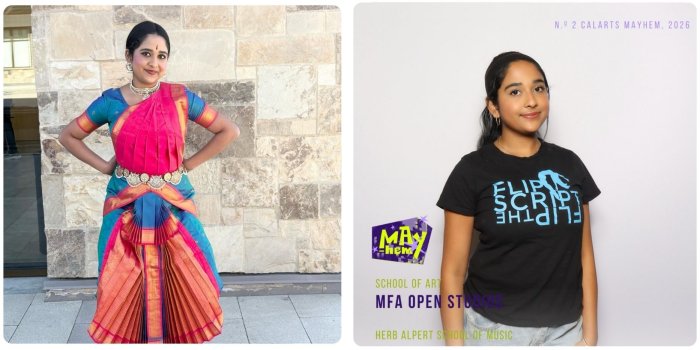
At The Buckley School, Sherman Oaks, CA, dance education extends beyond learning choreography. It encourages students to explore movement as culture, storytelling, and identity. During the Fall 2025 semester of World Dance, culminating in the October 2025 World Dance Workshop, and later through participation in the April 2026 spring dance concert in Flip the Script, I began to understand how deeply my Bharatanatyam training shaped the way I approached unfamiliar dance forms. Rather than feeling separate from my classical background, each experience reinforced how Bharatanatyam provides a foundation that allows a dancer to move thoughtfully across traditions. 

Read more in the site

Please type your name along with your comment. Anonymous and derogatory comments are likely to be removed.

Trip down Odissi's memory lane in Orissa Dance Academy's Subarnima - Taalam: column by Leela Venkataraman


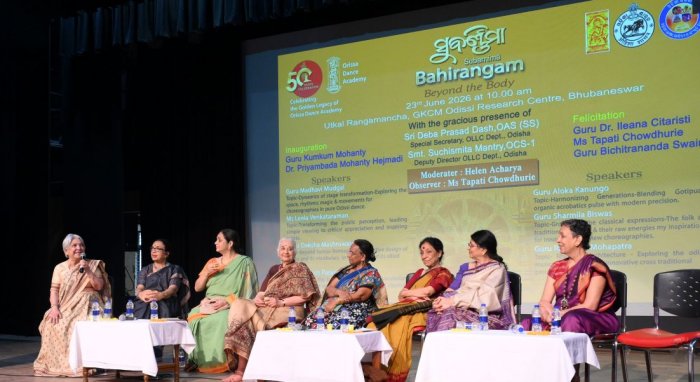
Celebrations marking fifty years of an art Institution, can take on many hues. Apart from marking a milestone, it can be a time for stock taking, for renewing pledges and also reveling in still retaining a place in a fast-moving world with a penchant for splashes of brilliance rather than longevity. What one saw in Subarnima of Orissa Dance Academy, an institution with a hyper active calendar of events, established in 1975 by the enterprising Guru, late Gangadhar Pradhan and now managed by his top disciple Aruna Mohanty, was a thoughtfully designed umbrella of items, encapsulating a salutation to the artistry, of all the great Gurus of Odissi - but for whose Herculean efforts, present day Odissi could not have boasted of such a large presence in the prevailing dance scenario of India. All credit to Aruna Mohanty, Creative Director cum Secretary of Orissa Dance Academy, who by laying stress on the contribution of the entire family of teachers, has subsumed the invariable contradictions existing between and amongst different Paramparas. By this one act of unifying the entire Odissi brigade with so much grace, the three day Subarnima event (June 22 to 24, 2026 at Rabindra Mandap, Bhubaneswar), acquired a special texture of togetherness and bonhomie.

Read more in the site

Please type your name along with your comment. Anonymous and derogatory comments are likely to be removed.

Friday, 3 July 2026

Article - Embracing motherhood - Sree Veena Mani

Most of us here have embraced motherhood. We know what it feels like to not wear our bells for almost a year - whether it is for the first baby or the second. Looking back at both my pregnancies, there is one thing I can say with certainty: it may be a pause from being on stage, but it is never a pause from dance itself.


Through both my pregnancies, I continued to grow as an artiste. I focused on understanding the theoretical aspects of Nritya, exploring them in depth with my guru, and strengthening my foundation as a practitioner. One of those explorations was even featured on this website.

Read more in the site

Please type your name along with your comment. Anonymous and derogatory comments are likely to be removed.

Wednesday, 1 July 2026

Anita says...July 2026

 I write this month's thoughts from the cool of the mountains. Watching the mist shifting shapes and sipping a cup of Nilgiris tea. Taking long walks in silence and reading. Writing a script for a new work and recalibrating for the months ahead.


It is that time of the year when sporting events abound. Amidst the summer outdoor dance and music festivals, my eyes turn to tennis (what else!) and the surprise that unfolded on the clay courts of Paris.

Even though the sport has moved onto the Wimbledon grass, I want to bring your attention to a surprising event that took place just before the women's and the men's singles final matches.

Read more in the site

Please type your name along with your comment. Anonymous and derogatory comments are likely to be removed.

Monday, 29 June 2026

Interview - Bringing Rasa to the Digital Stage: A conversation with Aravinth Kumarasamy - Dr. Siri Rama


With so much culture now experienced through screens, can the deep emotional connection of Indian classical dance - the Rasa experience - be felt online? Aravinth Kumarasamy, founder of Avai.Video, a streaming platform for Indian dance and arts, believes it can. 

Read more in the site

Please type your name along with your comment. Anonymous and derogatory comments are likely to be removed.

Friday, 26 June 2026

Obit / Tribute - Pratap Pawar (1942-2026)- Ashish Mohan Khokar


In the death of guru Pratap Pawar (20 May 1942 – 25 June 2026), a lifetime Kathak trotter came to an end.  A generous man but democratic personality, he was the FIRST ganda bandh (formally accepted student with a red thread on wrist tying ceremony) shishya of Pt. guru Birju Maharaj in 1970.

Read more in the site

Please type your name along with your comment. Anonymous and derogatory comments are likely to be removed.

Saturday, 20 June 2026

Double Bill Summer Dance Festival at IIC - Taalam: column by Leela Venkataraman

IIC's Summer Festival, for its dance component on the second day (June 12), attracting a fair-sized audience, could not have envisaged a more rewarding recital than that of Sourav Mohanty - a rare male Odissi talent, whose evocative dance effloresced in both stillness and movement. A product of training under Durga Charan Ranbir and presently under Rahul Acharya, both hailing from the Debaprasad gharana of Odissi, Sourav's dance with its impeccable lines, could be a reference point for both delicate artistry and aesthetic sensibility in Odissi...

The next half of the program featured Bharatanatyam dancer Sandhya Easwar, this year's winner of the Spirit of Youth Series in Chennai. Trained at Chennai's Kalakshetra, followed by a spell under Roja Kannan with abhinaya lessons under Bragha Bessel, the dancer is presently pursuing her training under the Dhananjayans....

Read more in the site

Please type your name along with your comment. Anonymous and derogatory comments are likely to be removed.

Friday, 19 June 2026

Article - Guinness Record - Vazhuvoor Saravanan

Today, one frequently sees performances of our traditional music and dance being staged under the banner of "Guinness World Records." It is evident that students, parents, and - even more so - their teachers and organizers are keenly interested in showcasing these events. Does this seem sensible?

Our ancient traditional arts, preserved and cherished for centuries, form the foundation of our esteemed Indian culture. These arts are the identity of this land; language and art are like our two eyes. Until a few centuries ago, these art forms were practiced primarily as a means of worship.  

Read more in the site

Please type your name along with your comment. Anonymous and derogatory comments are likely to be removed.

Wednesday, 17 June 2026

From Entitlement to Embodiment A Nāṭyaśāstra Reflection on Desire, Dharma, and Śṛṅgāra - Rohit Viswanath

The internet is a storm chamber. One wrong gust and a petty quarrel becomes a cyclone. The recent dating refund controversy is one such micro-storm: a man treats the cost of a shared meal as an investment that ought to yield a return, and the court of public opinion quickly divides into camps. Some argue for splitting the bill; others condemn the attitude as a red flag or a violation of consent. These are necessary, defensive arguments. They tell us what not to do. They do not tell us how to rise.

To understand the poverty of this encounter, we must move beyond the mechanics of modern dating and recover a neglected civilisational dimension. Śṛṅgāra is the classical Indian aesthetic of cultivated desire, revered in Bharata Muni's Nāṭyaśāstra as the Rasarāja, the sovereign among rasas. Viewed through this lens, the controversy is not merely a matter of poor manners or questionable etiquette. It reveals a deeper aesthetic failure: the reduction of the unpredictable mystery of human relationship to the rigid arithmetic of a ledger. 

Read more in the site

Please type your name along with your comment. Anonymous and derogatory comments are likely to be removed.

Friday, 12 June 2026

Interview - Sandhya Raman and Suma Suresh on the layers of art forms that brought interdisciplinary Kintsugi to life - Shveta Arora

Starting late 2025 and continuing well into 2026, Lata Pada's Canada-based Sampradaya Dance Creations toured with the production 'Kintsugi'. Kintsugi is a Japanese art that honours broken pottery by mending it with gold lacquer, highlighting the breaks rather than hiding them and 'embracing embellished brokenness'. The concept of the production was that kintsugi is 'where rupture meets renewal and radiance', 'what we lose, what we mend and what endures'. It was applied to the Mahabharata, reimagining volatile and unresolved ruptures in relationships as points of transformation or healing. It was a rich amalgamation of Kathak, Bharatanatyam and contemporary dance, which was very well woven into the music and the rhythm. Plus, there was a natya element in enacting the stories - Eklavya and Drona, Draupadi and Yudhishthir, Kunti, Arjuna and Karna, Gandhari and her daughter Dushala.

Read more in the site

Please type your name along with your comment. Anonymous and derogatory comments are likely to be removed.

Prism - Odra-Magadhi as Odissi: Myth or Fact? - Rahul Acharya

 Among the many claims surrounding the antiquity of Indian classical dance traditions, one of the most repeated assertions in modern Odissi discourse is that the dance form finds direct mention in the Nāṭyaśāstra under the term Odra-Māgadhī. This proposition, widely circulated particularly in post-independence scholarship, seeks to establish an uninterrupted continuity between contemporary Odissi and Bharata's Nāṭyaśāstra.


However, such a claim requires careful historical and textual scrutiny. Modern scholarship has often attempted to connect living performance traditions directly to the Nāṭyaśāstra in order to legitimize them through antiquity, sometimes overlooking the complex evolution of Indian dance through centuries of regional practice, transformation, and codification. A close examination of the Nāṭyaśāstra reveals that the text neither discusses present-day "classical" dance forms as we know them nor conceptualizes dance in the same manner as later traditions.

Read more in the site

Please type your name along with your comment. Anonymous and derogatory comments are likely to be removed.

Monday, 8 June 2026

Article - The silent cry of the Gungroo - Mutation and monetization of classical dance - Dr. Lata Surendra

For generations, classical art was not merely performed; its sacredness was preserved as its strength. It lived as a sacred trust, passed from breath to breath, born of a quiet reverence for the unseen and the eternal. Today, that protective shield has shattered. Be it the lucrative choreographers or the masses who lap it all up, we are stretching the crazy urge inside in seeking to impress more than express to extreme limits.

Ananya Panday's viral Chand Mera Dil controversy is the living embodiment of a tragedy that laments the death of a sacred art form - with Bollywood just staging the execution to create an uproar all around. Panday's viral "fusion" dance was labeled a "catastrophic misunderstanding" of Bharatanatyam by eminent dancer Anita R. Ratnam. Even committed performers all over the world and critics have watched Panday's performance and watched aghast at a centuries-old spiritual discipline being reduced to aggressive, soulless modern gymnastics. Panday's team defended the act as a "creative experiment," proving the point that today you have systems that prioritize cheap entertainment over cultural guardianship.

Today's artistes view themselves merely as entertainers rather than guardians of a sacred heritage. Fearing the verdict of a profit-driven industry where artistic compromise is the price of survival, few dare to champion the true system. We watch with quiet grief as pure folk and classical traditions are butchered on the altar of reality television, reduced to mere instruments of shock value. Manmade monstrosities like "Disco Dandiya" are paraded about, stripping away the spiritual sanctity of our roots.

Read more in the site

Please type your name along with your comment. Anonymous and derogatory comments are likely to be removed.

Wednesday, 3 June 2026

Article - From a museum artifact to a living tradition The revival of Pavakathakali in India - Vinod Gopalakrishnan


Dakshinachitra, founded as an institution of preservation, has carried a deep commitment to nurturing and sustaining India's diverse traditional Arts and crafts with a special sensitivity toward forms that survive at the margins of society and are often vulnerable to disappearance. Over the years, the museum has built a meaningful legacy not only as a custodian of living cultures, but also as an active cultural institution that recognizes 'living communities' and the artists who keep these fragile traditions alive.

Through its annual Dakshinachitra 'Virudhu' citation and Prize, the institution has consistently acknowledged individuals and groups whose lifelong dedication have strengthened the continuity of folk and traditional arts across India. 

In 2026, this honor was bestowed upon the Pavakathakali performing team leaders of the Natanakairali ensemble from Kerala. Kunnambath Sreenivasan and Kauthiyam Parambu Ramakrishnan were nurtured under the guidance of Guru G. Venu - the visionary Kudiyattam artiste and Navarasa Sadhana Guru whose dedicated pioneering work in reviving endangered performance traditions is extraordinary.

Read more in the site

Please type your name along with your comment. Anonymous and derogatory comments are likely to be removed.

Tuesday, 2 June 2026

Blend of experienced and aspiring dancers - Taalam: column by Leela Venkataraman

Milind Srivastava's Art Foundation, with World Dance Day round the corner, celebrated its own annual effort at the Habitat Centre, Delhi, featuring both experienced and aspiring talents. The curtain raiser was a short Modern Dance item conceived and choreographed by puppeteer Salim Zaidi, titled Samhrti - 'an exploration of existence and transcendence through the art of dance.' The performance looks at the cyclical nature of the Universe with the eternal rhythms of creation and dissolution....

At the Habitat, the World Dance Day celebration brought together in one program, not just all Indian dance forms, including classical and tribal, but also international groups from countries like Indonesia, Cambodia, Bangladesh, and a mixed African group. The event essentially stressed togetherness and bonhomie - represented through dances pertaining to various cultures - each with a distinctive identity. Mohiniattam dancer (who also teaches Bharatanatyam) Jayaprabha Menon, the choreographer, within the very short time she had for planning, wisely decided to enlist the help of foreign students studying in different colleges of Delhi. In what became a variety program of dance, each of the groups was given a separate slot of a few minutes, before coming together in the finale....

Fighting against very heavy traffic, I reached IIC too late to take in the starting item of dancer Amrita Lahiri's Kuchipudi program. The second item comprising a scene from the full length dance drama Usha Parinayam, revealed a dancer whose Bharatanatyam training with its linear geometry, has not influenced or detracted in any way, the mercurial grace and lyrical sensuality of Kuchipudi, which is in a compartment of its own, with her training under Jaikishore Mosalikanti and his wife Padmavani....

Yet another double bill presentation at the India International Centre, saw a very finished Bharatanatyam performance by Satvikaa Shankar, trained under Chennai's Anitha Guha. After gaining special accolades for her performance as Hanuman, it was a vastly different Margam dancer one witnessed with her opening comprising a rare varnam in Kalyani, a composition of Sivanandam of the Tanjore Quartette, addressed to the great patron of Arts, Maharaja Shivaji II, "Sarasa shikhamani neevani tsala nammiti." Set to dance by the dancer herself under the overall guidance of her guru, she specially mentioned her gratitude to both Nandini Ramani and Anupama Kylash for their help in better understanding the varnam.....

At the Shri Ram Centre, Kathak students of Sanskriti Foundation, the institution run by Gauri Diwakar, presented an evening of dance. With youngsters and the more advanced students participating, the program understandably, of varying standards, shared one pleasing feature, which was seeing all participants of different groups, turned out in simple salwar/kameez outfits of varying colours, deriving joy out of the entire enterprise.  

Read more in the site

Please type your name along with your comment. Anonymous and derogatory comments are likely to be removed.

Monday, 1 June 2026

Pratap Pawar: Global Guru of Kathak - The Dance History Column by Ashish Mohan Khokar


Born on 20 May 1942 in Dhar, Madhya Pradesh, Pratap Pawar was one of 26 children! His father was an army man, thus raised an army at home of hot-blooded Marathas, who were ready to give their all to a cause. Pratap grew up in Dewas and studied in Indore and dance became his cause in life. A life in dance that took him to four continents; five countries where he lived and danced and taught Kathak, with the last thirty years in London. His story spans five decades of dancing and spreading the message of Kathak. Although he went to Narayan Mandir High school in Dewas, he went on to study literature and philosophy at college and thus was grounded in mythology and history. This helped him all through his dancing years to create productions based on Indian history and mythology. An avid reader, he remains till date, a reader of books and stories and regales in telling some. 

Read more in the site

Please type your name along with your comment. Anonymous and derogatory comments are likely to be removed.

Anita says...June 2026

May was a series of immensely theatrical spectacles. And none were about dance!

I will, of course, blend my month of observations and reflections into our world of dance, but not before casting a wider lens on the very idea of PERFORMITIVITY that has permeated every sphere of our waking moments.

I begin by converging the three grand events of Fashion, Sports and Politics. While they may represent entirely different worlds, in May, all three genres demonstrated a remarkable convergence of productivity, performance, precision and theatricality. Each became a grand stage where discipline and spectacle fused in ways that rivalled the dazzle of Broadway and the excesses of Las Vegas and Bollywood. 

Read more in the site

Please type your name along with your comment. Anonymous and derogatory comments are likely to be removed.

Saturday, 30 May 2026

BJP zindabad! - Dance Matters: Column by Ashish Mohan Khokar


Bharatiya Jnana Parampara - BJP: A 3 day with over 30 delegates symposium took place on May 21-23 at Simla, capital of Himachal Pradesh at India's most prestigious think tank institution IIAS (Indian Institute of Advanced Study), currently headed by dynamic director Dr.Himanshu Chaturvedi. Dr Shashikumar Prabha is the chair. It was the first-ever dance parampara goshthi, on the scale and substance held here, or actually anywhere in India at a pan global level, not local, regional or even Indian.


Put together and pulled off by Ahmedabad's senior academic - dance guru Dr. Uma Anantani, this could easily be termed benchmark. Nothing ever on this scale outside of dance-specific institutions like the national SNA, or regional Music Academies and sabhas and schools has been done with such depth and dignity.

Read more in the site

Please type your name along with your comment. Anonymous and derogatory comments are likely to be removed.

Thursday, 28 May 2026

New perspectives - old themes - Taalam: column by Leela Venkataraman

It is heartening to see that youngsters are on the lookout for new directions, with novel themes as base for performances. The more encouraging factor is that organisations like Bhagyam Fine Arts and Ideas are willing to sponsor such attempts, at the risk of not getting sizeable audiences. What with minds full of the archetype of the slim and shapely dancer performing, to watch Dakshina Vaidyanathan Baghel, the Bharatanatyam dancer present Ayoga Vaatsalya built round the anticipation and excitement of a mother-to-be, with the dancer herself now in the seventh month of pregnancy, was to say the least, out of the ordinary....


Aditi Mangaldas Dance Company Drishtikon Dance Foundation, in collaboration with Oddbird Theatre in the third of its Zeroing In series, presented a Jugalbandi of two art forms - Kathak and Bharatanatyam. The attempt is itself bold, for dancers of the two dance genres, exceptions apart, have not been known to work very closely. The mini auditorium, ideal for experimental theatre, with ticketed shows evoking a good response, aside from close performer audience interaction, accommodates about five rows of audience on chairs at the same level as the performers, with five to six rows beyond of galleried seating....


Once again, outside the conventional box of dancers, particularly in Kathak, is Sudip Chakraborty, trained initially in Kolkata's Kalakshetra in Bharatanatyam before branching out to Kathak under Kolkata teachers Pranab Sanyal and Sandip Mallik - to finally - (in his 17 years spent with this dance form) come under Jaikishen Maharaj in Delhi. Now running his institution Nirvana Arts Foundation, he has caught the public eye, with his ability (stemming from a deep seated interest in literature, and general reading) for fresh perspectives, to bear on what would be deemed, cliched themes.... 

Read more in the site

Please type your name along with your comment. Anonymous and derogatory comments are likely to be removed.

Monday, 25 May 2026

Prism - UNESCO and the BORI Natyasastra The Many Natyasastras in the One and the One in the Many - Dr. Avanthi Meduri

I offer here a brief meditation on UNESCO's inscription of the Natyasastra manuscript in the Memory of the World Register, cast as a staged conversation across time with the late Kapila Vatsyayan - our Kapilaji - whose life's work helped make India's Natyasastra traditions newly legible to the world.

In this exchange, I reflect on the relation between world heritage and lived history, between sastra and prayoga, and between the living historical Natyasastras that helped shape the twentieth-century revival of Bharatanatyam and Indian classical dance, placing these firmly on the global stage.

This staged conversation draws on my 2025 essay on the Natyasastra in The Oxford Handbook of Indian Dance, where I reflect on three historical Natyasastras through which the text entered Indian classical dance history, practice, training, pedagogy, and public performance - a question newly sharpened by UNESCO's 2025 inscription. 

Read more in the site

Please type your name along with your comment. Anonymous and derogatory comments are likely to be removed.