Saturday, 19 September 2020

"Obit/Tribute - My tribute to my Guru - Navina Jafa

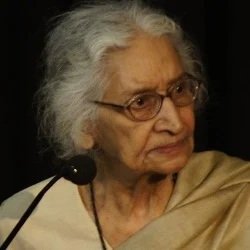
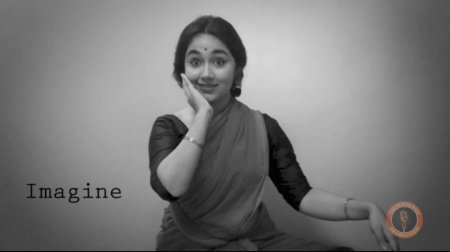
Dr. Kapila Vatsyayan, once called the Czarina of Indian Culture, was a legendary scholar on Indian culture. An administrator, institution builder, scholar, and dancer all packed in one. Her comprehension of the journey in understanding the seeds lying in the internal soils of India and Asia to the ephemeral fragrance was unmatched. My journey with her started at the age of 10 and a half when she was our neighbor in Satya Marg. We often shared time over dinners, shopping, and walks. She became my affiliated guide for my Ph.D. along with Dr. Narayani Gupta at the Jamia Milia Islamic. Here are some excerpts from my diary:


"How can you go to the fragrance of a flower? Well, you need to understand the soil in which the seed is nurtured, then the journey of the plant, and then the flower. But most times, the journey begins and ends with the fragrance, something that dissolves as soon as it is released."

Friday, 18 September 2020

Obit/Tribute - Tribute to Dr. Kapila Vatsyayan - V.P. Dhananjayan


The passing away of Dr. Kapila Vatsyayan creates a vacuum in the arts and cultural field of Bhaaratam. An erudite scholar and cultural activist par excellence she drew high reverence from all quarters of our society, for her steadfast nature and contributions she made to keep our cultural ethos flying aloft in the international arena.

Read more in the site

Wednesday, 16 September 2020

UPAJ - Improvisation in Kathak: Column by Janaki Patrik

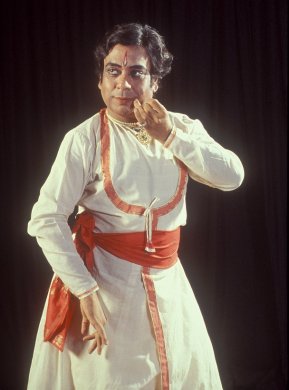
Classical north Indian Kathak dance has been my life's work. Having studied since 1967 during extended periods with India's pre-eminent Kathak dancer and guru Pt. Birju Maharaj, I have witnessed many of his solo performances, given many performances of my own and seen many performances by other Kathak artistes. Over the more than 50-year period of my life as a Kathak artiste, I've also had a chance to analyze the components of this great classical dance tradition.


Improvisation is one of those components which has fascinated me since I first saw Pt. Birju Maharaj perform in 1963 and was mesmerized. His performance did not appear to be composed. It appeared to be effortlessly improvised. When I decided in that moment to become a Kathak dancer, I wanted to learn everything, and especially improvisation.

Monday, 14 September 2020

Interview - Reading 'The Poetic Saree' - Rashika Ojha


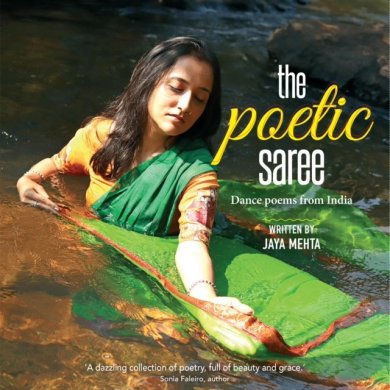
 While meditating, the mind takes a plunge inwards from the laughter of the outside to the silence of the inside. Treading this journey is like going through a catharsis of emotions but what happens when the inner self is constantly talking to you... then there is just dialogue. When Jaya Mehta talks with her inner self, she 'spills' over 'melody' of poetry and gives birth to a new idea or genre of poetry, 'Dance Poetry' as beautifully described by the renowned poet, playwright and philosopher Dr. H.S. Shivaprakash in praise of the book 'The Poetic Saree.'

Read more in the site


Sunday, 13 September 2020

Stree vesham and a stree without parallel - Taalam: column by Leela Venkataraman

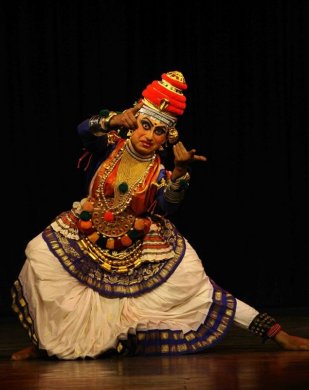
Exalted evening of Shakespearean classics inspired Kathakali stree vesham

The inspiration behind the elegantly organised Kathakali event by the Institute of Advanced Studies in Bangalore, was a book on Stree Vesham in Kathakali (Shubhi Publication) by exponent Prabal Gupta, dedicated to two famous people in the world of dance who changed his career - the most important being his Guru Sadanam P. V Balakrishnan, groomed under stalwarts like Kalluvazhi Ittirarissa Menon Asan, Pattikamtodi Ravunni Menon and the eminent teacher, innovator whom the guru regards as his role model for life namely, Keezhpadam Kumaran Nair Asan. The second person is Mohiniattam dancer/guru Bharati Shivaji who as Prabal's first dance mentor was instrumental in steering his aptitude for lasya oriented dance towards stree vesham in Kathakali for which she deemed he was a more suitable candidate.....
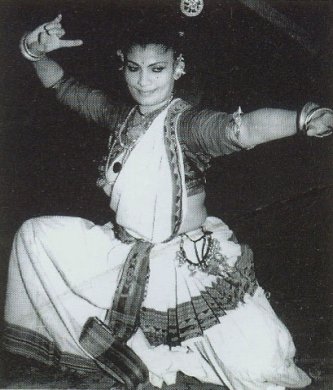


Remembering the dance legend Shanta Rao
A 'formidable lady' in more senses than one, Shanta Rao was one of those rare dancers, who will never have a second to equal her. And yet, but for the book Dances of the Golden Hall authored by Ashoke Chatterjee and a clutch of extraordinary photographs of her by Sunil Janah, images of this dancer, who lived in her own private world and whose magnetic almost masculine energy in dancing became a byword in the lasya immersed Mohiniattam world, would have been totally unknown. Great minds were arrested by the electric quality of her dance. 
Thursday, 10 September 2020

Article - The quest of a yearning heart - Sudha Sridhar

 The incredibly intriguing journey in the realm of art world keeps one on the edge of emotions ranging from that of the pleasant to the most painful while a mystical quest keeps guiding all through.


As a student in pursuit of learning the art form, the heart yearns for a Guru to take one through the rough and tough and reach the acme of the art world knowledge wise. This yearning gets transformed when the same heart reaches the stage of a teacher or Guru yearning for or crying out for transferring the knowledge to discerning students. It is in this context, that one can see how pivotal and paramount the role of the Guru in the art world is. It is akin to how a spiritual aspirant needs to be kept on course on the river of life - Samaskara Sagaram - under the watchful eyes and guidance of the Guru to reach the ultimate goal of life. Any diversion or distraction from the main goal makes the aspirant settle on the banks of the river under the influence of their samaskaras be it good or bad, both unequivocally altering the course of the journey.

Tuesday, 8 September 2020

A piece based on several questions about dance - Soch: Column by Dr. Arshiya Sethi

As the title suggests, this piece is about questions. Questions are important. Not because they get us the answers, but they get us understanding. The right question at the right time can enrich a learning experience, or embed it more permanently in memory. A question creates a needle-point of light which in a jiffy can grow into a glowing orb, even as it suggests darkness. It jabs and fingers at the mind, then burrows in like a drill. These little fragments of curiosity, that get at the marrow of important issues, resonate, throb, linger and finally open up vast spaces of understanding. The great Greek philosopher Socrates subscribed very strongly to the importance of questions in enhancing knowledge. These disciplined questions Socrates believed, would enable the examination of ideas, determine the validity of those ideas, and pursue the thought in many directions and for many purposes. The key to distinguishing Socratic questioning from questioning per se is that the former is systematic, disciplined, deep and usually focused on fundamental concepts, principles, theories, issues or problems.


Read more in the site