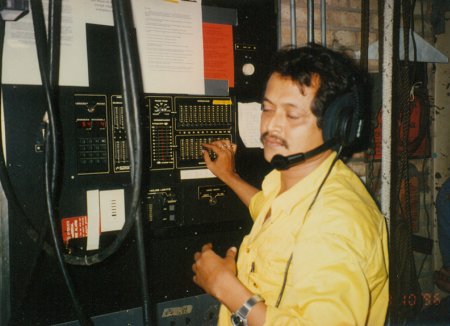
It is with deep sorrow that I share with you the news of the untimely demise of a friend, colleague, playwright, stage-light designer and master story teller Jaydev Das at his Cuttack home at 4am early morning on 27th March 2020. He was only 60 years old. Born on 20th April 1960, he was full of vitality and creative ideas till the very end.
Read more in the site
As we are almost all homebound by the need for social distancing and further curtailed by extreme social distancing, social media is buzzing with ideas on how to spend this time. Trevor Noah uses this time to do a version of his hugely popular Daily Show, which he calls "The Daily Social Distancing Show". Priyanka Chopa and Nick Jonas along with other Hollywood/Bollywood couples feed us with a stream of sweet videos of positive messages and pictures and details of how they are spending their time. The virus has been a great equaliser, for star and fans are often doing the same thing.Very popular on both sides of the celebrity divide are experiments in cooking. Some pair the cooking with experiments in drinking. Online Solitaire, Candy Crush, Sudoku and Contract Bridge on the laptop are flourishing. Some serious minded students and some older but eternal students are looking for online courses they could enrol in. Both celebrity and ordinary, if we are to believe Kriti Sanon, are cleaning up their rooms and cupboards!In the glut of options, a fresh idea came from the Union Minister for Women and Child Development, GOI, Smriti Irani. Ms. Irani is rather active on social media, and has an impressive list of followers. She invited all followers on her Twitter account to play 'Twitter Antakshari' with her, and urged them to tweet a line of a song that they like, to get the game going. By all accounts it is a great idea and a really happy way to keep both community and fun alive. But her effort went beyond that and became an effective medium for forwarding the anti Corona message.
Read more in the site
Looking across the board at the performing art treatises ascribed to the late first and early second millennia - such as Abhinaya Darpana by Nandikeswara, Dasarupaka by Dhananjaya, Manasollasa by Someswara, Brihaddesi by Matanga, Nrittaratnavali by Jayasenapati, in that order, among others -- some scholars believed that the Desi (regional) tradition differs from the Marga (classical) in two major ways. One, by putting its emphasis on the style of presentation rather on the context of the composition, and second, by concentrating on the use of more demonstrative, even acrobatic movements. This deems that Marga aspires to be spiritual, transformational or metaphysical experience, whereas Desi is aimed at entertaining. Single codification of dances has tapered down due to ruling kings and temples that dictated what was pure and could be sanctified. But 'regional' is not an antonym to the words 'pure' or 'path'. Desi signifies all aspects of art that are not intentionally created but are rather products of human evolution. It is mostly a naturally-evolved practice, both ritualistic and entertaining in nature. Adhering to this definition, Marga is a consciously created and learnt art. It is only in the later parts of 20th century that their connotations took another turn as 'folk' and 'classical'.
Read more in the site
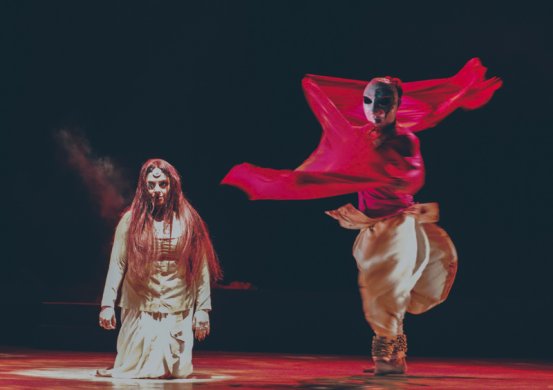
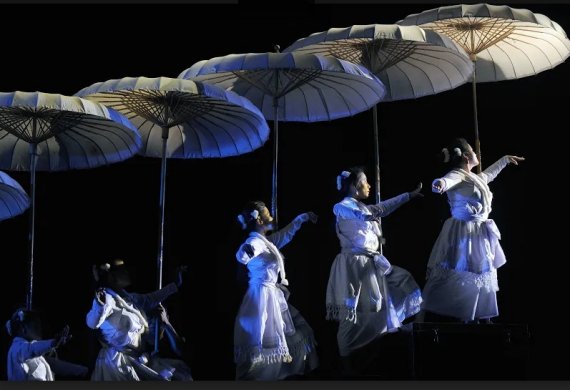
There is always a buzz about a new play by Ratan Thiyam, the celebrated writer, director, designer, musician, and actor. After he directed Shakespeare's Macbeth three years ago, the latest Lairembigee Eshei, Song of Nymphs in Manipuri, as a closing play at 21st Bharat Rang Mahotsav at Kamani Hall, Delhi, attracted a large crowd to witness the new play.The Chorus Repertory Theatre was established in April 1976 in the valley of the small hill state of Manipur in the easternmost part of India. Since then, Ratan and his company have never looked back, winning awards in international theatre festivals. Renowned for its disciplined performance practice, spectacular aural and visual aesthetics with potent thematic explorations, Ratan's work has placed him in the company of such figures as Suzuki, Brook and Grotowski. To strike a personal note, I have seen from close quarters his direction and training methodology. It has been a rare privilege.
Read more in the site
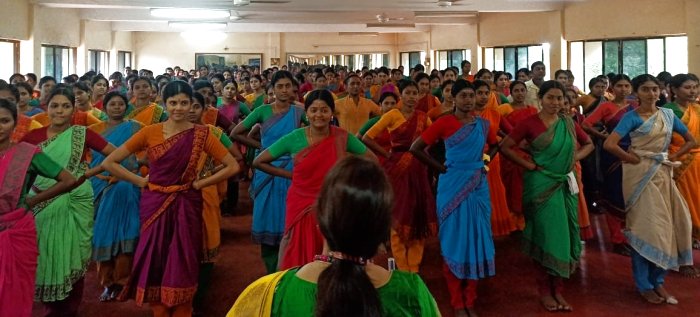
I had always wanted to visit Sri Lanka. This year, I was fortunate to be invited to Jaffna University to do a workshop and to perform at the Colombo Natyanjali Festival 2020. At the workshop, I was overjoyed to see so many young aspiring dancers. I was so touched because every student had thirst to learn the values of the arts. Several of these students have come out of the trauma of war. I was saddened by listening to many of their personal struggles, those who lost their homes, parents, relatives and friends. How they had struggled on a daily ration of one idli for sustenance and how they studied by the lamplight of a single wick was heart wrenching. Now, dance and the arts are helping them to overcome the agony of the past. When I was encouraged by the teachers to strike conversations with the students, they shed their reservations and many of them opened up and came forward to share their sad experiences. It seemed they saw in me a mother figure.
Read more in the site
It is the irony of life that laments and celebrations go together While a part of Delhi was experiencing tragic riots, 'Dilli Ki Sankriti' celebrating literature, Arts and ideas of Delhi was being held with both 'Dilliwallahs' and immigrants participating, on the greens of the IIC. 'Words in the Garden' saw Sohail Hashmi, S.Y. Quaraishi, Rajeev Sethi and Pavan K. Varma with Ashok Vajpeyi, curator of the three day event moderating, in an exchange of thoughts on the old Delhi of the 1920s and 30s when the city's composite culture, given its vibrant Muslim identity with Sufi culture, also reflected a harmonious blend of religions - demonstrated in Chandni Chowk's Gauri Mandir, Christ Church, Gurudwara, and Ghantaghar all standing cheek-by-jowl, without tensions.
Read more in the site
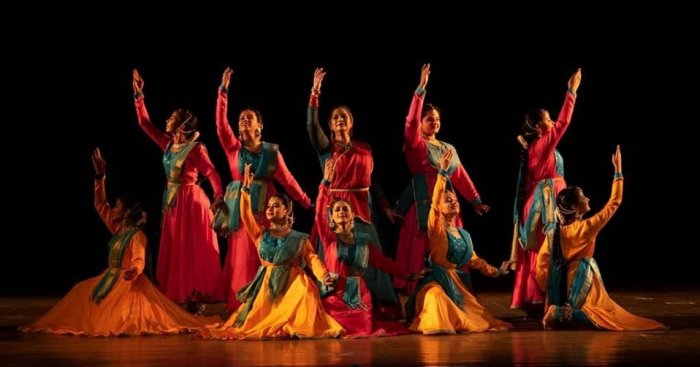
This essay looks from a 21st CE perspective, the principles of Kakshya Vibhajan as given by Bharata in the Natyashastra, while also trying to identify the principles which trickled into Kathak. The journey of both theatre and dance go hand in hand with the evolution and transformation of the stage - from Bharata's natyamandapam, to the Kathakaars dancing in the chaupal to the modern day auditoriums and stadiums. Through all of this an interesting element that is a unique feature of Kathak is the Gat Palta, which made its way into the Kathak intra-forms approximately 200 years ago, became mainstream during the mid 19th CE and is a versatile element in today's proscenium Kathak. Recently, Dr. Vibha Dadheech published her unique research on 'Gat Nikas' which documented the history, features and uses of the 'Gat Palta'. This essay looks at the 'Gat Palta' from the standpoint of Bharata's Kakshya Vibhajan.
Read more in the site