India’s greatest wealth, development and civilisation have been stirred by its political and cultural processes (Talbot, 2006). In turn, the political agendas have used
culture as a medium. In this paper, I will talk specifically about
Bharatanatyam and the political history that surrounds this dance form
during a certain period. Just as religious norms and practices were
varied in India, in spite of emerging a single codification, so also
dance, its practice and purpose remained varied notwithstanding the many
treatises that documented it. Hence, one could believe that the
codification evolved more as a documentation of the existing practices
rather than a rulebook. However, these treatises have over the centuries
brought about a semblance of a common code for Bharatanatyam. The
important question is; what defines Bharatanatyam as classical? Rather,
what is classical and by that definition which aspects of Bharatanatyam
lend it its classicism? Many a times the term classical is
interchangeably used with the word Margam. Margam means the “path” or a
newly created space, a certain vision. The other term used alongside
Marga is Desi, which means regional. But “regional” is not an antonym to
the word path. Desi signified all aspects of art that were not
intentionally created but rather were products of human evolution.
During the later parts of 20th and the 21st centuries these terms and
their connotations took another turn as “folk” and “classical.” Common
comprehension of the term folk is any form of dance that is performed by
the rural people, to music that is regional, reflecting the inherent
cultural practices of the people there. It mostly is a naturally evolved
practice, both ritualistic and entertaining in nature. Keeping this
definition, can we then say that classical is performed by people who
have consciously learnt an art form, performing to music that is more
cosmopolitan in nature, reflecting values that are popular among many
different cultural groups? Let us therefore pitch this idea of what is
classical and what is folk.
Read the article in the site
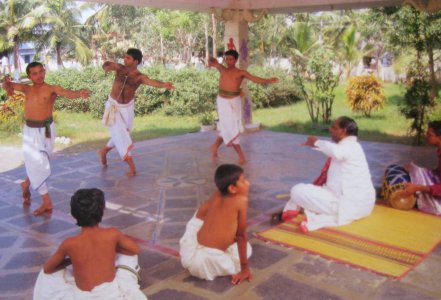
Margam is the codified formula of presentation that a Bharatanatyam
artiste follows to display her/his art. It is given to understand that
it is the ideal methodology which the practitioner of the dance form
ought to follow.
“Margam has been codified by the Tanjore Quartet in the 19th century”.
It had been immediately accepted by every dance guru of those times and
they have followed it ardently with full faith since then. People still
talk about it saying, margam is the right way a full Bharatanatyam
performance is to be presented. Kalyanasundaram, dance guru and
principal of Sri Rajarajeshwari Bharatanatya Kalamandir, strongly feels,
“Margam is here to stay. It is the most scientific format for imparting
‘systematic training’ with variety and gradual progression from the
simple to the complicated, both for the ‘performer’ and the ‘viewer’.
Read the article in the site
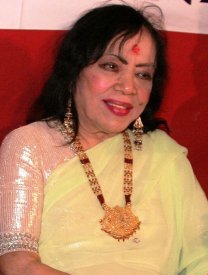
Nov 25, 2014, the TV news channels first gave the news - Sitara Devi no
more. It made national news because she was a firebrand, diehard dancer
with spunk and substance. She was larger than life and lived life
king-sized. Born Dhanno to a reputed tabla wizard and Sanskrit
scholar Pt. Sukhdev Maharaj and Matsya Devi, the three sisters Tara,
Sitara and Alaknanda (and two brothers Chaube and Pande) were a popular
trio, before individual fates took them to places as far as Benaras,
Bombay and Bengal. Although Sitara was born in Bengal (8th Nov 1920),
she lived most of her adult life in Bombay, with brief stay in Benaras.
Her sister Tara was the mother of Gopi Krishna, another famous film
dance personage.
Read the article in the site
The following is an excerpt of my keynote address:
At the outset, I decided to have an umbrella topic, which was TRADITION
AND INNOVATION IN CLASSICAL DANCE TODAY. I felt that this was a topic
worth discussing as Indian dance has today many teachers and many
performers all over the world and they have a voice which must be heard.
Innovation is inevitable and it is part of the creative process for
mature artists. What works and what does not has to go through the
process of development and approval. Authority to innovate is something
individuals have to know how to validate. A well informed and conscious
artist knows how to innovate without violating certain highly held
principles in classical dance.
Read the article in the site
This Andhra Pradesh village was originally known variously as
‘Kuchelapuram,' ‘Kuchelapuri' (one legend holds that Krishna's devotee
Kuchela lived here), ‘Kuchennapoodi' (after Kuchenna, a famous disciple
of Siddhendra Yogi) and ‘Kuchipundi.' It was populated by Bhagavathulu
and their families and the village has produced some of the greatest
classical dancers and teachers of the country.
The Kuchipudi Bhagavathamelam, the original repository, the progenitor
of the Kuchipudi dance of today, have been the acknowledged and
documented torch bearers of the art form for centuries while being
mainly confined to Kuchipudi Agraharam in Muvva Taluka, Krishna
district, a hallowed spot with renowned practitioners of the art calling
it a “pilgrimage centre” - the village akin to be a “wonderful temple”
and “cultural treasure.”
Read the article in the site
The religio-philosophic background of Bharatanatyam
Most Indian classical dances, particularly Bharatanatyam, have
religious and spiritual beginnings. They have been part of Hindu temple
rituals. They follow the Hindu philosophy in attitude. The Hindu
philosophy and their teachings are part and parcel of their themes of
presentation. Explanation for the phenomena of rasa-experience in Indian classical performing arts has been investigated in the systems of Hindu philosophy.
Spirituality in Bharatanatyam
The Vedas are the very first scriptures of Hindu philosophy and
religion. All human beings are the limited manifestation of the Ultimate
Being and reunion of the soul with the Absolute Soul should be the
goal. This is the truth offered in the Vedas. Inevitably, the Vedas
teach the ideal way to lead life to ensure our way back to the source.
“The goals of life which are accepted by all Hindus are righteousness or
obedience to the moral law (dharma), wealth or material welfare (artha), pleasure (kama), and emancipation (moksha). Dharma prevails throughout life, that is, neither pleasure nor wealth is to be obtained through violation of the rules of morality. Moksha is the ultimate goal to which all men should aspire. This social philosophy is accepted without question by all Hindus.”1These
ideals have, since ages, ruled not only our life, lifestyle and outlook
but also permeated through the arts; because this ideal way of life
“recognizes in every sphere of activity, the kinship of God and man”2.Thus,
the underlying idea of practice of Indian classical performing arts is
to transcend the 'self' towards a higher plane and achieve bliss through
spiritual expression.
Read the article in the site