Tuesday, 23 July 2013

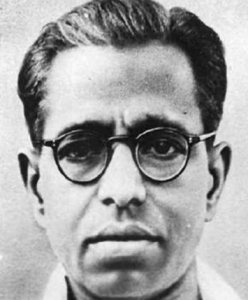
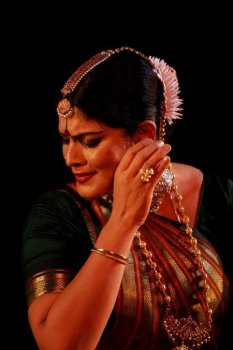
Roses & Thorns - The race for Facebook "Likes" is on! - Ahalya Narendran

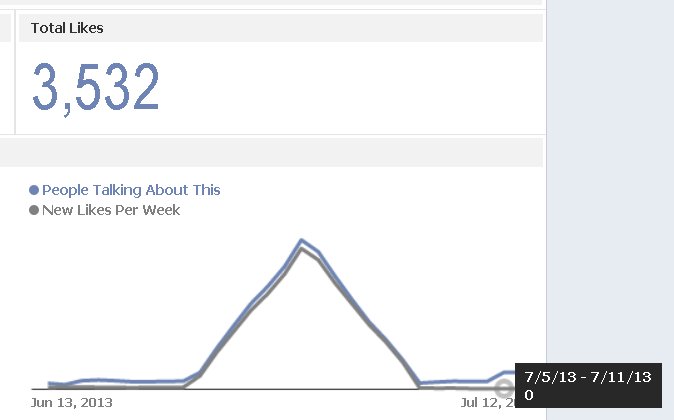
In addition to the standard list of status symbols that those obsessed with their social status today buy with money, such as newspaper reviews, TV appearances, dance awards and titles, and real estate on the Moon, there is a brand new item: Facebook likes. It seems, it is not just the US State Department who buy ‘Likes’ on Facebook , but some Bharatanatyam schools have gone on the likes buying spree as well. Just a couple of months ago, the page of a very young Bharatanatyam school had steadily grown over the years to list over 2000 likes, while the number of people who "liked" the page of the large Bharatanatyam school where she studied since the school was 10% of its present strength was nearly 8 times less and hardly growing. Apparently, the school's PR managers were unwilling to realise that not everybody out of the 300+ students in their school is a born dancer. Extraordinary talent and skill cannot be mass produced at dance factories. 

Read the article in the site

Monday, 15 July 2013

Poetry in Dance - Lakshmi Vishwanathan

Most of our dance repertoire is poetry in song. We seldom get to read them just for their poetic beauty .We read them only when we are researching new texts for dance. Language skills are needed for this exercise. Poems when set to suitable tunes should inspire lyrical dance.

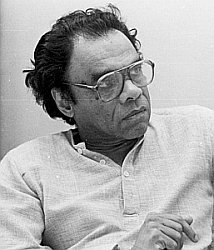
When I first encountered some lovely poems from ancient Tamil translated into poetic English I was excited enough to make Girish Karnad read some as I danced to the melodies of a sitar under a starlit sky in the Cholamandal artists village near Chennai. This was way back in 1976 and the book of translations was the famous Interior Landscape by A.K. Ramanujan. The last time I met him was in Hyderabad airport. A genial and unassuming man he told me, “I am coming out with something of particular interest to you. That book is When God is Customer.” I found his translations of many of my padams delightful and used them often to introduce my dance. Instead of the usual introductions, I just read out the poems and needless to say it was more than effective. Bhagirati, a theatre person and friend read some of them when I premiered an entire evening of padams titled HRDAYA VILAPAM. I think we enjoyed the evening as much as the audience.

Read the article in the site

Tuesday, 25 June 2013

Article - Questioning Contemporaneity - Veejay Sai

No other state has as many cultural festivals like Odisha does.  Music, dance, theatre, folklore, tribal, ritual and what have you! Other states in India should surely take a lesson or two in being more inclusive about art and culture when their budgets are made.
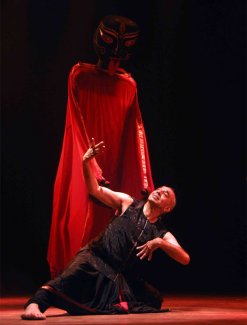
Contemporary dance has been grappling with its ‘Indianness’ over the last few decades. Having become an undeniable part of the performing arts world, it is comparable to the English language that has become an integral part of our day to day transactions. Whizzes have termed it everything from ‘Modern’, ‘Neo-classical’, ‘Progressive’ and whatever else. The fact remains, as a creative alternative medium of expression, Indian dance has found its contemporaneity through its individual practitioners, often not backed by any institutional endorsements. “Contemporary dance by Indian dancers is secure in a comfort zone of its own,” said Uttara Asha Coorlawala, a veteran in the field, at the brief lecture she delivered at Samakala.  Into its second year, the festival organized by the Odisha Sangeet Natak Akademi has already grown into full strength. This year, some of the biggest names from the world of Indian contemporary dance presented their performances in Bhubaneswar. 
Saturday, 22 June 2013

Interview - Sanjay Shantaram: To learn an art form is not a cake walk - Lalitha Venkat

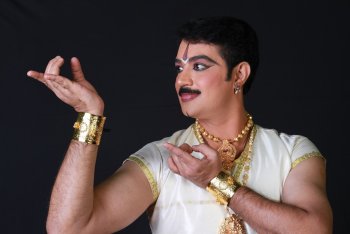
Bharatanatyam and Kuchipudi dancer / teacher Sanjay Shantaram, the director of Shivapriya School of Dance in Bangalore, is all set to celebrate 25 years of his dance school from June 25 – 27, 2013. He started to learn Bharatanatyam from age 7 under GS Rajalakshmi and later from guru Narmada. He learnt Kuchipudi from Sunanda Devi and Veena Murthy Vijay. A dentist, he has also acted in more than 60 films as a child artiste and about 20 popular soaps in Kannada and Telugu. Sanjay has to his credit, several charity programs given to bring cheer to the lesser privileged and old people. He shares his thoughts with www.narthaki.com on reaching this important milestone in his career.
How has your dance journey been in the course of these 25 years as a teacher? Did you ever think that it would last this long?
This journey of dance has been truly enriching, exciting and humbling. It has elevated me spiritually and made me realise nothing is impossible in this world if we try hard. As a teacher, I learnt to correct so many of my mistakes by correcting the students that in turn has shaped me into a more serious and responsible dancer and teacher. I have been made to realize that I need to be constantly fit and an ideal role model to kids who look up to me and that has helped me work towards my practice and wellbeing. Yes, financial stability and name are bonuses. I never planned when I started so I never gave attention to how long this would go. But this is what I always wanted to do after my dental course and have never regretted ever since.


Read the interview in the site

Tuesday, 18 June 2013

2nd edition of Samakala Festival - Dr Sunil Kothari

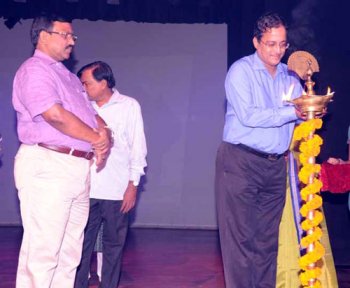
On 11th June 2013 the second edition of Samakala Festival was flagged off at Rabindra Mandap, Bhubaneswar, under the aegis of Odisha Tourism, and Odisha Sangeet Natak Akademi, Department of Culture, Govt. of Odisha. After receiving enthusiastic response from diverse audience last year, this year the organizers planned the festival inviting the leading lights of contemporary dance for three evenings, presenting two artistes each evening.
 

The very fact that the organizers and in particular, the initiative taken by the Principal Secretary,  Odisha Tourism, Mr. A.K. Tripathy, the dance, music and folk dance festivals including regional music of Western Odisha, Sankirtan Festival, Chhau dances, Gotipua dancers and the classical dance festivals, International Odissi Dance Festival,  Sand festival etc., Odisha  has become within a span of three years ‘a land of festivals.’ Odisha has won excellent awards for Tourism, and the dance festivals have indeed drawn tourists not only from abroad but also from within India. Not only that, a series of publications on arts of Odisha, with excellent photographs, eye catching lay-out, minute details to the printing, graphics and production have been brought out and have become collector’s items. The passion behind all these speaks volumes for Mr. A.K. Tripathy.
 

It is indeed very heartening to see that Contemporary dance has found a place in this series of festivals. Since East West Dance Encounter, which took place in January 1984 in Mumbai under the vision, guidance and sponsorship of Georg Lechner, the director of Max Mueller Bhavan, along with the National Centre for the Performing Arts (NCPA) and various other cultural agencies, within a span of thirty years Contemporary dance as a specific genre has come into its own. It would be also pertinent to mention that The Other Festival started by Anita Ratnam along with Ranvir Shah in Chennai also played a historical role, promoting Contemporary dance. 

Read the review in the site

Friday, 14 June 2013

Seen & Heard by Lakshmi Vishwanathan - Vimarshana

The Sanskrit word Vimarshana can be loosely translated to mean "review." In ancient India, formal performances were evaluated on the spot by experts, both in royal courts and other venues.  Even the great Vaggeyakara Kshetragna was challenged in the Nayak court! Good work was lauded and rewarded instantly. Some say bad work attracted punishment!

Read the article in the site

Thursday, 13 June 2013

Ashta Darshana: A confluence of music and dance - Dr. Sunil Kothari

Sudha rendered Arunachala Kavirayar’s composition “Yaro Ivar Yaro” in Bhairavi dwelling upon Rama’s first glimpse of Sita in Mithila. The varying moods revolved round sringara.


From the Gita Govinda, the ashtapadi “Sakhi he keshi mathanamudaram” enacted by Geeta to depict sringara succeeded in terms of expressing Radha’s bashfulness and Krishna’s bold cajoling and saying sweet nothings to Radha, untying her garments for union - it had the intensity and dignity, highlighting the lyrics sung melodiously by Sudha. Turning her back to the audience, as Radha, Geeta suggestively displayed the lajja, bashfulness of Radha and turning in front sitting in a majestic stance as Krishna embracing her, she created exquisite images of  Radha and Krishna in love play.

Read the review in the site