Sunday, 1 March 2026

Anita says...March 2026

February has been a very special month for me personally. A trip of a lifetime with my favourite sibling, the mountains and rivers singing into my ears every night, fresh food being harvested before my eyes by the gentle and spiritual Andean people, the contrasting energies of the larger than life spectacle of the Rio Carnival - dancing in the streets and foot tapping rhythms around every corner. What better way to disengage and recharge than to travel. To savour the lives and rhythms of people far away from my homeland and yet connected through the elements of the sun, moon, water and wind. To re-enter my own inner world by observing the habits and customs of another culture half a world away. To return feeling chastened by the common threads and eternally grateful for the magnificent planet we inhabit.

AND

To not wear any make up, Kajal, lipstick or worry about my hair for weeks. Just moisturiser, sun screen, a hat and a big smile! Only a dancer will know what a joy that is!

So this month, I will not talk about dance in the expected ways. Instead, I will share my thoughts of my recent travel and experiences that were full of colour, movement and energy. To put out there the ideas of rest, recharge, reboot, review, renew and revisit our lives and art. 

Read more in the site

Please type your name along with your comment. Anonymous and derogatory comments are likely to be removed.
Wednesday, 25 February 2026

Article - The future of the Sabha lies in differentiation - Rohit Viswanath

Why artistes must rediscover their svadharma and build their own assemblies.

ach December, as the Margazhi season gathers force across Chennai, an old argument returns with predictable intensity: should dancers pay to perform? For some, the very notion undermines the dignity of art. For others, it is a practical exchange: a fee for infrastructure, visibility, and documentation in an increasingly crowded field.

The debate often hardens into a moral binary. Either one defends artistic purity, or one capitulates to commodification. Yet this framing obscures a deeper structural issue. The real crisis is not 'pay to perform.' It is that we no longer have clarity about what a Sabha is, nor about what it is meant to do.

The Sabha as Assembly, not Rental
Historically, the Chennai Sabha was more than a performance venue. It was an assembly; a gathering shaped by shared aesthetic literacy, discernment, and accountability. A performance under a respected banner signaled not merely stage access but entry into a cultural conversation.

Read more in the site

Please type your name along with your comment. Anonymous and derogatory comments are likely to be removed.

Tuesday, 24 February 2026

Dhauli-Kalinga - Where man of war converted to messenger of peace - Taalam: column by Leela Venkataraman

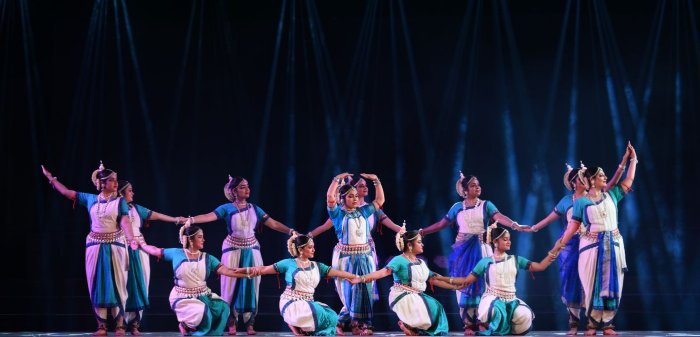
Envisioned by late Odissi Guru Gangadhar Pradhan over a couple of decades ago, and mounted by his institution Orissa Dance Academy, at Shanti Vihar, the foothills of Dhauli, the Dhauli-Kalinga Mahotsav, now held under the auspices of the Department of Odia Language, Literature and Culture, government of Odisha, is one of its kind - combining in its fare, dance of various genres along with martial art forms. A very fitting twosome one would think, to be presented on the historic grounds where the epoch making Kalinga war was fought, with river Daya flowing in the region earning the sobriquet of Nirdaya, its waters running red with the blood of fallen heroes! Overnight, the scale of slaughter turned Emperor Ashoka, the conqueror in innumerable wars, into a messenger of peace. And even now, when dignitaries during the lamp lighting ceremony for the festival at the foot of the hill, stand with backs to the audience, facing the Peace Pagoda on top on the right, flanked by the Shiva temple on the left side, holding aloft burning torches in a solemn oath-taking gesture, saluting peace, it is a moving moment, for in the strife ridden world, peace is a pre-eminent need.

Read more in the site

Please type your name along with your comment. Anonymous and derogatory comments are likely to be removed.
Friday, 20 February 2026

Article - The Myth of the Either/Or - Dr. Lata Surendra

A committed dancer does not choose between the stage and the hearth because for her life is not a dichotomy, but a deliberate choreography. To say she must pick is to ask her to breathe only on the inhale; instead, she understands that art is the soul's inhalation, and life - with its messy, beautiful, quotidian demands - is the exhale. Her feet are rooted in the earth, anchoring her to the mundane, while her arms reach toward the ethereal, crafting stories in the air. She is not a creature of either/or; she is the living embodiment of both. Each pirouette is fed by the lessons of the day; each quiet moment with family lends depth to her performance. She is not fragmented; she is unified in motion, finding in the tension between duty and desire not a struggle, but a rhythm. Her art and her life do not compete; they dance together.

Read more in the site

Please type your name along with your comment. Anonymous and derogatory comments are likely to be removed.
Thursday, 19 February 2026

Prism - The spectacle and the spectator - Sree Veena Mani

Walking down a street, you may suddenly find yourself watching an argument or confrontation unfold - an everyday occurrence. In such moments, we often remark that those involved are "creating a spectacle." This idea of spectacle lies at the heart of how Indian drama has been understood. In his commentary on the Nāṭyaśāstra, Manmohan Ghosh explains that Indian drama is conceived as prekṣā - a spectacle to be seen - while the audience is the prekṣaka, the spectator who beholds and interprets the performance.

Spectators were never called Srota or the audience, Ghosh's interpretation of the Nāṭyaśāstra says. 

Read more in the site

Please type your name along with your comment. Anonymous and derogatory comments are likely to be removed.
Tuesday, 17 February 2026

Points to reflect on during the Chennai Season - Taalam: column by Leela Venkataraman

In the cornucopia of dance and music that Chennai offers during the Season, some events went without reportage. I would like to briefly refer to certain aspects of the teacher/taught relationship in dance, as also some of the recitals which could not find mention in my writing, thanks to the crowded calendar.


Dancer Malavika Sarukkai’s Kalavaahini Trust, in its annual festival Dance for Dance, organized in conjunction with Karthik Fine Arts at the Bharatiya Vidya Bhavan auditorium, is a laudable effort at educating and promoting promising youngsters, who get featured in a special festival. Amidst the indifference and chalta hai attitude that artistes often have to contend with, what one finds particularly praiseworthy in the Dance for Dance event, is the sensitivity of the organizers, with extra special treatment meted out to the performers, making them feel valued and giving them a sense of self pride as dancers.

What has however, raised a few questions among practitioners is the mentoring aspect, which is gaining ground among Bharatanatyam practicing youngsters of the day. Quite against the whispering gallery of comments, one would like to discuss this aspect with rank openness.

Read more in the site

Please type your name along with your comment. Anonymous and derogatory comments are likely to be removed.
Monday, 9 February 2026

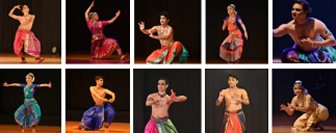
Rama: The gold standard - Dance Matters: Column by Ashish Mohan Khokar


Rama is her name and dance is no game to her - but her calling. A Kerala girl, who had the distinction of becoming the first student of Andhra queen of Kuchipudi, Odissi and Bharatanatyam - guess who? The one and only prima donna of Indian dance Yamini Krishnamurthy- has grown today to become a benchmark of Bharatanatyam not only in her base Delhi but all over India in her age group (50-60). More than a benchmark, actually, the gold standard...

Her soothing offering to rasikas and common person was seen and savoured in Bangalore at HCL Concerts, Chowdaiah Hall, on Republic Day. That's one day when Bangalore roads were usable because there was less traffic!

With just four students and four musicians she created a magnum opus of beauty, sensitivity and substance - Maalyada - An ode to Andal 

Read more in the site

Please type your name along with your comment. Anonymous and derogatory comments are likely to be removed.
Saturday, 7 February 2026

Thursday, 5 February 2026

Article - The delicate balance: Notes from the in-between generation - Shreya Kumar Gopal Rao

Somedays, my life feels like a study in contrast. I wake up, surrounded by deadlines, ambitions, and dreams that stretch into the future. In the evening, I share the last bit of golden sunlight with intensive rhythms, twinkling gejje bells, and the resonant sound of the nattuvangam.


At 16, I’m rooted between two worlds, one full of speed, innovation, and palpable results, whereas the other is still, deep, and complete, like the slow crest of a wave. And yet, rather than clashing, these two worlds have begun to merge, shaping who I am becoming. Somewhere in their meeting, I discovered a delicate balance.

Read more in the site

Please type your name along with your comment. Anonymous and derogatory comments are likely to be removed.
Monday, 2 February 2026

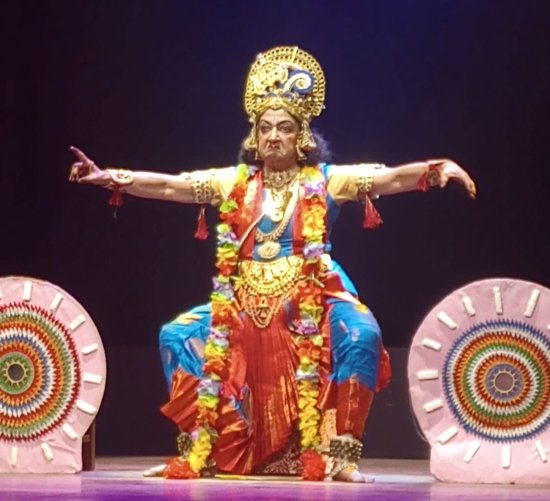
Article - Dancing a holographic consciousness - Dr. Lata Surendra

'Highlighting the deep interconnectedness between the individual and the Universe'

My journey as a performer through six and a half decades is a personal exploration of a lifelong dance path, referencing the idea of a "holographic consciousness" as a way to describe the multifaceted, interconnected, and enduring nature of my identity and experience, which is deeply interwoven with the art form of Bharatanatyam. It involves my evolving with the dance form, a legacy from ancient times, and highlights how this journey has me connect me to my inner self, cultural heritage, and the broader human experience, even in this digital age. A six-decade journey implies mastery, adaptation, and a long-term engagement with the art, perhaps witnessing its changes and incorporating new influences, while yet remaining true to its roots. With the dance becoming an integral part of my inner core and outward expression, I awakened to evolving life inspiring the Art and Art contributing to Life and awakened to my integrated and interconnected 'sense of self', where me - the dancer, the art form, and the spiritual and cultural heritage of my country became parts of a unified whole, much like a hologram that captures a 3D image from a single point. The dance transformed as a journey of consciousness, where I sought to find myself through movement and expression to experience that in being all that I reached out with I was not distinct from life but life itself.

Read more in the site

Please type your name along with your comment. Anonymous and derogatory comments are likely to be removed.
Sunday, 1 February 2026

Anita says...February 2026

 We are living in surreal times. It feels like the world is at the brink. That powers beyond our control are manipulating us like puppets - moving our limbs, controlling our thoughts in a sinister manner. That the vortex of chaos is any city far away from us, but very close - almost around us.

The new world architecture of power and positioning may not be what we in the dance and music world necessarily pay attention to. But it is happening. It is no more about performing at venues outside our geography. It is the weight of our reputations in the domestic market that will determine our brand value in the times ahead.

Several cultural organisations have put out messages that signal a pause. My eagerly awaited monthly mythology newsletter from the Joseph Campbell Institute came with the opening lines, "We are pausing our regular communications out of respect for the intensity of the moment we are collectively living through. At times of heightened emotion and uncertainty, we believe it is important to create space for reflection." This came from the USA, but the enormity of the geo political moment is not lost on anyone.


Read more in the site

Please type your name along with your comment. Anonymous and derogatory comments are likely to be removed.
Tuesday, 27 January 2026

Profile - Padmarani Rasiah Cantú - Anita Vallabh


Padmarani Rasiah Cantú is a distinguished Bharatanatyam dancer, choreographer, and teacher whose life and work reflect a rare confluence of artistic excellence, spiritual inquiry, and sustained pedagogy. Rooted in a lineage of cultural service and guided by eminent gurus, her decades-long journey has shaped generations of dancers across Sri Lanka and the United States. What follows is a portrait of an artiste whose commitment to the unity of art, devotion, and education continues to inspire across borders.

Read more in the site

Please type your name along with your comment. Anonymous and derogatory comments are likely to be removed.
Bharat Ratna! - Dance Matters: Column by Ashish Mohan Khokar


On the eve of Republic Day, the much coveted Padma Awards are announced. Artistes wait with bated breath to get the news. Some know much in advance, by aakash vani. Buzz in the air. In India, nothing can remain hidden! Bharat Ratna is rarely given to dancers, not one has received till date.

On the eve of Republic Day 2026, those who missed Dr. Padma Subrahmanyam's solo act on Bhagavad Gita - done for Drishti's 21st Dance Festival in Bangalore - missed out on one of the last greats of classical dance, in an all-time high performance that was punctuated by economy of movements, minimal need to impress and a talent so vast that no words are enough. Dr. Padma Subrahmanyam is not a human, she is an ocean of art.

Read more in the site

Please type your name along with your comment. Anonymous and derogatory comments are likely to be removed.
Monday, 26 January 2026

Music Academy's annual dance deluge - Taalam: column by Leela Venkataraman


The words of Duke Orsino in Shakespeare's twelfth Night, '...Music and more of it, so that the appetite may sicken and so die' substituted by the word Dance, would well express Music Academy's 19th Dance Festival! How else does one describe thirty-two performances in seven days? Taking in sixteen of them with a colleague taking in the other half, was enough to leave one bleary eyed. 

It was a good way to start with a group expression, Karuna Kavya conceived and choreographed by Urmila Sathyanarayanan, the latest dancer to merit Music Academy's Nritya Kalanidhi award. Presented by students of her institution Natya Sankalpa started in 1996, Karuna Kavya turned out to be a slick production based, very imaginatively, on legends behind poetic masterpieces of devotional literature, composed in myriad ways-- through visions, divine interventions, miracles and what have you - beyond the pale of man's daily existence. 

Read more in the site

Please type your name along with your comment. Anonymous and derogatory comments are likely to be removed.
Wednesday, 21 January 2026

Mind boggling excellence all the way in the 43rd Natya Kala Conference - Taalam: column by Leela Venkataraman

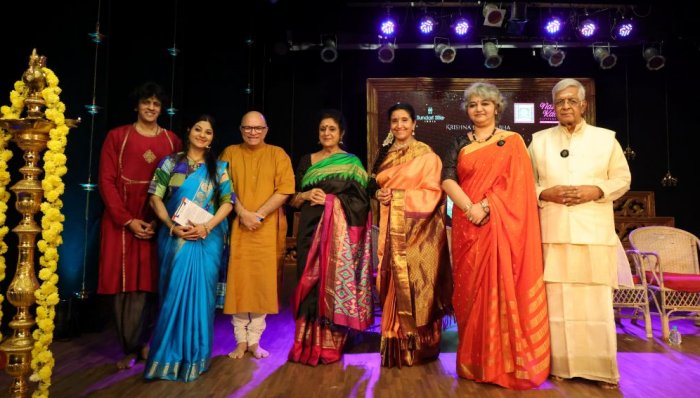
Conceived and curated by the Kathak and Bharatanrithyam couple Nirupama and Rajendra, Chennai's Krishna Gana Sabha's forty third consecutive annual Natya Kala Conference titled Navonmesha (quest for creative excellence), was an eloquent testimony to sheer excellence in every aspect of planning. Textured and insightful in the programming and selection of participants, alongside uncluttered eloquence and neatness in execution of every event (with Aalap helping), the three-day event was a feather in the cap of the organizers. The opening saw the curators refer to how this year's conference, with its searchlight on present day creativity, viewed from the long road of India's ancient wisdom, mentioned in texts like the Natya Sastra to the contemporary times of Artificial intelligence, was looking for, and putting the searchlight on, Artistic intelligence. 

Read more in the site

Please type your name along with your comment. Anonymous and derogatory comments are likely to be removed.
Sunday, 18 January 2026

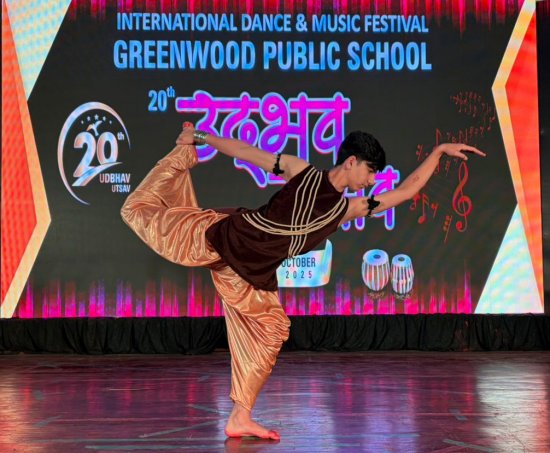
Profile - Sathya at 60: What endurance looks like in dance - Anurag Chauhan


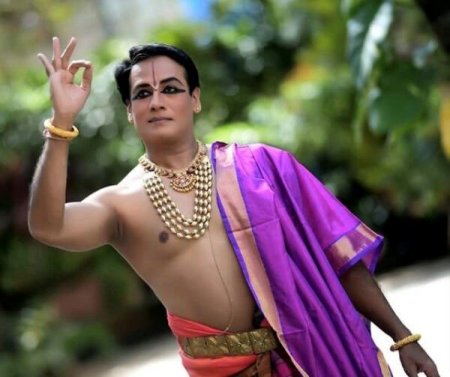
There are dancers whose journeys are marked by applause and immediacy, and there are others whose lives unfold like a raga at dawn, slowly, deliberately, revealing their beauty only to those willing to listen. Sathyanarayana Raju belongs to the latter tradition. His life in Bharatanatyam has never been about arrival. It has been about staying. Staying with the form through doubt and discipline, through neglect and renewal, through years when the art asked more of him than it gave back.

As he turns sixty, Sathya stands not as a figure of nostalgia but as a living presence in Indian classical dance, one whose relevance has been earned through continuity rather than reinvention. His journey invites reflection on what it truly means to choose Bharatanatyam as a way of life, especially when that choice runs counter to expectation. 

Read more in the site

Please type your name along with your comment. Anonymous and derogatory comments are likely to be removed.
Thursday, 15 January 2026

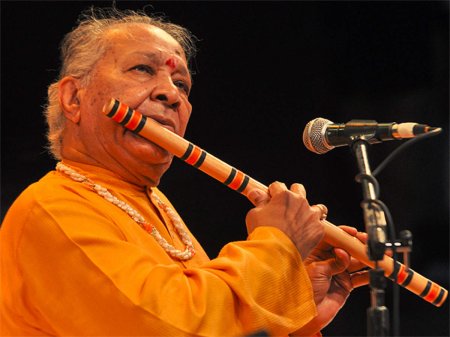
Interview - Dr. Arshiya Sethi on SADI - Shveta Arora


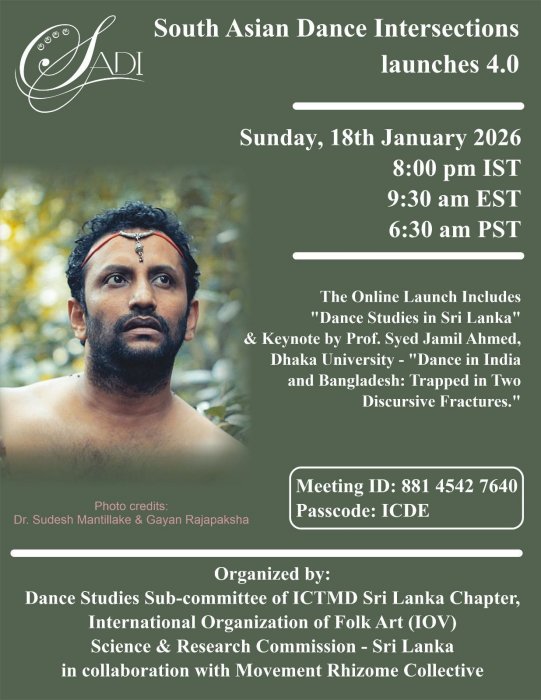
A novel might be just a story till literary analysis refracts it to reveal its influences, context and interpretative potential. Similarly, scholarship in dance can turn its beautiful practice from an aesthetic discipline into an exploration of our world - its geography, history, culture and even its politics. Hence, even though it is not required, it might be beneficial for practitioners to write about their discipline academically, to plan analyses, research their perspectives and use rigorous academic requirements to develop the habit of scholarship.

SADI (South Asian Dance Intersections) is a double-blind peer-reviewed journal housed at the University of North Carolina in Charlotte, USA, that provides a space for recognized academic writing on dance by anyone in South Asia, in any South Asian language. Its acronym is also a Punjabi word that means 'ours'. Its editorial board, which also includes its founders, consists of Dr. Rohini Acharya, Oberlin College, Ohio; Dr. Anurima Banerji, University of California, Los Angeles; Dr. Pallabi Chakravorty, Swarthmore College; Dr. Ananya Chatterjea, University of Minnesota; Sheema Kirmani, independent activist-scholar from Pakistan; Lubna Marium, A Center for Advancement of South Asian Culture; Dr. Sarah Morelli, University of Denver; Dr. Rumya Putcha, University of Georgia; Dr. Urmimala Sarkar, Jawaharlal Nehru University; Dr. Kaustavi Sarkar, University of North Carolina at Charlotte; Dr. Yashoda Thakore, guest faculty, Dance University of Silicon Andhra, California; Dr. Aishika Chakraborty, director, Women's Studies, Jadavpur University. 

Read more in the site

Please type your name along with your comment. Anonymous and derogatory comments are likely to be removed.
Article - Democracy as Natya: Toward civilisational renewal - Rohit Viswanath

Democracy today is outwardly ritualised, yet inwardly hollow.

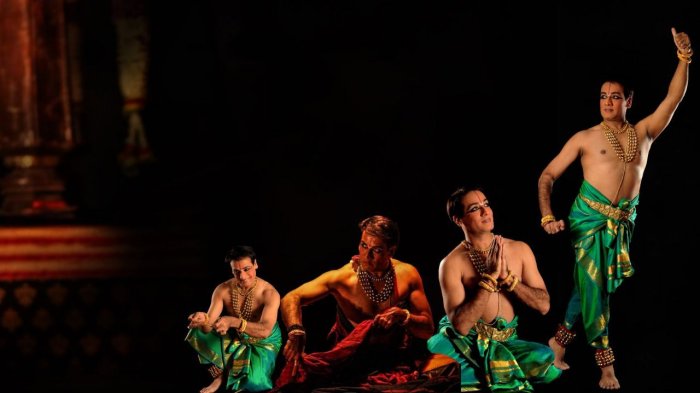
When seen only as procedure, Democracy risks becoming a Nāṭya without rasa. Yet Bharata's Nāṭyaśāstra reminds us that Nāṭya is not mere spectacle but a mirror of life, a fifth Veda meant to harmonise society through Dharma and aesthetic experience.

If politics is reframed as poetry, and governance as dramaturgy, then citizenship itself becomes a sādhanā: a disciplined participation in the cosmic drama.

In this vision, the sabhā of world affairs is not a battleground of interests, but a stage where harmony, wisdom, and responsibility are enacted as Dhārmic roles. 

Read more in the site

Please type your name along with your comment. Anonymous and derogatory comments are likely to be removed.
Monday, 12 January 2026

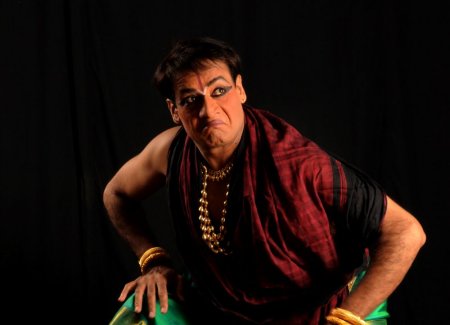
Interview - Ashwini Kalsekar: Kathak beyond borders - Vijay Shankar


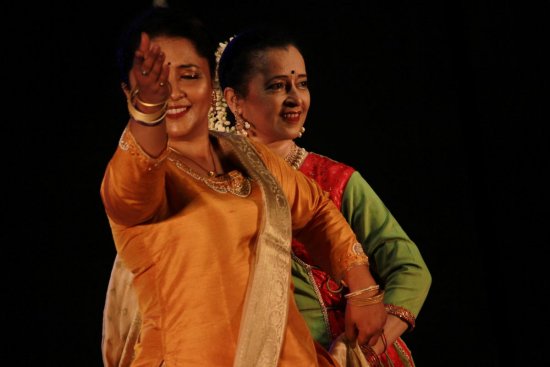
London based Ashwini Kalsekar, the Artistic Director of KKMUKCIC, is a professional Kathak exponent, teacher and choreographer for over two decades. She learnt under her mother, Guru Rekha Nadgauda, for 17 years that instilled foundational knowledge and a profound love for the art. She continued further training with Guru Shama Bhate in Pune for her MA.


Ashwini Kalsekar shares her thoughts with Narthaki.com

You have been teaching Kathak in London for over two decades. Have you noticed any changes in students and parents over the years?
I have always felt extremely fortunate to be surrounded by students and parents who are supportive and trusting. They have believed in my approach to teaching, my understanding of the form, and in me as an individual. While times have certainly evolved, Kathak continues to attract those who value authenticity and purity. My association has largely been with people who seek depth and sincerity, and that has remained a constant throughout my journey.

Read more in the site

Please type your name along with your comment. Anonymous and derogatory comments are likely to be removed.
Saturday, 10 January 2026

Article - Finding Shiva: A process of rebuilding my own truth - Arnav Ajana


The stone amphitheatre in Old Nessebar keeps the day’s heat like a held note. The sea sits behind the stage as a dark, patient backdrop, and the audience arrives in layers: faces, silhouettes, then the soft static of anticipation. I step into the light with the kind of caution that is really concentration. My feet test the surface, my ribs find the first inhale, and then the body begins its argument with gravity. The turn that follows is not upright. It is angled, airborne for a breath, and it lands slightly before I feel ready.

From my experiences representing India in the International Children's Dance and Music Festival and performing with an ensemble in Bulgaria, the medal mattered far less than the question that brought me there: how does a hip hop body learn an Indian vocabulary without turning it into a costume?

Taking my learnings from Bulgaria with me after the XXIII International Children’s Festival “Sun, Joy, Beauty” in Nessebar (14–19 June 2025), where we won first prize in the International Folk Dance category, I set out with my choreographer to create a new solo piece called ‘Finding Shiva’. 

Read more in the site

Please type your name along with your comment. Anonymous and derogatory comments are likely to be removed.

Tuesday, 6 January 2026

When the Bansuri finds its voice: Bansuri Jab Gaane Lage as a living tribute to Pandit Hariprasad Chaurasia - Ratikant Mohapatra calling


On the evening of 20 December 2025, Rabindra Mandap, Bhubaneswar, was transformed into a space of collective remembrance, reflection, and deep emotional resonance. The stage musical Bansuri Jab Gaane Lage unfolded not merely as a biographical narrative, but as a profoundly human and artistic experience that touched the audience at multiple levels. By the time the final moments arrived, the silence in the hall - heavy with emotion - stood as testimony to the power of this production. What the audience witnessed was the life of Pt Hariprasad Chaurasia rendered with sincerity, restraint, and aesthetic intelligence, allowing his journey to breathe organically through music, memory, and theatre. 

Read more in the site

Please type your name along with your comment. Anonymous and derogatory comments are likely to be removed.

Monday, 5 January 2026

Profile - Sathyanarayana Raju: A life in dance - V.V. Ramani


He wanted to celebrate the milestone moment, his sixtieth birthday with what he loved the most in his life - Dance. He felt that this opportunity had to be utilized meaningfully by way of an offering to the lord of dance Nataraja, who had bestowed and blessed him with the art. Sathyanarayana Raju embarked on a marathon effort to dance the Ashtaragamalika varnam composed by Tanjore Quartette sixty times before his birthday. The very next day after this thought surfaced, he got an invitation from Guru M R Krishnamoorthy of Kalakshiti to perform for his organization. Sathya began the first in the series there and subsequently more and more opportunities came his way, and on 6th January 2026 he completes the sixtieth performance of his Anjali. "It is the grace of the lord that I have been able to complete my offering," says Sathya.

Read more in the site

Please type your name along with your comment. Anonymous and derogatory comments are likely to be removed.

Interview - Dr.Sathyanarayana Raju: From AgriCulture to Culture, Paddy fields to the Proscenium - Srivatsa Shandilya


From the quiet rhythm of paddy fields to the disciplined geometry of the proscenium, Dr. Sathyanarayana Raju's journey is one of transformation shaped by perseverance, devotion, and grace. Rooted in an agricultural upbringing and guided by an unwavering inner calling, his life in Bharatanatyam spans four decades - cultivated with the same patience, discipline, and integrity that once defined the soil he grew up on.


Celebrating 43 years of Bharatanatyam through the Navarasa
Dance captivated me from a very young age, even though I grew up in an agricultural family where art was not part of daily life. Ours was a world shaped by farming, discipline, and physical rigour - my father himself was a kushti pattu wrestler.

Read more in the site

Please type your name along with your comment. Anonymous and derogatory comments are likely to be removed.

Saturday, 3 January 2026

Obit / Tribute - Guru Prabha Marathe (1936-2025) - Ashish Mohan Khokar


Kathak Guru PRABHA MARATHE passed away on December 31, 2025 aged 89. She was the ace disciple of guru Birju Maharaj and first lot in Delhi at Kathak Kendra in the 1960s. She also created Pune's biggest (in land size) dance school - Kala Chhaya in 1965 - where many artistes got platformed in music and dance like Bhimsen Joshi, Amjad Ali Khan and others. She engaged Guru Munnalal Shukla to teach Lucknow gharana for years. She gave space to workshops by Prerna Shrimali and all other gharanas. The space had amphitheatre, exhibition galleries and more. Her niece Rashmi Jangam rook charge in the last decade to run it. Prabha Marathe is credited with popularising and documenting the techniques of Kathak She will be remembered by the art fraternity of Pune as a pioneer and patron. 

Read more in the site

Please type your name along with your comment. Anonymous and derogatory comments are likely to be removed.

Thursday, 1 January 2026

Anita says...January 2026

 And just like that! It is 2026!


The Chinese year of the Horse. The sacred month of Margazhi or Margasirsha. The time of holidays, family gatherings, dance meetings and of transition when we watch another 12 months that has flashed past us and a brand new dozen appears, filled with the promise of an improved year ahead.

2025 has been a year of great fluctuations. Many of us in the performing arts have faced major life shuffles, dislocations, health challenges and many ruptures. But the year has also been important for personal development, career shifts and lifestyle readjustments. Global and geo political realities have impacted the arts and have reduced the flow of people and ideas. The rise and rise of digital technology has caught many of us by surprise and is presently overwhelming us with its astonishing complexity and sophistication.

And yet, here I am. Writing this monthly column, now in its 16th year. That means that this is the 190th monthly edition that I am sharing with you. It has been and continues to be a privilege to express my views and opinions as another generation of dance emerges to claim space and attention for Indian dance. Whether Gen Z and the Millennials read my thoughts or not, these will remain as a document of observations and reflections of a dance passionista!

Read more in the site

Please type your name along with your comment. Anonymous and derogatory comments are likely to be removed.