Saturday, 25 October 2025

Article - Dancing through distress: How classical dance becomes a language of healing - Bipasa Sen

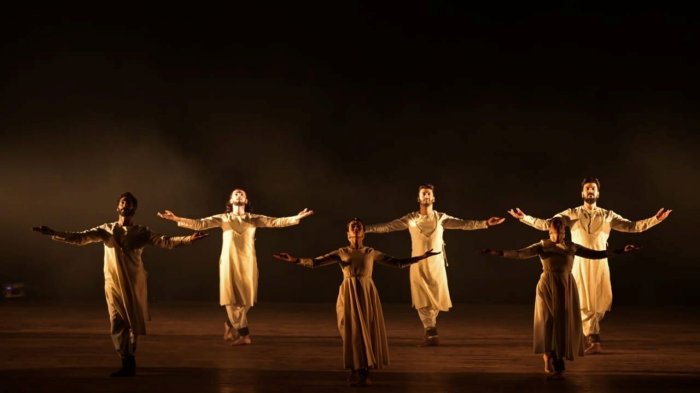
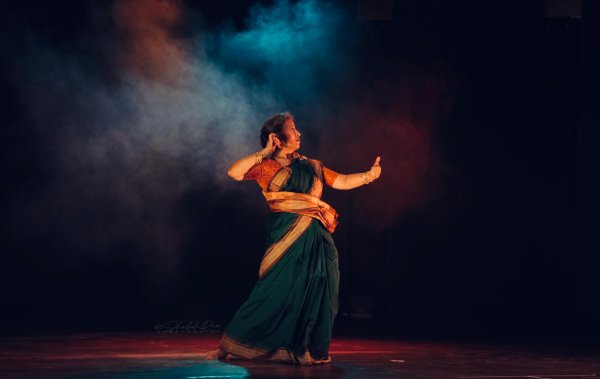
There is a point in every dancer's journey, when the stage is no longer just a place to perform - it becomes a place of letting go, of silent healing. Indian classical dance has been, for a long time, more than just an art form - it has been a holy communication between body, mind, and feeling. In times of emotional distress, this communication becomes a deeply moving, non-verbal language of strength.

The body as an emotional landscape

Dancing is basically to live the body thoroughly - to allow it to say what you cannot put in words. In Indian classical arts like Bharatanatyam, the body is not considered different from the mind but rather its most fluent partner. Every movement, beat, and look conveys the depth of feeling that is both experienced and expressed. 


Read more in the site

Please type your name along with your comment. Anonymous and derogatory comments are likely to be removed.

Wednesday, 22 October 2025

Anant Mahapatra - A dialogue with the maestro Exploring the Soul of Theatre and Films - Ratikant Mohapatra calling


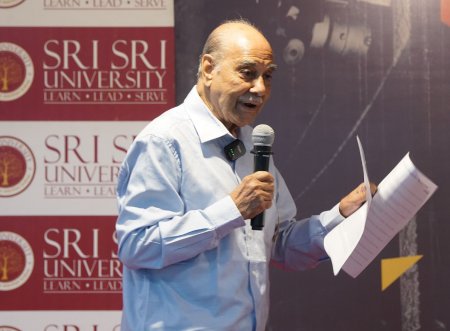
Art, when pursued with devotion, transcends the boundaries of time and place. On the morning of October 15, 2025, the Shruti Building of Sri Sri University became a living testament to this truth when it hosted an extraordinary event titled "A Dialogue with the Maestro: Exploring the Soul of Theatre and Films." Organized by the School of Languages and Social Sciences (SoLSS) under the Faculty of Arts, Communication and Indic Studies (FACIS), the session brought together the academic and artistic communities of the University to celebrate the timeless dialogue between stage, screen, and spirit.

The distinguished guest and speaker of the day was Anant Mahapatra, one of Odisha's and India's most respected theatre and film personalities. A nonagenarian whose life and work have spanned more than six decades, Mahapatra is revered as a visionary who not only chronicled but also shaped the evolution of Indian theatre. His presence at the University infused the atmosphere with rare gravitas and serenity, embodying both the wisdom of experience and the curiosity of perpetual learning. 

Read more in the site

Please type your name / email id along with your comment. Anonymous and derogatory comments will be removed.

Tuesday, 21 October 2025

80 and more! - Dance Matters: Column by Ashish Mohan Khokar


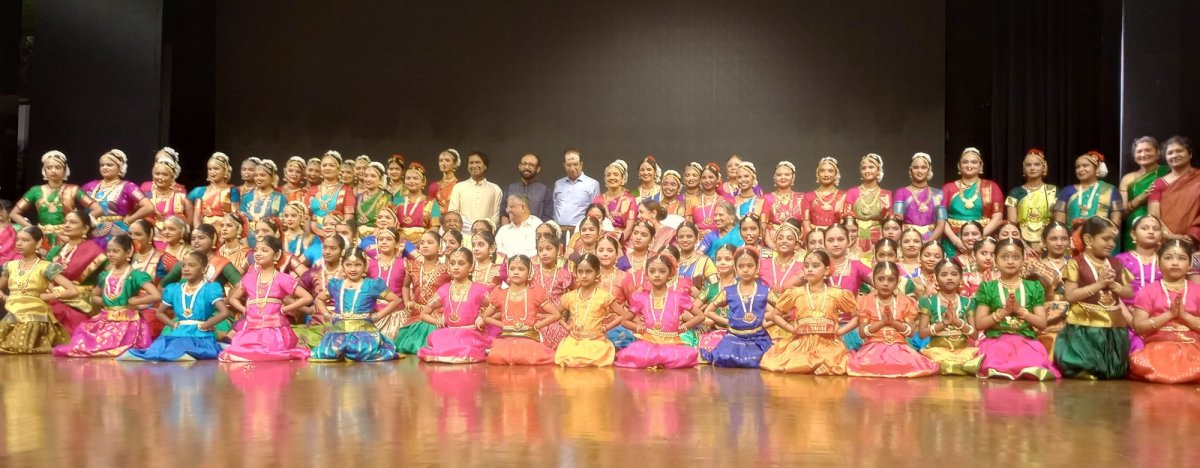
1945: India wasn't even India but an assembly of kingdoms, some motely, some remotely controlled by the British. In this scenario, when struggle for freedom was at its peak, who would think of art, dance and higher learning? One family from Tanjore. Or Thanjavur, as called colloquially.

Sri Rajarajeswari Bharata Natya Kala Mandir gurus trudged a million bullock-cart miles those days to take their divine art far and wide. The history of the first families of Bharatanatyam dance is an unexplored area and much work needs to be done. These men and women and their children are to be respected as our national treasures because they gave their art freely, without often benefit or returns or rewards. In some countries like former USSR or Japan, classically trained artistes were higher pedestal than even royalty or rulers, film or TV stars! 

Read more in the site

Please type your name / email id along with your comment. Anonymous and derogatory comments will be removed.

Obit/Tribute - Dr. Padmini Chakraborty - Anusha Chakraborty

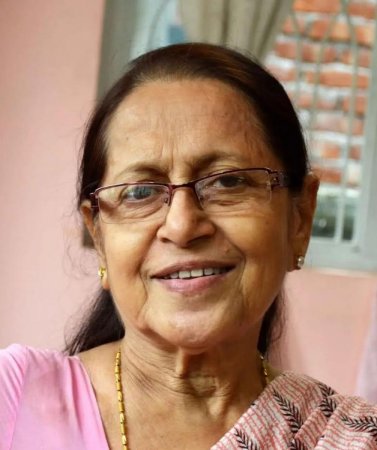
Dr. Padmini Chakraborty, the pioneer of Bharatanatyam dance in the North-eastern state of Tripura, passed away on 13th October 2025. Born in 1946, she initially started her dance training in Manipuri dance from Raj Kumar Surendrajit Singha and Chandrajit Singha. During her time in Rabindra Bharati University, Kolkata, she trained under legendary Bharatanatyam gurus Kattumannarkoil Muthukumaran Pillai and Ellappa Nattuvanar and learnt Kathakali from Guru Govindan Kutty. 

Read more in the site

Please type your name / email id along with your comment. Anonymous and derogatory comments will be removed.

Saturday, 18 October 2025

Interview - A conversation with Dr. Neena Prasad - Sunanda Narayanan

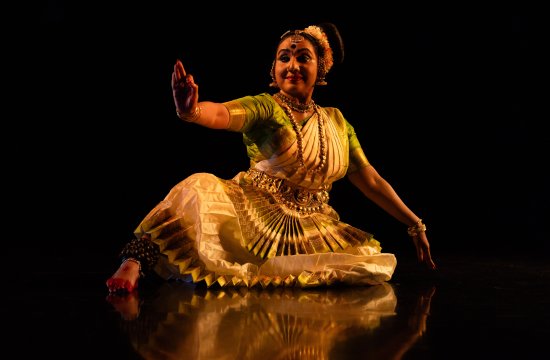
You have trained with the best gurus and in depth in Bharatanatyam, Kuchipudi, Kathakali, and Mohiniattam. When did you first start dancing and in which of these styles? What made you pursue training in these multiple art forms and how did you manage what must have surely been a very intensive learning process? How did you reconcile the sometimes contradictory demands on your body in the pursuit of these dance forms?

I started dancing at the age of three. My mother was waiting for the day when I could commence dance lessons since I was a meek child who did not show much interest in regular studies. She enrolled me in both Bharatanatyam and Kathakali classes in Thiruvananthapuram. I had my Kathakali arangetram at the age of 11, and it was unusual because it was a performance of Kuchela Vratham, where my brother played the role of Kuchela and I played Krishna! Subsequently, I assumed minor roles in many Kathakali plays and also witnessed long performances in 3-acts that would start in the evening and run late into the night. When I was in 10th grade, I was selected to be the lead actor in All India Radio's children's Kathakali group. Thiruvananthapuram has a strong affinity for Kathakali and even the children of the royal family used to train in it. In this manner, I continued with some minor training in Mohiniattam and a primary focus on Kathakali all through my school years and I won many local awards.

Read more in the site

Please type your name / email id along with your comment. Anonymous and derogatory comments will be removed.

Monday, 13 October 2025

Echo of Kumudini Lakhia & Remembering Zohra Segal - Taalam: column by Leela Venkataraman

Kumudini Lakhia, one of the most sensitive of Kathak luminaries whose creative output helped shape modern Kathak, is sadly no longer with us. But in the students trained by her with so much love and diligence at her institution Kadamb, one glimpses facets of her prodigious sense of aesthetics, which imparted to each aspect of the dance form, a quality of added lyricism. Titled The Dance of Celestial Ecstasy, the Kathak program at the Kamani, designed by Kumudini's long-time student Sanjukta Sinha and presented along with students groomed in her dance company, succeeded in evoking in the capacity gathering in the auditorium, a nostalgic feel of the special poetry of movement which was the hallmark of Kumudini Lakhia.....


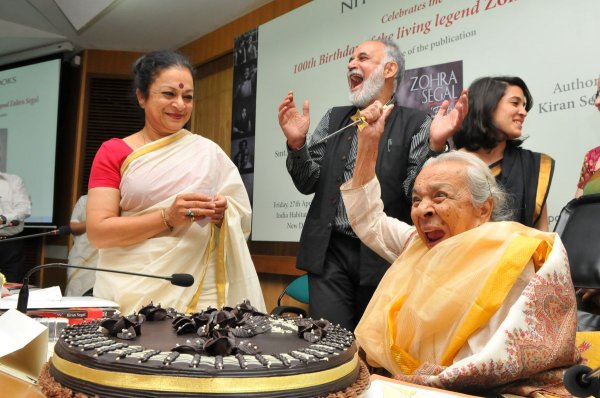
The annual Zohra Segal Festival of the Arts, conducted by Pallavi Arts run by Zohra's daughter Kiran Segal, celebrated this year in conjunction with Ahad Anhad at the Academy of Fine Arts and Literature in Siri Fort Institutional Area, very successfully captured the feel of Zohra in all her liveliness and laughter. The program spread over three days, for this critic, underlined Zohra's most cherished quality - of being able to laugh at herself. With all her talents, in a life which had its full share of ups and downs, it was the sheer fun of life coupled with an enviable sense of humour, which never left her, and enabled her not only to triumph over life's less joyous moments, but to bring joy to people she had interactions with.


Read more in the site

Please type your name / email id along with your comment. Anonymous and derogatory comments will be removed.

Thursday, 9 October 2025

Bhagyam Arts and Ideas recalls pages of Gandhi's Satyagraha and righteous struggle - Taalam: column by Leela Venkataraman

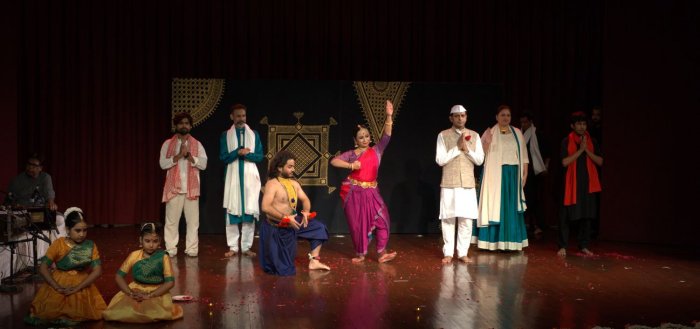
Come Gandhi Jayanti and it is time for Bhagyam Arts and Ideas led by founder Suranya Aiyar's script, concept, design, curating and direction, to pay homage to the Father of the Nation through the medium of various art expressions. This year's calendar comprised two presentations, built round his life episodes, highlighting his philosophy. The first titled Satya Agraha (on Sept 27) based on events in India, was largely portrayed through Indian art forms while the next In Righteous Struggle was fashioned round the moral fibre of Gandhiji's philosophy influencing leaders of enslaved peoples in foreign countries like America's Civil Rights Movement led by Martin Luther King Jr and Nelson Mandela's fight against Apartheid. Apart from episodic encounters enacted by the core group of actors - Joy Sengupta, Rajesh Kumar, Suranya Aiyar and Sandeep Gautam, common to both presentations, the second program comprised music Hymns, Jazz Fusion, Blues, etc with the danced part contributed by Ballet and Jazz Dancers, including pantomime artists. 

Read more in the site

Please type your name / email id along with your comment. Anonymous and derogatory comments will be removed.

Tuesday, 7 October 2025

A theatre that speaks to our times: A bold story of power, betrayal, and truth - Ratikant Mohapatra calling


AJIT's mission has always been to bring theatre closer to the masses, not simply as entertainment but as a medium to communicate social messages in a realistic and relatable manner. Over the past two decades, AJIT has celebrated talent, nurtured creativity, and upheld Odisha's folk and literary traditions while also experimenting with modern theatrical idioms. The formation of AJIT itself is rooted in a unique tradition - the celebration of Ajit Das's birthday, which marked the beginning of the institution's journey. Today, after 21 successful years, AJIT continues to groom students into professionals and has carved a permanent place in Odisha's cultural landscape.

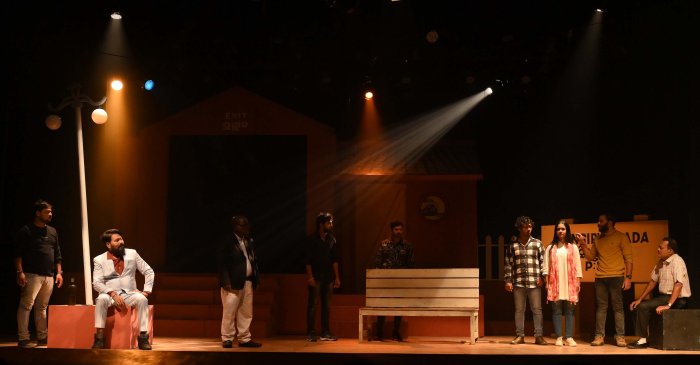
The play Last Train carries this legacy forward. It has been metamorphosed by Ajit Das and directed with great care and precision by the young and dynamic Deepak Ranjan Pati (Aman). Written by Dr. Bijoy Mishra, Last Train explores a theme that resonates deeply with contemporary society - the exploitation of disillusioned youth. The narrative follows a group of downtrodden young men who, caught in the hands of a manipulative leader, are transformed into looters and killers. The leader, Comrade Raghu Patra, driven by his own ambitions and investments, manipulates them with revolutionary rhetoric, invoking Lenin and other ideologues. To the outside world, he positions himself as a benefactor, distributing looted money to the marginalized and economically backward. But beneath the surface, he is a schemer, exploiting their vulnerability for his gain. 

Read more in the site

Please type your name / email id along with your comment. Anonymous and derogatory comments will be removed.

Monday, 6 October 2025

Profile - Shama Bhate: A flowing river of Kathak - Dr. Chitra Sharma


The Golden Era of an artiste

For Guru Shama Bhate, affectionately called Shama Tai, this moment in time is the Amrit Kaal of her artistic journey - a golden era that reflects the luminous history of Kathak in Maharashtra. Her work, born of relentless sadhana (discipline), is not only a celebration of tradition but also a reminder of Kathak's limitless capacity for reinvention.

Read more in the site

Please type your name / email id along with your comment. Anonymous and derogatory comments will be removed.

Sunday, 5 October 2025

Interview - Yamini Kalluri: Choreography is second nature to me - G.V. Anna Rao


Yamini Kalluri is a young Kuchipudi student of Dr.Sobha Naidu pursuing her career in the U.S.

Your Guru Sobha Naidu was an iconic figure. Can you share some memories of her, her style of Kuchipudi and influence of her own guru, legend Chinna Satyam and your own takeaway from being her student.
Being her student of dancing, what truly influenced me was her mindset and presence.

More than the style, those learning from such a charismatic and original diva become copycats, but I had the rare blessing of living and breathing her aura closely - as her rehearsal director, main assistant teacher, music production assistant, and even as a singer accompanying her performances. What I absorbed was not just her artistry, but her values and the sheer obsession and devotion to dance that made her the queen of Kuchipudi. 

Read more in the site

Please type your name / email id along with your comment. Anonymous and derogatory comments will be removed.

Friday, 3 October 2025

Interview - Ud. Amjad Ali Khan & the Sarod Quintet - Manjari Sinha


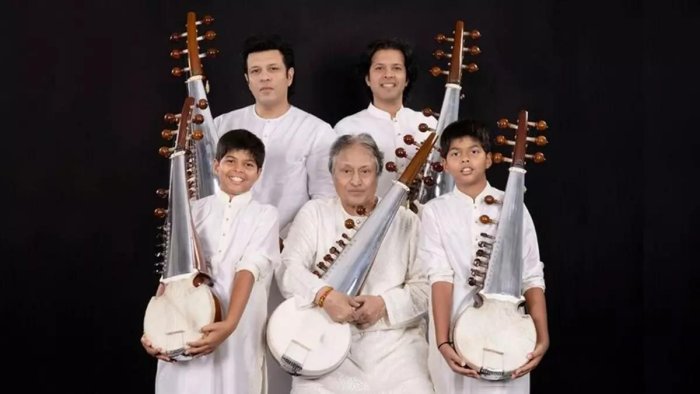
The Embassy of India in Washington, D.C., recently hosted a reception in honour of the esteemed Sarod maestro Ustad Amjad Ali Khan. Khan Saheb was in the U.S. capital for a very special concert titled "The Sarod Quintet - Three Generations, One Legacy," presented by the DC South Asian Arts Council Inc. in collaboration with the Embassy of India. The performance was held at the Terrace Theatre, Kennedy Center, on the 17th of September 2025, and brought together not only the maestro himself but also his sons, Amaan Ali Bangash and Ayaan Ali Bangash, along with his 13-year-old twin grandsons, Zohaan and Abeer. Together, the five of them form the Sarod Quintet, a living embodiment of continuity and tradition, representing India's classical music heritage. 

Read more in the site

Please type your name / email id along with your comment. Anonymous and derogatory comments will be removed.

Wednesday, 1 October 2025

Anita says...October 2025

Here are my thoughts at the end of this year's Navaratri season. This is my favourite time in India. The daily GOLU visits to friends old and new. Houses decorated with colourful dolls and figurines from the epics - some handed down from mother to daughter over 50 and 60 years ago. The chatter of women's voices. The chickpea SUNDAL snack that is served everywhere. October 2nd is the end of the festival and DUSSERA - the 10th day - is celebrated as VIJAYA DASAMI in South India. It is not just the marker for Devi Durga's triumph over darkness, ignorance and sloth but also a new awakening of the mind and the body to fresh possibilities. This is the season for new beginnings, especially fresh learning. Account books are balanced, Goddess Lakshmi worshipped, Saraswati invoked and manufacturing pauses on the 9th day to honour the machines and devices that we use daily. Writers place books, painters their brushes, musicians their instruments and dancers their ankle bells. IPads and laptops, anything that is part of the profession, is placed in the sacred prayer space. On that day, we are supposed to pause and rest; for dancers, it is our body, the machine. That is the main instrument which creates the art of dance. 

Read more in the site

Please type your name / email id along with your comment. Anonymous and derogatory comments will be removed.