E for....Engrossing. Ethics. Entertainment. Eeks!How can Indian dance be made engrossing? Or entertaining? Is it not so, currently? Name 10 performances or productions in a year, that were worthy by way of a repeat show, abundant audience or outstanding reviews that matched the work. Ten is too many? Then how about five?Forget us editors, critics, historians, commentators and assorted opinion makers and givers. Even if dancers don't care for our opinions - unless flattering or it suits them - what we often report or state reaches far. It reaches higher echelons of babudom, decision makers and VIPs. They often put us on committees that decide candidates for festivals, awards, even grants.Dancers may think their art is great or they are god's gift to mankind but where's the audience? And, more importantly, where is the PAYING audience? Except in Mumbai and the Chennai Sabha December season, most dance shows are "family and friends" affair. Excuses abound after 70 years of state spoon-feeding: ours are divine dances (then please go dance in heaven; don't create hell here on earth!) Or, its inbuilt chamber-art content is that it makes it less accessible to masses, it's only for the classes (who understand sangeeta, shastra, sahitya). Some dancers ably and without much effort themselves have made it less accessible. One Delhi dame made parables saleable by stating geometric patterns as part of art discourse!
Read more in the site

Vijayalakshmi is a globally acclaimed exponent of Mohiniyattam, the graceful classical dance form from South India. She is also a celebrated choreographer, singer, writer and speaker. She is the founder director of Mohiniyattam Institute, Los Angeles and Artistic-Director of the Center for Mohiniyattam, New Delhi. Her unique interpretation of the dance form resonates with contemporary universal relevance, delving deeply into femininity and beyond. Vijayalakshmi grew up imbibing a deep knowledge of this traditional dance form which is the dance of the divine enchantress. She trained under her mother-guru Bharati Shivaji who is the principal architect, involved in the revival and re-construction of Mohiniyattam ensuring its rightful place both on the national and international map. Using this substantial training as her foundation, Vijayalakshmi developed her own vision for this art form through her own insight and exploration of the form's aesthetic principles and lexicon, with her path breaking innovative choreography and interpretation, using contemporary subjects without digressing from the essence of this traditional art form. She has performed at major venues around the globe. Her long and distinguished body of work in dance is a testament to her artistic caliber and eminence.
Read the interview in the site
At the high risk of being dubbed "hasty generalization", a casual observation could pardonably be made that the canonized dances on planet Earth - once one leaves out classical and modern ballet --- fall perceptibly into three streams, with, of course, many delightful deviations that palpably transgress into each other's territory.
Read more in the site

With untimely rains calling the shots, the postponed Dhauli -Kalinga Mahotsava 2020, proceeded without weather playing tricks again from Feb 10-12. After the peace oath, with V.I.P's holding aloft flaming torches facing the Peace Pagoda atop the hill, at the site where, in the aftermath of the bloody Kalinga war, Emperor Ashoka became Dharma Ashoka converting to Buddhism, a joint curtain-raiser offering of Pallavi as a tribute to Guru Kelucharan Mohapatra by Orissa Dance Academy and Srjan Bhubaneswar was excellently thought out. With two good minds, Aruna Mohanty and Ratikant Mohapatra guiding, the large expanse of the stage, at three levels, was fully utilized, bringing out the excellently trained dancers from two institutions - wisely functioning in independent groups - though in simultaneity as part of one large frame. Each group got chances to be in the centre, on the flanks and right on top. The movements blended beautifully and to listen to the music of Bhubaneswar Misra with Guru Kelucharan on pakhawaj uttering ukkutas for Pallavis in Shankarabharanam, Hamsadhwani and Kirwani created a deep sense of nostalgia.
Read more in the site
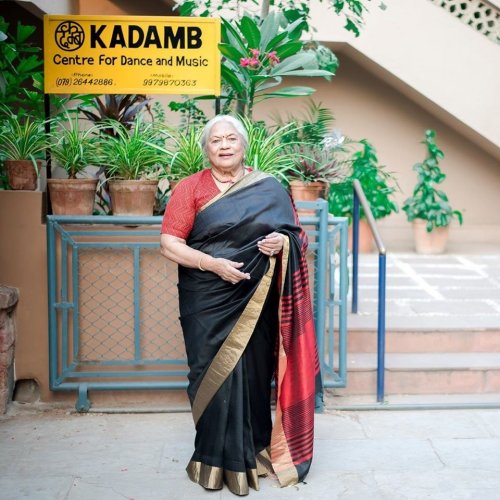
Having known Kumudini Lakhia for more than 60 years since we met in Mumbai at Cross Maidan in 1957, it has been quite an interesting journey of her career that I have been privileged to witness. Therefore, when we few dance critics were invited to attend two day Kathak dance festival Yugantar she had planned with her disciples, all came to learn more about the trials and tribulations she had undergone when establishing her institution Kadamb to train young generation of dancers way back in 1960!She says: "There were only three dancers who joined. Then five, and then seven, and so on. I soon realized that in Ahmedabad, Kathak was not even accepted as a dance form. People had a misconception that it was considered dance of kothewalis, nachanewalis and girls from good families do not learn dance. It was a huge challenge for me to give Kathak a status that it deserved. I had returned to Ahmedabad having studied under the great Lucknow gharana master Shambhu Maharaj, Jaipur gharana master Sunderprasad and others. And I had appreciated Kathak as an excellent art form. So it became a mission for me to give Kathak the respectability that it deserved."Read more in the site
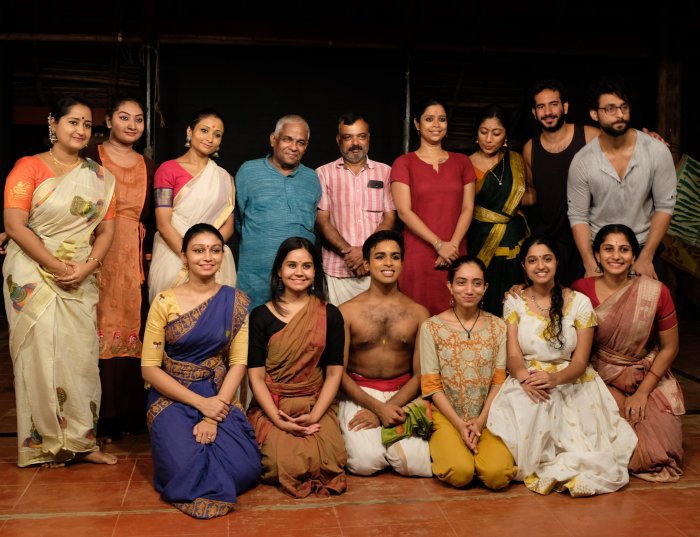
The journeys we make and the roads we take lead us to ourselves. This is a thought that constantly lingers in my mind. Every visit to Irinjalakuda and that mandatory visit to Natanakairali fortifies this very thought. The peaceful atmosphere and the palpable energy here, pulls me back again. The last time I visited Natanakairali, I witnessed a series of Koodiyattam performances that enriched me as a lover of art. This time, it completely changed me as a human being and an artist. The experience of the Navarasa Sadhana cannot be expressed in words. It was more than just learning a process. It changed the way I perceived, how I sought inspiration, how I acknowledged things.The Navarasa Sadhana is an intensive practice routine designed for artists from all performance spheres. The workshop is structured in such a way that the participants explore the different layers of the nine rasas in detail and depth. Venuji through years of research and experiments has created this methodology drawing inspiration from the Koodiyattam training, Kodungallur technique of abhinaya, theatre practices from across the world.The workshop began with an informal meeting and inauguration. The 15 member group including me introduced ourselves. We were blessed to listen to the soulful music of Parvati Baul and her group that morning. From here, we began our days of explorations.
Read more in the site
The Bharathanatomy series is back!Over the next few months, we will be looking closely at the concept of balance and its role in movement and dance.To be able to balance means that we are a) able to maintain an upright posture against the force of gravity and b) ensure that our body's centre of mass is exactly above our support base (in dance, this base of support is our feet).
Read more in the site