Monday, 8 June 2026

Article - The silent cry of the Gungroo - Mutation and monetization of classical dance - Dr. Lata Surendra

For generations, classical art was not merely performed; its sacredness was preserved as its strength. It lived as a sacred trust, passed from breath to breath, born of a quiet reverence for the unseen and the eternal. Today, that protective shield has shattered. Be it the lucrative choreographers or the masses who lap it all up, we are stretching the crazy urge inside in seeking to impress more than express to extreme limits.

Ananya Panday's viral Chand Mera Dil controversy is the living embodiment of a tragedy that laments the death of a sacred art form - with Bollywood just staging the execution to create an uproar all around. Panday's viral "fusion" dance was labeled a "catastrophic misunderstanding" of Bharatanatyam by eminent dancer Anita R. Ratnam. Even committed performers all over the world and critics have watched Panday's performance and watched aghast at a centuries-old spiritual discipline being reduced to aggressive, soulless modern gymnastics. Panday's team defended the act as a "creative experiment," proving the point that today you have systems that prioritize cheap entertainment over cultural guardianship.

Today's artistes view themselves merely as entertainers rather than guardians of a sacred heritage. Fearing the verdict of a profit-driven industry where artistic compromise is the price of survival, few dare to champion the true system. We watch with quiet grief as pure folk and classical traditions are butchered on the altar of reality television, reduced to mere instruments of shock value. Manmade monstrosities like "Disco Dandiya" are paraded about, stripping away the spiritual sanctity of our roots.

Read more in the site

Please type your name along with your comment. Anonymous and derogatory comments are likely to be removed.

Wednesday, 3 June 2026

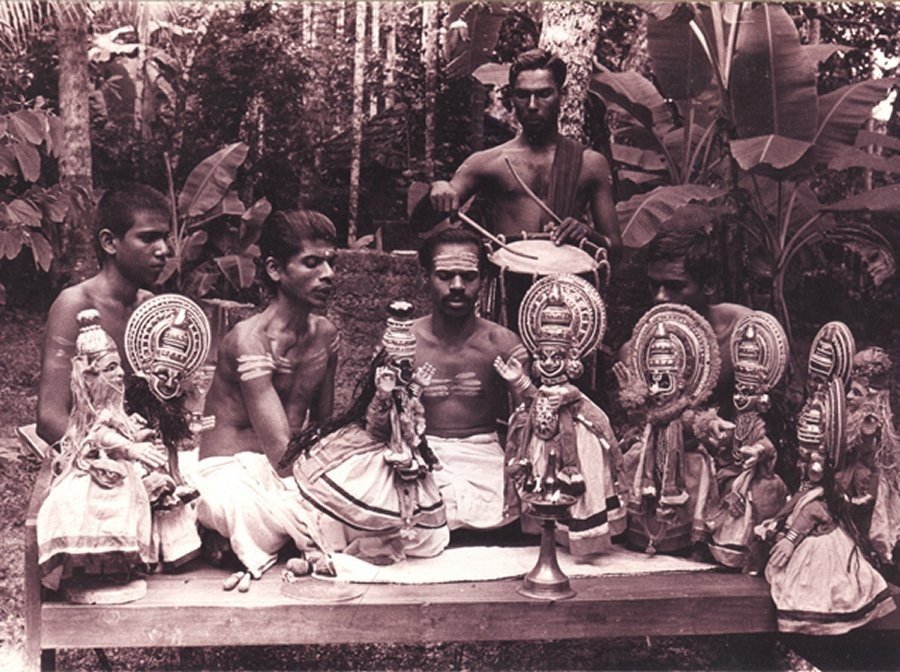
Article - From a museum artifact to a living tradition The revival of Pavakathakali in India - Vinod Gopalakrishnan


Dakshinachitra, founded as an institution of preservation, has carried a deep commitment to nurturing and sustaining India's diverse traditional Arts and crafts with a special sensitivity toward forms that survive at the margins of society and are often vulnerable to disappearance. Over the years, the museum has built a meaningful legacy not only as a custodian of living cultures, but also as an active cultural institution that recognizes 'living communities' and the artists who keep these fragile traditions alive.

Through its annual Dakshinachitra 'Virudhu' citation and Prize, the institution has consistently acknowledged individuals and groups whose lifelong dedication have strengthened the continuity of folk and traditional arts across India. 

In 2026, this honor was bestowed upon the Pavakathakali performing team leaders of the Natanakairali ensemble from Kerala. Kunnambath Sreenivasan and Kauthiyam Parambu Ramakrishnan were nurtured under the guidance of Guru G. Venu - the visionary Kudiyattam artiste and Navarasa Sadhana Guru whose dedicated pioneering work in reviving endangered performance traditions is extraordinary.

Read more in the site

Please type your name along with your comment. Anonymous and derogatory comments are likely to be removed.
Tuesday, 2 June 2026

Blend of experienced and aspiring dancers - Taalam: column by Leela Venkataraman

Milind Srivastava's Art Foundation, with World Dance Day round the corner, celebrated its own annual effort at the Habitat Centre, Delhi, featuring both experienced and aspiring talents. The curtain raiser was a short Modern Dance item conceived and choreographed by puppeteer Salim Zaidi, titled Samhrti - 'an exploration of existence and transcendence through the art of dance.' The performance looks at the cyclical nature of the Universe with the eternal rhythms of creation and dissolution....

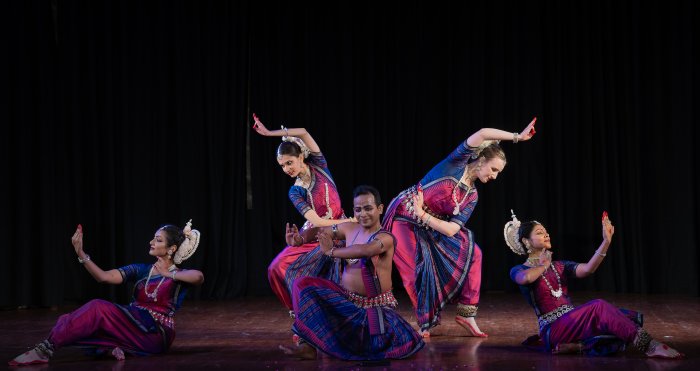
At the Habitat, the World Dance Day celebration brought together in one program, not just all Indian dance forms, including classical and tribal, but also international groups from countries like Indonesia, Cambodia, Bangladesh, and a mixed African group. The event essentially stressed togetherness and bonhomie - represented through dances pertaining to various cultures - each with a distinctive identity. Mohiniattam dancer (who also teaches Bharatanatyam) Jayaprabha Menon, the choreographer, within the very short time she had for planning, wisely decided to enlist the help of foreign students studying in different colleges of Delhi. In what became a variety program of dance, each of the groups was given a separate slot of a few minutes, before coming together in the finale....

Fighting against very heavy traffic, I reached IIC too late to take in the starting item of dancer Amrita Lahiri's Kuchipudi program. The second item comprising a scene from the full length dance drama Usha Parinayam, revealed a dancer whose Bharatanatyam training with its linear geometry, has not influenced or detracted in any way, the mercurial grace and lyrical sensuality of Kuchipudi, which is in a compartment of its own, with her training under Jaikishore Mosalikanti and his wife Padmavani....

Yet another double bill presentation at the India International Centre, saw a very finished Bharatanatyam performance by Satvikaa Shankar, trained under Chennai's Anitha Guha. After gaining special accolades for her performance as Hanuman, it was a vastly different Margam dancer one witnessed with her opening comprising a rare varnam in Kalyani, a composition of Sivanandam of the Tanjore Quartette, addressed to the great patron of Arts, Maharaja Shivaji II, "Sarasa shikhamani neevani tsala nammiti." Set to dance by the dancer herself under the overall guidance of her guru, she specially mentioned her gratitude to both Nandini Ramani and Anupama Kylash for their help in better understanding the varnam.....

At the Shri Ram Centre, Kathak students of Sanskriti Foundation, the institution run by Gauri Diwakar, presented an evening of dance. With youngsters and the more advanced students participating, the program understandably, of varying standards, shared one pleasing feature, which was seeing all participants of different groups, turned out in simple salwar/kameez outfits of varying colours, deriving joy out of the entire enterprise.  

Read more in the site

Please type your name along with your comment. Anonymous and derogatory comments are likely to be removed.
Monday, 1 June 2026

Anita says...June 2026

May was a series of immensely theatrical spectacles. And none were about dance!

I will, of course, blend my month of observations and reflections into our world of dance, but not before casting a wider lens on the very idea of PERFORMITIVITY that has permeated every sphere of our waking moments.

I begin by converging the three grand events of Fashion, Sports and Politics. While they may represent entirely different worlds, in May, all three genres demonstrated a remarkable convergence of productivity, performance, precision and theatricality. Each became a grand stage where discipline and spectacle fused in ways that rivalled the dazzle of Broadway and the excesses of Las Vegas and Bollywood. 

Read more in the site

Please type your name along with your comment. Anonymous and derogatory comments are likely to be removed.
Saturday, 30 May 2026

BJP zindabad! - Dance Matters: Column by Ashish Mohan Khokar


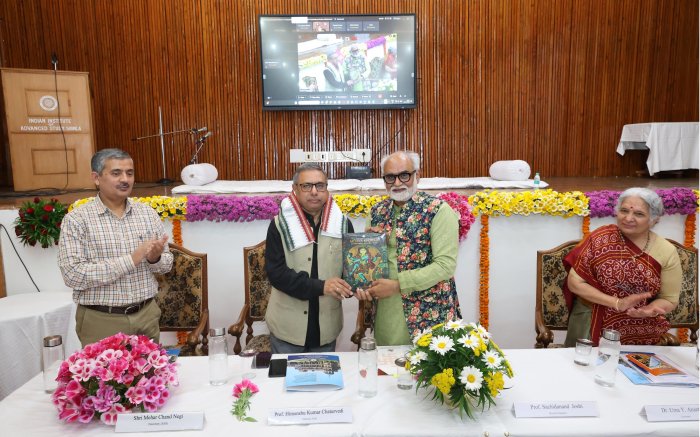
Bharatiya Jnana Parampara - BJP: A 3 day with over 30 delegates symposium took place on May 21-23 at Simla, capital of Himachal Pradesh at India's most prestigious think tank institution IIAS (Indian Institute of Advanced Study), currently headed by dynamic director Dr.Himanshu Chaturvedi. Dr Shashikumar Prabha is the chair. It was the first-ever dance parampara goshthi, on the scale and substance held here, or actually anywhere in India at a pan global level, not local, regional or even Indian.


Put together and pulled off by Ahmedabad's senior academic - dance guru Dr. Uma Anantani, this could easily be termed benchmark. Nothing ever on this scale outside of dance-specific institutions like the national SNA, or regional Music Academies and sabhas and schools has been done with such depth and dignity.

Read more in the site

Please type your name along with your comment. Anonymous and derogatory comments are likely to be removed.
Thursday, 28 May 2026

New perspectives - old themes - Taalam: column by Leela Venkataraman

It is heartening to see that youngsters are on the lookout for new directions, with novel themes as base for performances. The more encouraging factor is that organisations like Bhagyam Fine Arts and Ideas are willing to sponsor such attempts, at the risk of not getting sizeable audiences. What with minds full of the archetype of the slim and shapely dancer performing, to watch Dakshina Vaidyanathan Baghel, the Bharatanatyam dancer present Ayoga Vaatsalya built round the anticipation and excitement of a mother-to-be, with the dancer herself now in the seventh month of pregnancy, was to say the least, out of the ordinary....


Aditi Mangaldas Dance Company Drishtikon Dance Foundation, in collaboration with Oddbird Theatre in the third of its Zeroing In series, presented a Jugalbandi of two art forms - Kathak and Bharatanatyam. The attempt is itself bold, for dancers of the two dance genres, exceptions apart, have not been known to work very closely. The mini auditorium, ideal for experimental theatre, with ticketed shows evoking a good response, aside from close performer audience interaction, accommodates about five rows of audience on chairs at the same level as the performers, with five to six rows beyond of galleried seating....


Once again, outside the conventional box of dancers, particularly in Kathak, is Sudip Chakraborty, trained initially in Kolkata's Kalakshetra in Bharatanatyam before branching out to Kathak under Kolkata teachers Pranab Sanyal and Sandip Mallik - to finally - (in his 17 years spent with this dance form) come under Jaikishen Maharaj in Delhi. Now running his institution Nirvana Arts Foundation, he has caught the public eye, with his ability (stemming from a deep seated interest in literature, and general reading) for fresh perspectives, to bear on what would be deemed, cliched themes.... 

Read more in the site

Please type your name along with your comment. Anonymous and derogatory comments are likely to be removed.
Monday, 25 May 2026

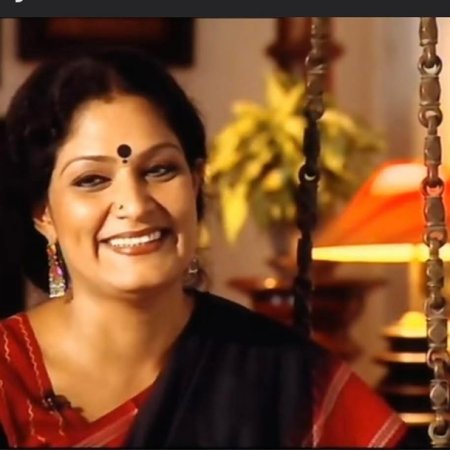
Prism - UNESCO and the BORI Natyasastra The Many Natyasastras in the One and the One in the Many - Dr. Avanthi Meduri

I offer here a brief meditation on UNESCO's inscription of the Natyasastra manuscript in the Memory of the World Register, cast as a staged conversation across time with the late Kapila Vatsyayan - our Kapilaji - whose life's work helped make India's Natyasastra traditions newly legible to the world.

In this exchange, I reflect on the relation between world heritage and lived history, between sastra and prayoga, and between the living historical Natyasastras that helped shape the twentieth-century revival of Bharatanatyam and Indian classical dance, placing these firmly on the global stage.

This staged conversation draws on my 2025 essay on the Natyasastra in The Oxford Handbook of Indian Dance, where I reflect on three historical Natyasastras through which the text entered Indian classical dance history, practice, training, pedagogy, and public performance - a question newly sharpened by UNESCO's 2025 inscription. 

Read more in the site

Please type your name along with your comment. Anonymous and derogatory comments are likely to be removed.
Sunday, 24 May 2026

Reverential homage in Kamalini Samaradhanam spearheaded by Manasa - Art Without Frontiers - Taalam: column by Leela Venkataraman


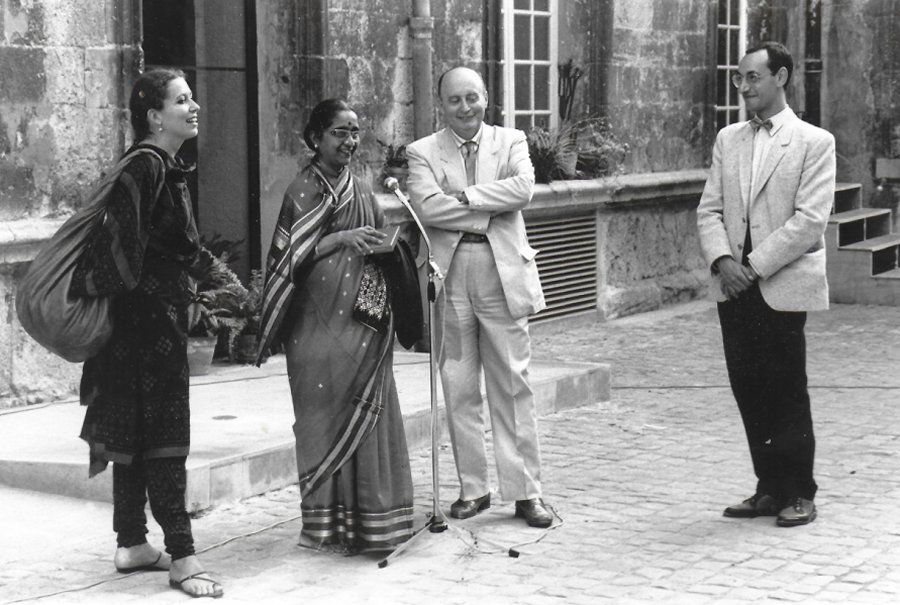
Exactly a year after she left this world for her heavenly abode, those who had the opportunity of working with Kamalini Dutt, paid reverential homage to a person who defied being categorized. Guru, mentor, choreographer, Doordarshan producer, aesthetic and spiritual guide, artistic collaborator, most valued friend et al, Kamalini represented above all human qualities of immeasurable value. An unfortunate accident having put paid to an active performing career in dance in the seventies, for one who had mastered the art under renowned Sikkil Ramaswamy Pillai, and had her arangetram when she was a seven year old, with over two years spent on mastering a varnam, without giving in to self-pity, she set about carving an equally, if not more valuable future for herself - transferring her considerable energies to spreading the message of Indian dance to the general public, through her work in Doordarshan.

Who can forget the innumerable National Programs of Dance and Music, she presided over? With her mastery over how the camera looked at movement, she released more than a thousand productions. Apart from ushering in new trends, her expertise in being able to control and direct multiplicity of cameras in a program, cut out a great deal of needless work at the editing table. And later as Deputy Director General of Central Doordarshan Archives, the material she collected and left behind, particularly for dissemination, remains unparalleled. All this, while suffering in stoic silence, acute physical pain and discomfort from rheumatoid arthritis.

One has to note that it was left to Sharon Lowen, an American citizen, who spent years learning Odissi under Kelucharan Mohapatra, and has made India her home, teaching Odissi, to mount this evening of homage, which no other Indian amongst the many who benefited from Kamalini's instructions, had thought of. 

Read more in the site

Please type your name along with your comment. Anonymous and derogatory comments are likely to be removed.
Thursday, 21 May 2026

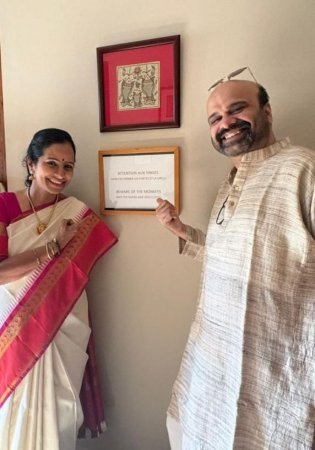
Article - Why Dance? - Dr. Rohini Dandavate

Often, parents and young students wonder whether they or their children should pursue dance education. I would like to reflect on this question through the lens of my lifelong journey with Odissi, a pursuit that began in early childhood and continues to shape my life even today.

Through years of performance, arts administration, and arts education, I have gradually come to understand not only what dance demands of us, but also what it gives back in return. The discipline, resilience, sensitivity, and joy I have gained through this quest are reflections I wish to share here.

I distinctly remember being asked, sometimes mockingly, "So, are you going to become a professional dancer?" I would simply smile and walk away without answering. Looking back now, I realize I did not need an answer then, because the value of dance extends far beyond professional ambition. I remain deeply grateful to my parents and family for their unwavering support and for encouraging me to remain steadfast on this path. 

Read more in the site

Please type your name along with your comment. Anonymous and derogatory comments are likely to be removed.
Friday, 15 May 2026

Article - My journey into abhinaya - Sushma Kotireddy

My obsession with abhinaya began long before I knew what the word meant. As a child learning Bharatanatyam, I believed dance was all about thattā adavu and nattā adavu, precise footwork, rigid postures, and counting beats. I practiced tirelessly, unaware that the real magic of Bharatanatyam lay not in the steps, but in the silent conversation that happens through eyes, hands, and subtle expressions.

The first crack in this belief came unexpectedly when I was around 8 years old, while watching a television serial Malgudi Days. In one episode, a small girl performed the padam "Krishna nee begane baro." I could not understand the words, but I was mesmerized. Her eyes searched for Krishna, her hands reached out in longing, and her face softened with devotion. She was not simply dancing; she was speaking directly to the divine. That fleeting moment planted the seed of abhinaya in my heart. After this, I started observing the world, the people differently. 

Read more in the site

Please type your name along with your comment. Anonymous and derogatory comments are likely to be removed.
Wednesday, 13 May 2026

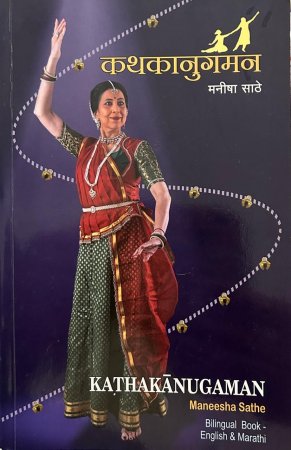
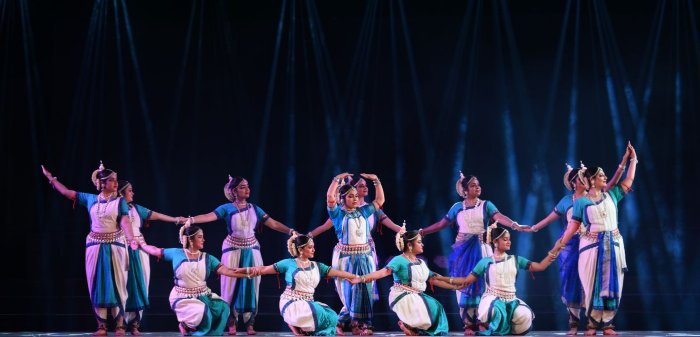
Book Review - Kathakanugaman - Vijay Shanker

Kathakanugaman

Bilingual book - English and Marathi
By Maneesha Sathe
Bookmark Publications, Pune
Price: Rs 450

Pune based veteran Kathak exponent and mentor Maneesha Sathe has written a very interesting book in two languages, 'Kathakanugaman' in English and Marathi, in order to maintain regional flavour, ethnic quality and also to cater to the international audience with a holistic perspective. It traces the journey of the dancer, whose invaluable and outstanding contribution in the promotion and propagation of Kathak dance on the global platform, spans more than five decades.

Read more in the site

Please type your name along with your comment. Anonymous and derogatory comments are likely to be removed.
Exemplary in concept and execution, Natya Vriksha's 19th consecutive World Dance Day celebration - Taalam: column by Leela Venkataraman

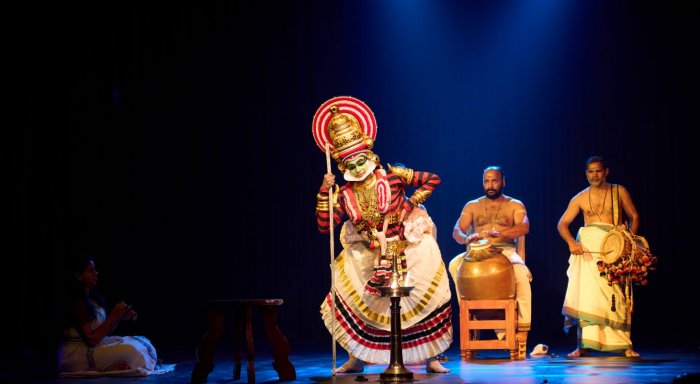
With its judicious mix of tradition and contemporaneity, Natya Vriksha's nineteenth consecutive celebration of World Dance Day, in conjunction with the India International Centre, deserved the highest accolades - in all aspects of conceptualization, execution and audience participation. The celebratory mood was set off with an informal evening before, at the brand new Natya Vriksha premises, with a small group of invitees watching three of Geeta Chandran's students presenting an item each, in the newly appointed, aesthetically designed studio - the performance space with wooden floor, equipped with sophisticated fittings in light and sound. 

Read more in the site

Please type your name along with your comment. Anonymous and derogatory comments are likely to be removed.
Monday, 4 May 2026

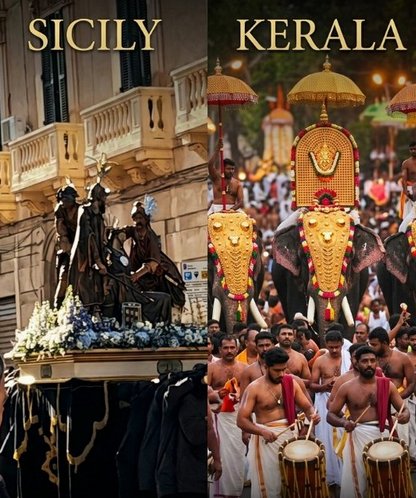
Article - The pulse of devotion: A visual dialogue from the Mediterranean to the Arabian Sea - Maria Barraco

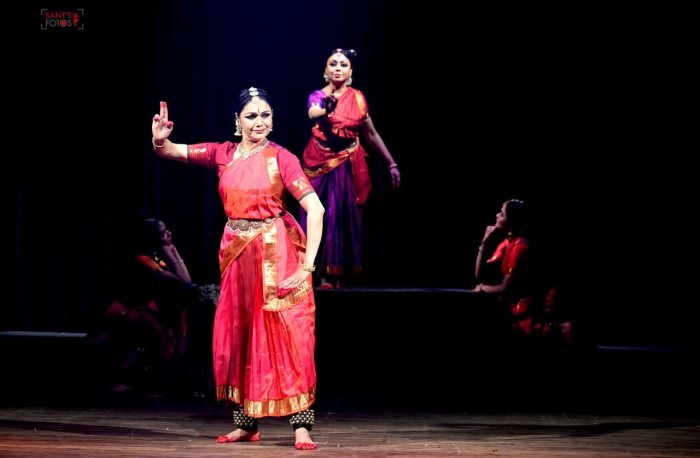
There are moments when geography fades, and only the rhythm remains. In the heart of the Mediterranean and on the tropical shores of the Arabian Sea, two ancient traditions breathe with the same lungs. This Holy Week, we explore an unexpected mirror: the Misteri of Trapani and the Arattu and Pooram of Kerala. 

Read more in the site

Please type your name along with your comment. Anonymous and derogatory comments are likely to be removed.
Friday, 1 May 2026

Anita says...May 2026

April has always been a packed month for the performing arts community. As Spring blooms in full splendour in some parts of the globe, temperatures soar in South Asia and hundreds of dancers and musicians from India are taking to the skies towards further shores. To teach, tour, perform and continue their creative journeys. Even while visa restrictions increase and travel costs soar, performers, especially dancers, remain resilient and hopeful.

Read more in the site

Please type your name along with your comment. Anonymous and derogatory comments are likely to be removed.
Saturday, 25 April 2026

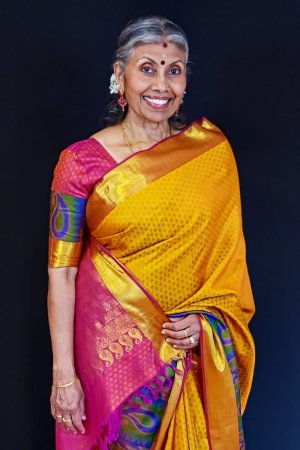
Profile - Indian dance in France: Jean-Paul Montanari - Sonya Wynne Singh

Around this time last year, I was working on the 25th edition of attenDance, the only yearbook on dance published by Ashish Khokar. Specifically, I had just completed my text on Jean-Paul Montanari, the director of the Montpellier Danse Festival, who had done so much to introduce the world's dance traditions to a French and Western audience. Little did I know that this text would take the form of an obituary. On the 25th of April 2025, dance lost one of its greatest stalwarts - someone with a profound and instinctive understanding of the arts. I thought back on our meeting, just a few weeks prior organised by Elisabeth Petit, and realised it was perhaps the last recorded interview of him while in office. It was Jean-Paul Montanari's last day as director for Montpellier Danse, as he was retiring. What was supposed to be a brief interview went for over an hour, during which he spoke at length about his life, his deep love for dance and the small moments of pure pleasure when he listened to Vilayat Khan.

Read more in the site

Please type your name along with your comment. Anonymous and derogatory comments are likely to be removed.
Friday, 24 April 2026

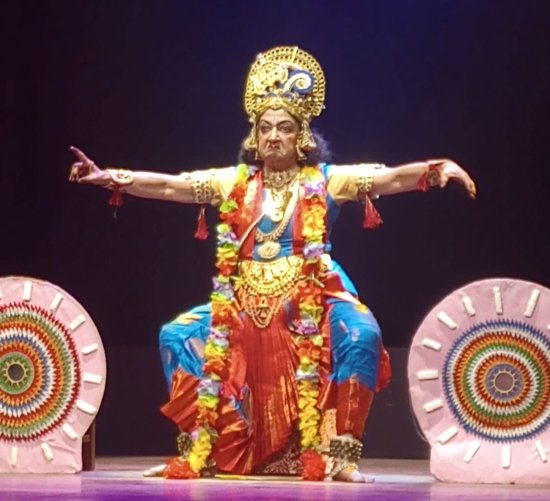
When beauty meets Biomechanics: The hidden athletic demands of Bharatanatyam - Dr. Vallabhi Chellam - Not just anyBODY: a health and fitness column

Picture this: You're holding a perfect aramandi for the fifteenth time in an hour-long practice, your quadriceps screaming in protest while your face maintains serene devotional expression. Sounds familiar? As a physiotherapist who's spent equal time treating athletes and treating my own dance-induced aches, I can tell you that Bharatanatyam dancers are some of the most underestimated athletes I've ever encountered.

The deceptive elegance
That graceful aramandi! It's essentially a sustained squat that would make gym enthusiasts weep. Those lightning-fast tatta adavus create ground reaction forces comparable to high-impact sports. The mesmerizing spins and jumps in tillanas demand the explosive power of a sprinter combined with the balance of a gymnast. You cannot train in any sport without holistic protocols.

Read more in the site

Please type your name along with your comment. Anonymous and derogatory comments are likely to be removed.
Tuesday, 21 April 2026

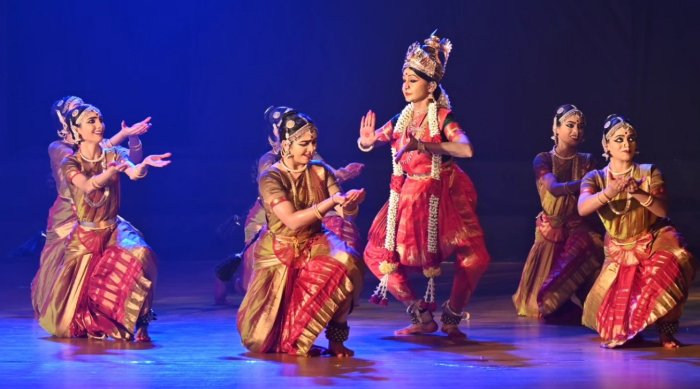
Article - Blood, Dust, and Mudras: Why my Sicilian Soul recognizes India - Maria Barraco

They call it "exotic," but to me, it felt like coming home to a house I had forgotten I owned.

I am not a dancer. I don't have the technical vocabulary of a critic, nor the flexibility of a performer. I am a woman born in Sicily - a land of salt, ancient stones, and silences that weigh more than words. And it is precisely because of this "Southernness" that I stopped being a stranger the moment I encountered Bharatanatyam.

I. The language of the "Eyes"

In Sicily, we have a way of talking without opening our mouths. A squint of the eyes, a tilt of the head, a hand held in a certain way - it's our own abhinaya. 

Read more in the site

Please type your name along with your comment. Anonymous and derogatory comments are likely to be removed.
Sunday, 19 April 2026

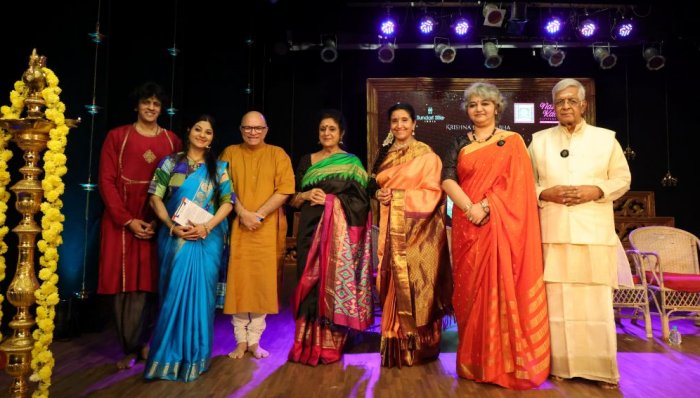
Allowing a thousand flowers to bloom in a world gone haywire - Taalam: column by Leela Venkataraman

LET A THOUSAND FLOWERS BLOOM

In a world going haywire with dissensions, the exhibition 'Let a thousand flowers bloom' mounted at Delhi's Habitat World by Malaysia's Sutra Foundation, was like a breath of fresh air. Structured round Odissi dance, the event comprising exhibits of drawing, painting and some excellently sensitive photography, featuring 21 artists of India and Malysia, was a tribute to late Dinanath Pathy of Odisha. 


THE GITA GOVINDA CAN NEVER GO STALE

What is the alchemy of the 12th century text of Jayadeva's Gita Govinda with its 27 Ashtapadis in 12 prabandhas (which by the year 2002 itself had inspired 57 commentaries in over twenty European languages!) still holding the world of art captive, with its multi layered theatre of bhakti and sringar? Yet another collaborative production 'Gita Govinda where there is Radha, there is Hari,' at the Kamani (New Delhi), before an engrossed audience, proved that this Sanskrit work with its strange sringar twosome comprising a supreme being entangled in a form of his own creation (a rare situation of the macro ultimate also crying out for the micro), with its peaks and depths of emotion, mesmerizes audiences even today. Shivam Sahni, director, script writer and conceptualizer, who also takes on the role of Krishna in this Contemporary Dance/Theatre work, defines his involvement as a 'visceral calling, far greater than perception'!


NO HOLDS BARRED FEMALE GAZE OF 'REBEL RANIS' HOLDS AUDIENCE SPELLBOUND

Visceral and unapologetic in its blistering tones, of re-contextualizing attitudes defining our epic heroines, through what is referred to as the 'female gaze, placing woman at the center of the performance,' Rebel Rani staged at the Kamani, held a packed auditorium spellbound. Presented by the experimental Keelaka Dance Company founded in 2024 by Jyotsna Shourie and long-standing student Aneesha Grover, its interdisciplinary approach, not dictated by conventional classical performance practices, in a layered, emotive form of its own creation, not excluding the spoken word and music (contributed by MadStarBase, Dr.Himanshu Srivastava, Harini Iyer and O.S. Arun) - makes for highly communicative fare.


Read more in the site

Please type your name along with your comment. Anonymous and derogatory comments are likely to be removed.
Monday, 13 April 2026

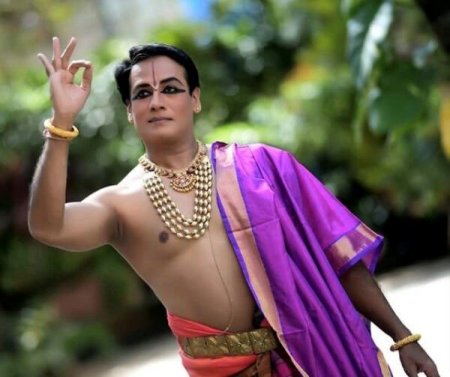
Article - Growing into your own seal, A journey from the collective to the individual - Dr. Lata Surendra

Growing into one's own signature as an artist is not a frantic search for a unique style, but rather a quiet, reflective process of recognizing one's authentic voice, that tends to be hidden within gestures, choices, and a way of seeing the world through another's eyes. It is a journey from imitation to internalization, transforming raw emotion and technique into a consistent, personal "fingerprint" that resonates with both the creator and the viewer.

An artistic signature is not created; it is recognized over time. It is the rhythm of color, the movement, and the emotional touch that remains constant even as subject matter shifts. The signature in fact is a soul mark - an extension of the artist's personality--whether harsh or gentle, bold or whispering--acting as punctuation at the end of a personal, creative monologue happening through an evolution over a period of time gathering in depth, performance after performance. 

Read more in the site

Please type your name along with your comment. Anonymous and derogatory comments are likely to be removed.
Friday, 10 April 2026

Article - The return of Nāṭya Art, Memory, and the Long Rhythm of a Civilisation - Rohit Viswanath

At the great temple of Bṛhadiśvara in Thanjavur, the stone speaks in an administrative voice. It records land grants, duties, and allocations. Among these, it notes the presence of hundreds of women attached to the temple, trained in music and dance, and sustained through a carefully organised system of patronage. They are not incidental figures. They belong to the structure of the place.


Further north, at the Virūpākṣa temple at Hampi, inscriptions from the Vijayanagara period record similar arrangements, including endowments for dancers, musicians, and ritual specialists. The language is consistent across centuries. Performance is accounted for, maintained, and institutionalised.

From a modern vantage, these records can appear as remnants of a lost world, evidence of a tradition that flourished, declined, and was later revived. But this reading carries a familiar assumption that history moves in a straight line.

Nāṭya does not quite follow that line. Its movement is cyclical, recursive, and responsive to shifts in the conditions that sustain it.


Read more in the site

Please type your name along with your comment. Anonymous and derogatory comments are likely to be removed.

Wednesday, 1 April 2026

Anita says...April 2026

In the shadow of a brutal war still continuing in the Middle East and its consequences spreading across the globe, I share my monthly musings. To be honest, it feels strange to talk about "dance", "performance", "culture" and the Arts when all we see and read is more and more bloodshed and devastation in the news cycles. And to think that I transited through the now damaged Dubai airport on my way home from South America barely 4 days before the mayhem began!

My personal thoughts about the value of the live arts in the current "theatre of war" seem almost puerile against the bombardment of heritage buildings and precious architecture that we are seeing crumble before our eyes. Perhaps this is the very contradiction that should be a sobering reminder of what really matters in our lives.

March started with a flood of dance performances. It felt like a wave of excess after my sabbatical in February. For eyes like mine, who have seen so many performances across the world for 50 years, it needs something very special to make me focus and sit up.

Fortunately, some dancers did make me smile in admiration. 

Read more in the site

Please type your name along with your comment. Anonymous and derogatory comments are likely to be removed.

Saturday, 28 March 2026

Article - The city stands tall - Yazhini SP

What kind of people make sense in stories? I wish to show the ideologies that dominate this purely aesthetic question, show rasa itself as complicit, and argue for the stage as a place exempt from such governance, where people and their interiority are valued as material, risk is valued as an aesthetic event, and unmediated audience perception is valued as the foundational condition of art.

What kinds of people "make sense" in stories?


Read more in the site

Please type your name along with your comment. Anonymous and derogatory comments are likely to be removed. 

Wednesday, 18 March 2026

Tribute - My Jayanthi Akka - Anil Srinivasan


(A special exclusive article for Narthaki by Pianist and Educator Anil Srinivasan on Jayanthi Kumaresh being selected for the SANGITA KALANIDHI title by Madras Music Academy.)

There are moments in the life of a musician when the world gets something exactly right. This is one of them.

When I heard that Jayanthi Kumaresh had been chosen for the Sangita Kalanidhi — the highest honour our classical tradition bestows — I felt something that is hard to describe without sounding sentimental. It wasn't surprise. It was the deep satisfaction of the inevitable, finally arriving.


Read more in the site

Please type your name along with your comment. Anonymous and derogatory comments are likely to be removed.

Sunday, 8 March 2026

Article - How emotions evolve in a changing world - Shreya Kumar Gopal Rao

Emotion is something that comes naturally to humans, a form of expression to voice our thoughts, ideas, and desires. But when it becomes something that you have to control, it begins to feel uncomfortable.

In Bharatanatyam, abhinaya forces us to experience and visualize emotions from perspectives we may have never considered before, and it's an odd feeling. In a generation that reacts first and then reflects, it shows how emotionally undertrained we are. Sure, we caption heartbreak, we constantly upload our highs and lows, and we curate vulnerability. But is that form of expression really the same as understanding emotion? 

Read more in the site

Please type your name along with your comment. Anonymous and derogatory comments are likely to be removed.

Sunday, 1 March 2026

Anita says...March 2026

February has been a very special month for me personally. A trip of a lifetime with my favourite sibling, the mountains and rivers singing into my ears every night, fresh food being harvested before my eyes by the gentle and spiritual Andean people, the contrasting energies of the larger than life spectacle of the Rio Carnival - dancing in the streets and foot tapping rhythms around every corner. What better way to disengage and recharge than to travel. To savour the lives and rhythms of people far away from my homeland and yet connected through the elements of the sun, moon, water and wind. To re-enter my own inner world by observing the habits and customs of another culture half a world away. To return feeling chastened by the common threads and eternally grateful for the magnificent planet we inhabit.

AND

To not wear any make up, Kajal, lipstick or worry about my hair for weeks. Just moisturiser, sun screen, a hat and a big smile! Only a dancer will know what a joy that is!

So this month, I will not talk about dance in the expected ways. Instead, I will share my thoughts of my recent travel and experiences that were full of colour, movement and energy. To put out there the ideas of rest, recharge, reboot, review, renew and revisit our lives and art. 

Read more in the site

Please type your name along with your comment. Anonymous and derogatory comments are likely to be removed.

Wednesday, 25 February 2026

Article - The future of the Sabha lies in differentiation - Rohit Viswanath

Why artistes must rediscover their svadharma and build their own assemblies.

ach December, as the Margazhi season gathers force across Chennai, an old argument returns with predictable intensity: should dancers pay to perform? For some, the very notion undermines the dignity of art. For others, it is a practical exchange: a fee for infrastructure, visibility, and documentation in an increasingly crowded field.

The debate often hardens into a moral binary. Either one defends artistic purity, or one capitulates to commodification. Yet this framing obscures a deeper structural issue. The real crisis is not 'pay to perform.' It is that we no longer have clarity about what a Sabha is, nor about what it is meant to do.

The Sabha as Assembly, not Rental
Historically, the Chennai Sabha was more than a performance venue. It was an assembly; a gathering shaped by shared aesthetic literacy, discernment, and accountability. A performance under a respected banner signaled not merely stage access but entry into a cultural conversation.

Read more in the site

Please type your name along with your comment. Anonymous and derogatory comments are likely to be removed.

Tuesday, 24 February 2026

Dhauli-Kalinga - Where man of war converted to messenger of peace - Taalam: column by Leela Venkataraman

Envisioned by late Odissi Guru Gangadhar Pradhan over a couple of decades ago, and mounted by his institution Orissa Dance Academy, at Shanti Vihar, the foothills of Dhauli, the Dhauli-Kalinga Mahotsav, now held under the auspices of the Department of Odia Language, Literature and Culture, government of Odisha, is one of its kind - combining in its fare, dance of various genres along with martial art forms. A very fitting twosome one would think, to be presented on the historic grounds where the epoch making Kalinga war was fought, with river Daya flowing in the region earning the sobriquet of Nirdaya, its waters running red with the blood of fallen heroes! Overnight, the scale of slaughter turned Emperor Ashoka, the conqueror in innumerable wars, into a messenger of peace. And even now, when dignitaries during the lamp lighting ceremony for the festival at the foot of the hill, stand with backs to the audience, facing the Peace Pagoda on top on the right, flanked by the Shiva temple on the left side, holding aloft burning torches in a solemn oath-taking gesture, saluting peace, it is a moving moment, for in the strife ridden world, peace is a pre-eminent need.

Read more in the site

Please type your name along with your comment. Anonymous and derogatory comments are likely to be removed.

Friday, 20 February 2026

Article - The Myth of the Either/Or - Dr. Lata Surendra

A committed dancer does not choose between the stage and the hearth because for her life is not a dichotomy, but a deliberate choreography. To say she must pick is to ask her to breathe only on the inhale; instead, she understands that art is the soul's inhalation, and life - with its messy, beautiful, quotidian demands - is the exhale. Her feet are rooted in the earth, anchoring her to the mundane, while her arms reach toward the ethereal, crafting stories in the air. She is not a creature of either/or; she is the living embodiment of both. Each pirouette is fed by the lessons of the day; each quiet moment with family lends depth to her performance. She is not fragmented; she is unified in motion, finding in the tension between duty and desire not a struggle, but a rhythm. Her art and her life do not compete; they dance together.

Read more in the site

Please type your name along with your comment. Anonymous and derogatory comments are likely to be removed.

Thursday, 19 February 2026

Prism - The spectacle and the spectator - Sree Veena Mani

Walking down a street, you may suddenly find yourself watching an argument or confrontation unfold - an everyday occurrence. In such moments, we often remark that those involved are "creating a spectacle." This idea of spectacle lies at the heart of how Indian drama has been understood. In his commentary on the Nāṭyaśāstra, Manmohan Ghosh explains that Indian drama is conceived as prekṣā - a spectacle to be seen - while the audience is the prekṣaka, the spectator who beholds and interprets the performance.

Spectators were never called Srota or the audience, Ghosh's interpretation of the Nāṭyaśāstra says. 

Read more in the site

Please type your name along with your comment. Anonymous and derogatory comments are likely to be removed.

Tuesday, 17 February 2026

Points to reflect on during the Chennai Season - Taalam: column by Leela Venkataraman

In the cornucopia of dance and music that Chennai offers during the Season, some events went without reportage. I would like to briefly refer to certain aspects of the teacher/taught relationship in dance, as also some of the recitals which could not find mention in my writing, thanks to the crowded calendar.


Dancer Malavika Sarukkai’s Kalavaahini Trust, in its annual festival Dance for Dance, organized in conjunction with Karthik Fine Arts at the Bharatiya Vidya Bhavan auditorium, is a laudable effort at educating and promoting promising youngsters, who get featured in a special festival. Amidst the indifference and chalta hai attitude that artistes often have to contend with, what one finds particularly praiseworthy in the Dance for Dance event, is the sensitivity of the organizers, with extra special treatment meted out to the performers, making them feel valued and giving them a sense of self pride as dancers.

What has however, raised a few questions among practitioners is the mentoring aspect, which is gaining ground among Bharatanatyam practicing youngsters of the day. Quite against the whispering gallery of comments, one would like to discuss this aspect with rank openness.

Read more in the site

Please type your name along with your comment. Anonymous and derogatory comments are likely to be removed.

Monday, 9 February 2026

Rama: The gold standard - Dance Matters: Column by Ashish Mohan Khokar


Rama is her name and dance is no game to her - but her calling. A Kerala girl, who had the distinction of becoming the first student of Andhra queen of Kuchipudi, Odissi and Bharatanatyam - guess who? The one and only prima donna of Indian dance Yamini Krishnamurthy- has grown today to become a benchmark of Bharatanatyam not only in her base Delhi but all over India in her age group (50-60). More than a benchmark, actually, the gold standard...

Her soothing offering to rasikas and common person was seen and savoured in Bangalore at HCL Concerts, Chowdaiah Hall, on Republic Day. That's one day when Bangalore roads were usable because there was less traffic!

With just four students and four musicians she created a magnum opus of beauty, sensitivity and substance - Maalyada - An ode to Andal 

Read more in the site

Please type your name along with your comment. Anonymous and derogatory comments are likely to be removed.

Saturday, 7 February 2026

Thursday, 5 February 2026

Article - The delicate balance: Notes from the in-between generation - Shreya Kumar Gopal Rao

Somedays, my life feels like a study in contrast. I wake up, surrounded by deadlines, ambitions, and dreams that stretch into the future. In the evening, I share the last bit of golden sunlight with intensive rhythms, twinkling gejje bells, and the resonant sound of the nattuvangam.


At 16, I’m rooted between two worlds, one full of speed, innovation, and palpable results, whereas the other is still, deep, and complete, like the slow crest of a wave. And yet, rather than clashing, these two worlds have begun to merge, shaping who I am becoming. Somewhere in their meeting, I discovered a delicate balance.

Read more in the site

Please type your name along with your comment. Anonymous and derogatory comments are likely to be removed.

Monday, 2 February 2026

Article - Dancing a holographic consciousness - Dr. Lata Surendra

'Highlighting the deep interconnectedness between the individual and the Universe'

My journey as a performer through six and a half decades is a personal exploration of a lifelong dance path, referencing the idea of a "holographic consciousness" as a way to describe the multifaceted, interconnected, and enduring nature of my identity and experience, which is deeply interwoven with the art form of Bharatanatyam. It involves my evolving with the dance form, a legacy from ancient times, and highlights how this journey has me connect me to my inner self, cultural heritage, and the broader human experience, even in this digital age. A six-decade journey implies mastery, adaptation, and a long-term engagement with the art, perhaps witnessing its changes and incorporating new influences, while yet remaining true to its roots. With the dance becoming an integral part of my inner core and outward expression, I awakened to evolving life inspiring the Art and Art contributing to Life and awakened to my integrated and interconnected 'sense of self', where me - the dancer, the art form, and the spiritual and cultural heritage of my country became parts of a unified whole, much like a hologram that captures a 3D image from a single point. The dance transformed as a journey of consciousness, where I sought to find myself through movement and expression to experience that in being all that I reached out with I was not distinct from life but life itself.

Read more in the site

Please type your name along with your comment. Anonymous and derogatory comments are likely to be removed.

Sunday, 1 February 2026

Anita says...February 2026

 We are living in surreal times. It feels like the world is at the brink. That powers beyond our control are manipulating us like puppets - moving our limbs, controlling our thoughts in a sinister manner. That the vortex of chaos is any city far away from us, but very close - almost around us.

The new world architecture of power and positioning may not be what we in the dance and music world necessarily pay attention to. But it is happening. It is no more about performing at venues outside our geography. It is the weight of our reputations in the domestic market that will determine our brand value in the times ahead.

Several cultural organisations have put out messages that signal a pause. My eagerly awaited monthly mythology newsletter from the Joseph Campbell Institute came with the opening lines, "We are pausing our regular communications out of respect for the intensity of the moment we are collectively living through. At times of heightened emotion and uncertainty, we believe it is important to create space for reflection." This came from the USA, but the enormity of the geo political moment is not lost on anyone.


Read more in the site

Please type your name along with your comment. Anonymous and derogatory comments are likely to be removed.

Tuesday, 27 January 2026

Profile - Padmarani Rasiah Cantú - Anita Vallabh


Padmarani Rasiah Cantú is a distinguished Bharatanatyam dancer, choreographer, and teacher whose life and work reflect a rare confluence of artistic excellence, spiritual inquiry, and sustained pedagogy. Rooted in a lineage of cultural service and guided by eminent gurus, her decades-long journey has shaped generations of dancers across Sri Lanka and the United States. What follows is a portrait of an artiste whose commitment to the unity of art, devotion, and education continues to inspire across borders.

Read more in the site

Please type your name along with your comment. Anonymous and derogatory comments are likely to be removed.

Bharat Ratna! - Dance Matters: Column by Ashish Mohan Khokar


On the eve of Republic Day, the much coveted Padma Awards are announced. Artistes wait with bated breath to get the news. Some know much in advance, by aakash vani. Buzz in the air. In India, nothing can remain hidden! Bharat Ratna is rarely given to dancers, not one has received till date.

On the eve of Republic Day 2026, those who missed Dr. Padma Subrahmanyam's solo act on Bhagavad Gita - done for Drishti's 21st Dance Festival in Bangalore - missed out on one of the last greats of classical dance, in an all-time high performance that was punctuated by economy of movements, minimal need to impress and a talent so vast that no words are enough. Dr. Padma Subrahmanyam is not a human, she is an ocean of art.

Read more in the site

Please type your name along with your comment. Anonymous and derogatory comments are likely to be removed.

Monday, 26 January 2026

Music Academy's annual dance deluge - Taalam: column by Leela Venkataraman


The words of Duke Orsino in Shakespeare's twelfth Night, '...Music and more of it, so that the appetite may sicken and so die' substituted by the word Dance, would well express Music Academy's 19th Dance Festival! How else does one describe thirty-two performances in seven days? Taking in sixteen of them with a colleague taking in the other half, was enough to leave one bleary eyed. 

It was a good way to start with a group expression, Karuna Kavya conceived and choreographed by Urmila Sathyanarayanan, the latest dancer to merit Music Academy's Nritya Kalanidhi award. Presented by students of her institution Natya Sankalpa started in 1996, Karuna Kavya turned out to be a slick production based, very imaginatively, on legends behind poetic masterpieces of devotional literature, composed in myriad ways-- through visions, divine interventions, miracles and what have you - beyond the pale of man's daily existence. 

Read more in the site

Please type your name along with your comment. Anonymous and derogatory comments are likely to be removed.

Wednesday, 21 January 2026

Mind boggling excellence all the way in the 43rd Natya Kala Conference - Taalam: column by Leela Venkataraman

Conceived and curated by the Kathak and Bharatanrithyam couple Nirupama and Rajendra, Chennai's Krishna Gana Sabha's forty third consecutive annual Natya Kala Conference titled Navonmesha (quest for creative excellence), was an eloquent testimony to sheer excellence in every aspect of planning. Textured and insightful in the programming and selection of participants, alongside uncluttered eloquence and neatness in execution of every event (with Aalap helping), the three-day event was a feather in the cap of the organizers. The opening saw the curators refer to how this year's conference, with its searchlight on present day creativity, viewed from the long road of India's ancient wisdom, mentioned in texts like the Natya Sastra to the contemporary times of Artificial intelligence, was looking for, and putting the searchlight on, Artistic intelligence. 

Read more in the site

Please type your name along with your comment. Anonymous and derogatory comments are likely to be removed.

Sunday, 18 January 2026

Profile - Sathya at 60: What endurance looks like in dance - Anurag Chauhan


There are dancers whose journeys are marked by applause and immediacy, and there are others whose lives unfold like a raga at dawn, slowly, deliberately, revealing their beauty only to those willing to listen. Sathyanarayana Raju belongs to the latter tradition. His life in Bharatanatyam has never been about arrival. It has been about staying. Staying with the form through doubt and discipline, through neglect and renewal, through years when the art asked more of him than it gave back.

As he turns sixty, Sathya stands not as a figure of nostalgia but as a living presence in Indian classical dance, one whose relevance has been earned through continuity rather than reinvention. His journey invites reflection on what it truly means to choose Bharatanatyam as a way of life, especially when that choice runs counter to expectation. 

Read more in the site

Please type your name along with your comment. Anonymous and derogatory comments are likely to be removed.

Thursday, 15 January 2026

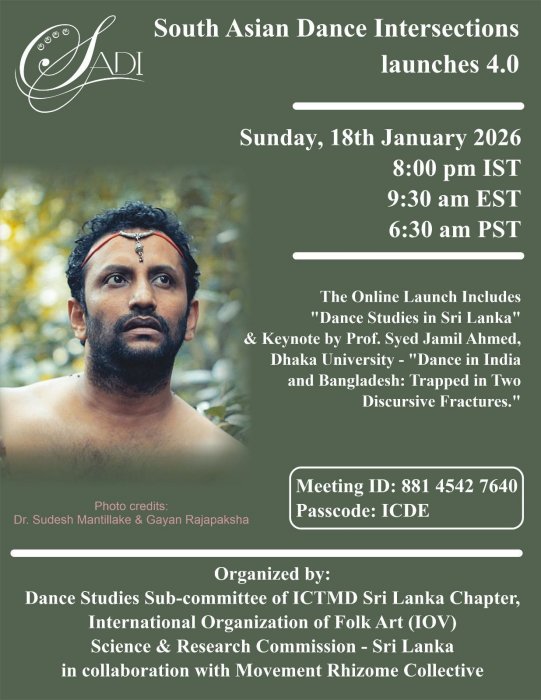
Interview - Dr. Arshiya Sethi on SADI - Shveta Arora


A novel might be just a story till literary analysis refracts it to reveal its influences, context and interpretative potential. Similarly, scholarship in dance can turn its beautiful practice from an aesthetic discipline into an exploration of our world - its geography, history, culture and even its politics. Hence, even though it is not required, it might be beneficial for practitioners to write about their discipline academically, to plan analyses, research their perspectives and use rigorous academic requirements to develop the habit of scholarship.

SADI (South Asian Dance Intersections) is a double-blind peer-reviewed journal housed at the University of North Carolina in Charlotte, USA, that provides a space for recognized academic writing on dance by anyone in South Asia, in any South Asian language. Its acronym is also a Punjabi word that means 'ours'. Its editorial board, which also includes its founders, consists of Dr. Rohini Acharya, Oberlin College, Ohio; Dr. Anurima Banerji, University of California, Los Angeles; Dr. Pallabi Chakravorty, Swarthmore College; Dr. Ananya Chatterjea, University of Minnesota; Sheema Kirmani, independent activist-scholar from Pakistan; Lubna Marium, A Center for Advancement of South Asian Culture; Dr. Sarah Morelli, University of Denver; Dr. Rumya Putcha, University of Georgia; Dr. Urmimala Sarkar, Jawaharlal Nehru University; Dr. Kaustavi Sarkar, University of North Carolina at Charlotte; Dr. Yashoda Thakore, guest faculty, Dance University of Silicon Andhra, California; Dr. Aishika Chakraborty, director, Women's Studies, Jadavpur University. 

Read more in the site

Please type your name along with your comment. Anonymous and derogatory comments are likely to be removed.