Wednesday, 28 October 2026

Article - When AI can perform, what remains to be cultivated in the artist? by Rohit Viswanath

This essay draws upon the writings of Dr. Padmaja Suresh, Ācārya for Nāṭya Pedagogy at Nāṭyaśāstra Gurukulam, on the philosophical, aesthetic and spiritual dimensions of Nāṭya, and the guidance of Dr. M. B. Athreya, the Gurukulam's Marga Darshak, on human development, institutional responsibility and Dhārmic statecraft. These perspectives inform the essay's engagement with AI, artistic judgement and self-governance.

A movement can be recorded, its geometry analysed, its execution compared against a reference, and a sequence of gestures generated through computational systems. Yet the cultivation of an artist entails a question of a different order. What happens to the person who practises? How are the body, perception, affect, imagination and judgement progressively refined through engagement with an art? And what distinguishes the possession of a repertoire from the cultivated capacity to interpret, embody and bring it to life? 

Read more in the site

Please type your name along with your comment. Anonymous and derogatory comments are likely to be removed.
Tuesday, 27 October 2026

Prism - Rang at Rangmanch, The role of colour in Kathak choreography by Ashima Sharma

Colour is an important aesthetic and symbolic element communicating emotional and structural expression in Kathak choreography. It gives narrative communication and visual coherence beyond its decorative function. Colour drives as a semiotic tool that shapes mood, descriptive clarity, character portrayal and spatial design. Embedded in Indian aesthetic traditions and evolved through performance practices, colour influences how the audience perceives dance movements, interprets a character, and experiences a particular rasa. This research article examines the heterogeneous role of colour in Kathak, focusing on costumes, lightings, stage compositions and principles of each Gharana. It also includes works by Kumudini Lakhia and Aditi Mangaldas drawing from classical texts, modern scholarship, and contemporary choreographic case studies. It advocates that the function of colour is not merely as an ornamentation but as a choreographic and semiotic tool that shapes the wholesomeness of a Kathak performance. Through exploration of existing theory of rasa and colour symbolism, cross-cultural examples of choreographies and Gharana-specific costume practices, this study argues that function of colour is as a powerful emotional and narrative structural element in Kathak dance performances.


Read more in the site

Please type your name along with your comment. Anonymous and derogatory comments are likely to be removed.
Monday, 26 October 2026

Kathak as dance theatre in Shovana Narayan's Lalitarpan Festival - Taalam: column by Leela Venkataraman

Lalitarpan, the annual festival of Asavari established in 1979, this year centered its celebration round the Yudhisthira/Draupadi interaction, based on Pavan Varma's book inspired by a work in Urdu, going into the emotional depths of this uneasy alliance between the head of the Pandavas and their wife Draupadi....


FINE DEBUT BY KALASHREE STUDENTS IN LUCKNOW GHARANA KATHAK OF GURU MUNNA SHUKLA

Kathak youngsters do not have the equivalence of an Arangetram, marking the dancer's formal stage appearance in a full-length performance. What students of Kalashree presented at the India International Centre auditorium, was a debut on similar lines for Kathak students of Kavita Thakur, a senior disciple of Lucknow gharana's late Kathak Guru Munna Shukla...

Read more in the site

Please type your name along with your comment. Anonymous and derogatory comments are likely to be removed.
Saturday, 24 October 2026

Profile - Kalamandalam Vasantha celebrates golden jubilee of Nruthanjaly by SK Venugopal


From a distinguished alma mater to nurturing generations of dancers, the inspiring journey of a dedicated guru and the golden legacy of 'Nruthanjaly'.

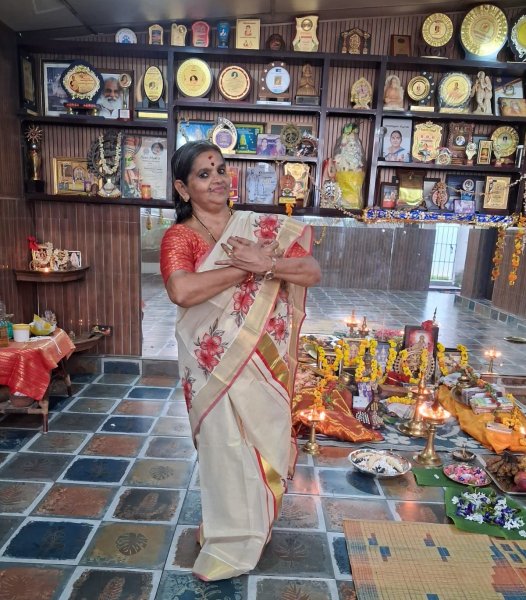
The story of Kalamandalam Vasantha is one of passion, perseverance, commitment and selfless dedication to the classical dance traditions of India. A proud alumnus of Kerala Kalamandalam, Cheruthuruthy, from where she graduated in 1975, Vasantha went on to carve a remarkable niche for herself, not merely as a practitioner of classical dance, but as a devoted teacher who made the propagation of this rich artistic heritage the mission of her life. She had the good fortune of getting trained in various classical dance forms under eminent gurus viz. Kalamandalam Sathyabhama, A.R.R. Bhaskar Rao, Kalamandalam Padmini, Palani Swami, Vasudeva Panicker, Kalamandalam Ramaswami, Sukumari Narendra Menon, Thanjavur Kittappa Pillai, Thanjavur Chandrasekhar, Vaishnavi, Kalamandalam Mohana Thulasi and others.

Read more in the site

Please type your name along with your comment. Anonymous and derogatory comments are likely to be removed.
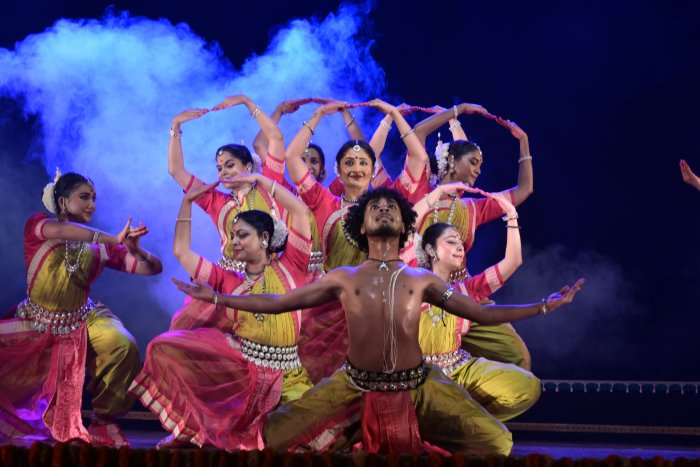
Steps of time present against backdrop of time still in Indraprastha Nritya Mahotsav - Taalam: column by Leela Venkataraman

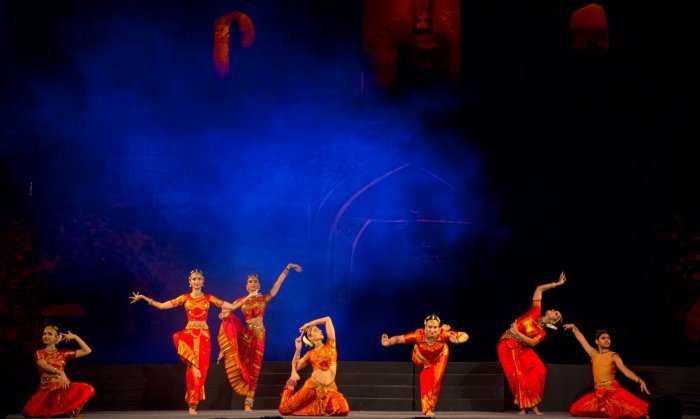
Standing as a majestic Sentinel of Time is the Purana Quila of Delhi, a 16th century construct of Humayun and Sher Shah Suri, with surrounding excavations revealing remnants going back to Shunga, Kushan, Gupta, Rajput, and Mughal periods in what is termed Indraprastha City. What greater testament of India's time past and time present can one have, than Delhi Tourism's three day, Indraprastha Festival - with contemporary versions of classical dance showcased against this architectural backdrop from the hoary past? The scene takes one back to the days of the Ananya Festival, conceived by Sangeev Bhargav of Seher, with classical dance groups. featured in the same venue. The present Indraprastha Nritya Mahotsav (Oct 2 to 4, 2026) held under the auspices of Delhi Tourism, 'conceived, designed and executed' by Maitreyee Pahari of Lok Chhanda, opened to a fleeting sound and light overture, visualized by Gautam Bhattacharya, as a declaration from the Fort, the voice emerging from illuminated sections of the fort's facade, proclaiming to be standing where the Pandavas once ruled over Indraprastha - its stones reminiscent of the time when Kings ruled, with the air all round seemingly heavy with muted cries of joy and distress of its peoples. "I belong to Time and the Jamuna" declares the voice, as pipes, live drumming by percussionists, and a recitation by Sama Veda specialists, conclude the introduction. 

Read more in the site

Please type your name along with your comment. Anonymous and derogatory comments are likely to be removed.
Tuesday, 20 October 2026

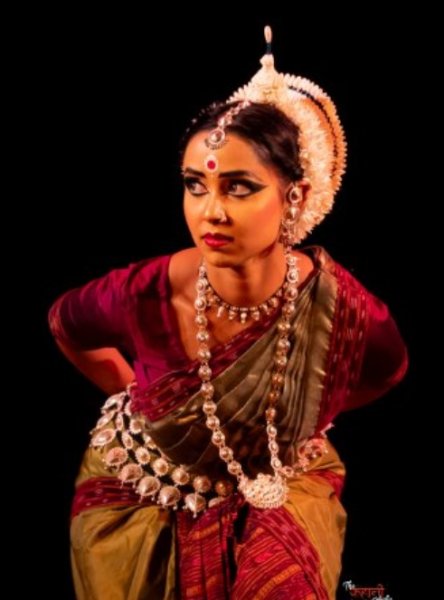
Article - Draupadi in the Sabha: Are we communicating injustice or displaying suffering? by Sushma Kotireddy

There are certain episodes in our epics that leave us deeply disturbed, no matter how many times we hear them. The dragging of Draupadi into the Kaurava Sabha is one such moment. It is a scene of humiliation, helplessness, injustice and, above all, the silence of those who had the power to prevent it. Whenever I think of this episode, I wonder how such a painful moment in our epic tradition should be brought alive on the Bharatanatyam stage.

Recently, I watched a dance performance in which the episode was portrayed with great physical intensity. The character playing as Draupadi was dragged from one corner of the stage to another, kicked, punched and subjected to repeated acts of physical aggression for nearly three to four minutes. The scene was difficult to watch. I understood the intention to convey the brutality of the incident, but a question remained in my mind: Was it necessary to show so much physical violence to make the audience understand Draupadi's suffering? And when the performer is a young student of fourteen, does this question become even more important?

I see Bharatanatyam as an ability to communicate the deepest human emotions through the smallest of gestures. A fleeting glance, a trembling hand, a sudden withdrawal of the body or a moment of complete stillness can sometimes convey what words cannot. I have always believed that the true power of abhinaya lies not in how much we show, but in how deeply we make the audience feel.


Read more in the site

Please type your name along with your comment. Anonymous and derogatory comments are likely to be removed.
Thursday, 15 October 2026

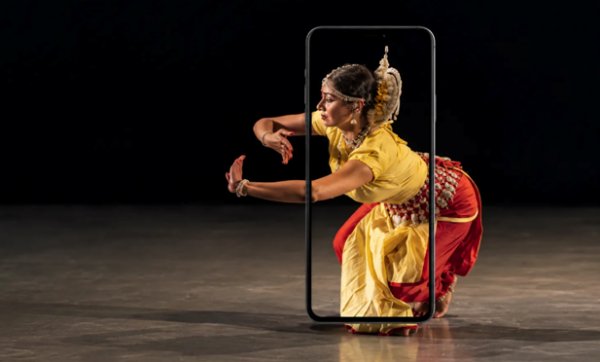
Article - The invisible labor of being an artist online by Anita Vallabh

If you are not online, it feels like you simply do not exist in today's artistic ecosystem. To ignore the power and presence of digital marketing is to do so at your own artistic peril.


Nowadays, Instagram seems to be the go-to platform for Indian artists, announcing everything from collaborations and performances to events they attend. The boundaries between the personal and the professional have become increasingly blurred. Come to think of it, where does one end and the other begin anyway?

Instagram affects people differently. Within my circle of friends, I see three broad responses. Some genuinely enjoy it. They are the enthusiasts - artists who embrace the platform as a space for creativity, connection, and self-expression. Others dislike social media altogether. They are the dissenters, preferring to devote their time and attention to their practice rather than the demands of an online presence. Then there are the reluctant-s: artists who remain on Instagram not because they enjoy it, but because they feel they have little choice. It is where audiences, presenters, collaborators, and professional opportunities now seem to converge. For them, Instagram is less a creative outlet than an indispensable part of the job.

Read more in the site

Please type your name along with your comment. Anonymous and derogatory comments are likely to be removed.

Wednesday, 14 October 2026

Pulse of Bangalore; Surats of Delhi and mahurat in Surat! - Dance Matters: Column by Ashish Mohan Khokar

Surat is the diamond capital of India; from all over the world, famous companies send their stones to be cut, polished, shone here. Textiles too, this city boasts of as Amit Patel, sari specialist tells me, "Making a sari has 36 processes". Thirty six! From preparing the field to plough to grow cotton to cultivate, cut, collect, clean, cater, categorise to mills for treatment, transport, traction in market by design, depth and diamonds even (yes, a sari can cost up to ten lakhs!) the whole gamut is like guru gyan.

Read more in the site

Please type your name along with your comment. Anonymous and derogatory comments are likely to be removed.

Sunday, 11 October 2026

Retaining authenticity while catering to contemporaneity - Taalam: column by Leela Venkataraman

It was a praiseworthy interactive initiative, spurred by Odissi dancer Madhulita Mohapatra heading Bangalore's Nrityantar - to round off the institution's annual celebration of Naman festival - with the invited dance critics and art column editors from different parts of the country, addressing the gathering of students in Bangalore's beautifully appointed Presidency University, on the occasion of the Performing Arts Colloquium 2026. The subject for the event Beyond the Performance, what sustains an Art form, saw proceedings comprising different aspects of this theme, allotted to each speaker. Opening remarks, warmly welcoming the guests, came from the Vice Chancellor Vidya Shankar Shetty, and Pritha Sanyal, Head of Presidency School of Liberal Arts and Science, Presidency University....


PROMISING SOLOISTS IN LASYAAYAN'S RAGANGA FESTIVAL

It is amazing how Odissi, having caught the imagination of the dance loving world within the span of seventy-five years, has been steadily attracting a larger clientele of dancers. At the Shri Ram Centre, Delhi, Lasyaayan, the Odissi institution headed by dancer Shimran Zaman, presented their Biennial Raganga Festival. 

Read more in the site

Please type your name along with your comment. Anonymous and derogatory comments are likely to be removed.

Tuesday, 6 October 2026

Article - The Instagramization of Indian classical dance by Dr. Rohini Dandavate


Social media has given Indian classical dance something previous generations never had: an immediate, global, and largely uncontrolled platform for visibility. A dancer in Bhubaneswar, Mumbai, Chennai, New York, or California can now reach thousands of people without waiting for a festival, Sabha, or institution to provide a stage. This became particularly evident during the pandemic years, when social media became an important means of maintaining visibility, communicating with audiences, and continuing artistic engagement. Since then, its role in the dance world has only continued to grow, bringing enormous opportunities for artists.

As someone who has spent several decades learning, performing, teaching, and choreographing within the Odissi tradition, I find this development both exciting and worthy of reflection. I have seen how access to dance has expanded through the screen. Artists who might once have remained known only within a particular geographical or cultural community can now be discovered by audiences across the world. At the same time, I have begun to wonder what happens to a form whose richness often lies in its gradual unfolding when it enters a medium designed for speed.

Every medium has its own visual grammar. Instagram and short-form video reward immediacy, visual impact, repetition, novelty, and compressed viewing. Classical dance, on the other hand, often requires time for development - a repertoire that unfolds gradually, a musical structure that opens incrementally, with subtlety and anticipation, and a relationship between the dancer and live audience that develops over time. 

Read more in the site

Please type your name along with your comment. Anonymous and derogatory comments are likely to be removed.

Saturday, 3 October 2026

Article - The Sovereign Art and the Administrative Web: Sadhana in the shadows of the portal by Dr. Lata Surendra

 We celebrated 80 years of Independence, but let us finally be independent in thoughts, deeds, and actions. True independence cannot merely be a date on a calendar; it must live in the uncompromised truth of our cultural conscience. To safeguard the pristine in all walks of life, we must actively strip away the petite barriers of power politics, institutional lobbying, and the manufactured noise that dictates modern success.


Art, in its highest form, must remain our great didactic mirror. It must boldly reflect the raw, actual reality of our human experience, ensuring that what we sustain is truly authentic. If not, we will watch good, authentic artists fade into obscurity, leaving a concerned fraternity standing in the shadows - carrying heavy whispers, forever wondering at the how with a desperate, unanswered why.

Yet, today we find ourselves suffocating in a hyper-optimized social media landscape. We watch as innocent childhood, budding genius, and seasoned mastery are all forced into the same frantic arena - vying for fleeting digital footprints in 30-second reels. This desperate chase of quantity over quality dilutes the sacred.

Read more in the site

Please type your name along with your comment. Anonymous and derogatory comments are likely to be removed.

Thursday, 1 October 2026

Anita says...October 2026

And just like that, I feel exhilarated to be a dancer, a performer and everything that has given me an inside view of this fabulous and frenetic world. I must confess, that the past few months had left me a bit wistful, maybe even a tad sad and uncertain about the future of our classical and neo classical styles. Despite all the efforts of recasting Bharatanatyam especially, in various moulds - stand-up comedy, Nightie Natyam (wearing kaftans for abhinaya) and Hip Hop, twerking and what not - there is so much energy and talent out there. Amidst the barrage of festivals and performances, I am seeing some phenomenal energy in the performing arts space.

And so, I share my travels and thoughts this month on a true high!

MELBOURNE

This vibrant and culturally diverse city called me back after 6 years. This time, my flight Down Under was to watch and lend solidarity to my long-time dance colleague, the dance diva of Australia, Anandavalli. 

Read more in the site

Please type your name along with your comment. Anonymous and derogatory comments are likely to be removed.